



From Isaac Anumihe, Abuja
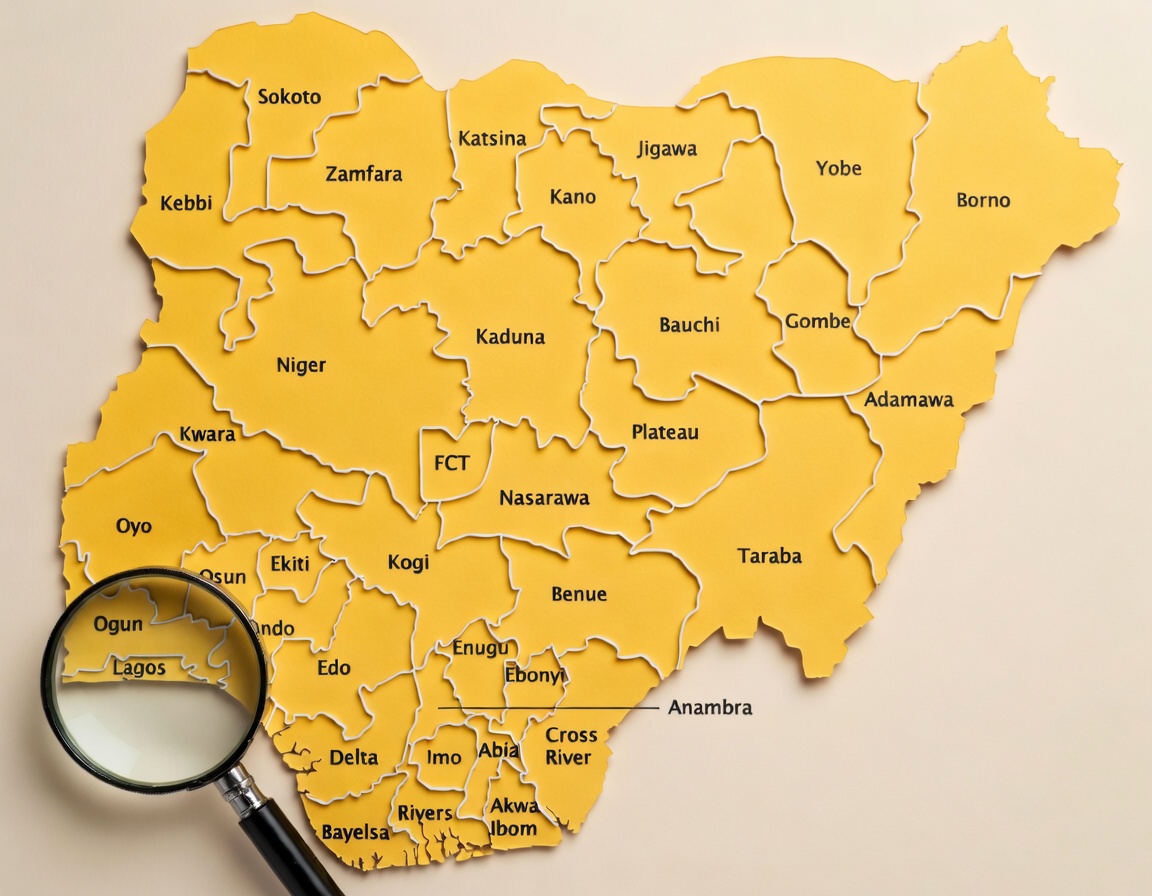
Lagos State owes a total of N1.22 trillion and $1.17 billion in domestic and external debts, respectively, emerging as the most indebted state in Nigeria.
In its Q4 2025 domestic and external debt report, the National Bureau of Statistics (NBS) said that the country’s total debt stock, comprising domestic and external debt, rose from N153.29 trillion or $103.94 billion in Q3 2025 to N159.28 trillion or $110.97 billion in Q4 2025.
The report said this represented an increase of 3.90 per cent on a quarter-on-quarter basis, adding that total external debt stood at N74.43 trillion, while total domestic debt was N84.85 trillion in Q4 2025.
The share of external debt, in naira value, was 46.73 per cent in Q4 2025, while the share of domestic debt, also in naira value, stood at 53.27 per cent of total public debt.
While Lagos State had the highest domestic debt in Q4 2025 with N1.22 trillion, Rivers came second with N378.81 billion, while Jigawa State recorded the lowest with N1.60 billion, followed by Ondo with N8.42 billion.
Lagos State also recorded the highest external debt over the reference period with $1.17 billion, followed by Kaduna with $684.29 million, while the Federal Capital Territory (FCT) had the lowest with $26.80 million, followed by Zamfara with $41.93 million, the NBS said.
According to the bureau, other heavily indebted states are Bauchi with $220.57 million and N156.05 billion as external and domestic debts respectively; Delta with $63.42 million and N248.83 billion as external and domestic debts respectively; and Enugu with $99.88 million and N157.60 billion as external and domestic debts, respectively.
“The issue of the rising debt burden has been a cause for concern for Nigerians as the debt service obligation is putting high pressure on the country’s revenue.
“Recall that it is expected that the removal of fuel subsidy would eliminate fiscal burden and excessive borrowing by both the states and the Federal Government.
“According to experts, removing the fuel subsidy in Nigeria aims to eliminate the massive fiscal burden on the government, freeing up trillions of naira for investment in healthcare, education and infrastructure. It tackles corruption in the subsidy regime, reduces smuggling, encourages private investment in refineries, and promotes long-term economic diversification.
“Also, eliminating the subsidy reduces government borrowing and budget deficits, allowing funds to be directed towards developmental projects rather than consumption.
“Furthermore, it mitigates unethical practices, such as the inflation of landing costs and the smuggling of gasoline to neighbouring countries, saving the economy from significant losses.
“So, the freed-up resources are expected to be invested in critical sectors like education, healthcare and transport, leading to improved public services.
“However, Nigerians are worried about what is playing out.”













Leave a comment