



Raheem Akingbolu
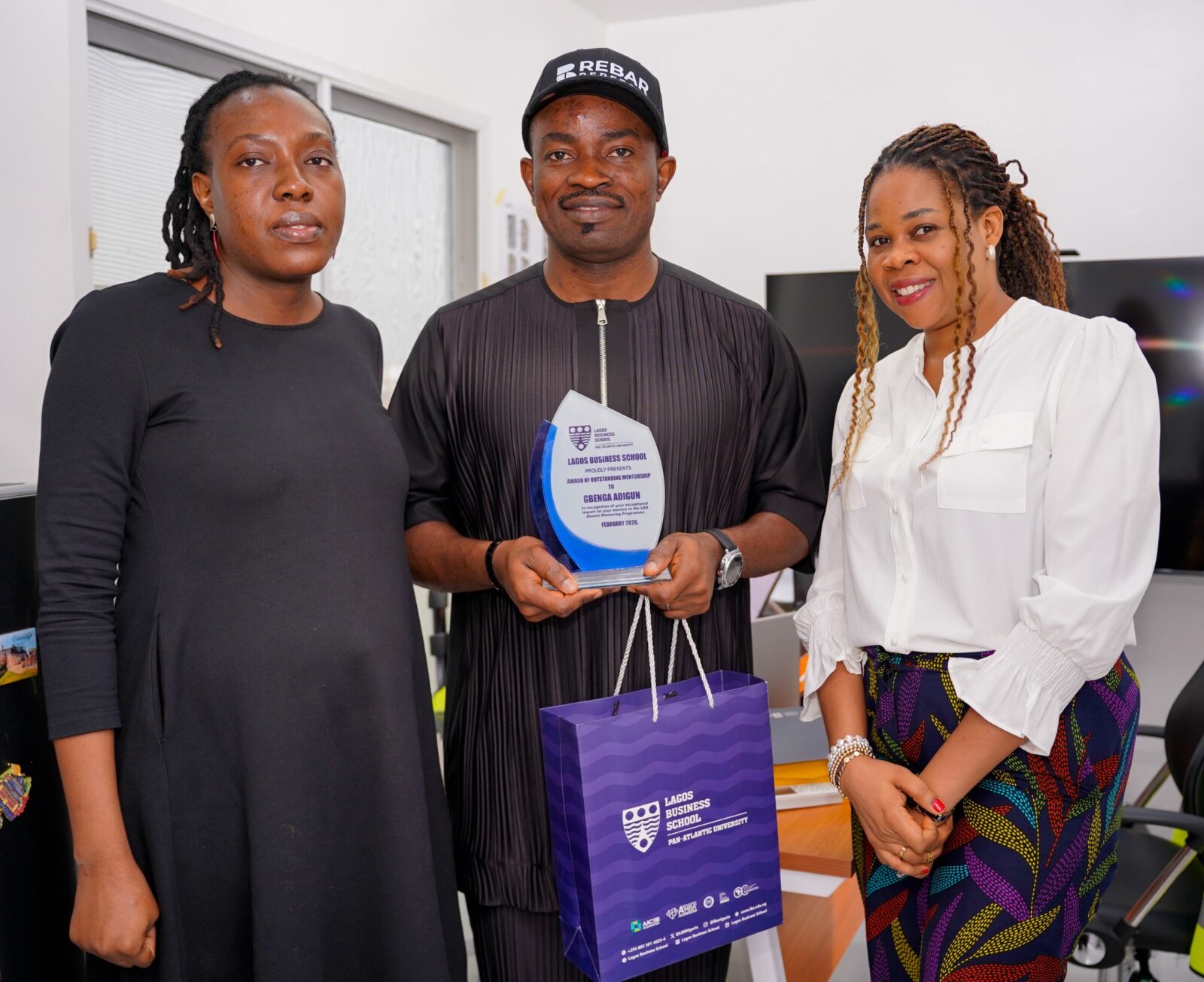
Lagos Business School has honoured Gbenga Adigun with a certificate of recognition for his role in the 2025 Alumni Mentoring Programme, in which he supported early-stage founders with structured guidance and financial backing.
The programme connects experienced professionals with emerging entrepreneurs, focusing on translating business knowledge into practical outcomes.
Adigun, speaking on his involvement, said he aimed to share lessons from experience and help reduce the gap between theory and real business conditions.
“I joined the LBS mentoring initiative because I wanted to provide the ‘operatin*g manual’ I wish I had almost two decades ago,” he said. “The 6 and I wanted to bridge that gap for the next generation.”
He said his method focused on developing thinking skills rather than offering direct soluti*ons.
“It wasn’t about giving them answers but teaching them to ask the right questions,” he said.
He outlined several ideas that shaped his engagement in the programme. He described “resilience” as necessary for business leaders managing uncertainty. He also referred to “the power of trust,” stating that “even in tech, human connection is our most important currency.”
In addition, he stressed “a focus on inclusion,” noting that business growth involves “building solutions that reach the underserved in every corner of the country.”
During the programme, one of his mentees progressed from planning to execution but faced a funding gap tied to inventory needs.
“In 2025, they were ready to launch new product lines but faced a common hurdle: inventory funding,” he said. “I decided to step in with debt capital support to help them stock up and meet the demand they had worked so hard to build.”
He said the result demonstrated the link between mentorship and capital.
“Seeing that capital translate into consistent sales and now receiving steady returns on that investment is the ultimate validation,” he said. “It proved that the mentorship wasn’t just about sharing almost 2 decades of experience; it was about providing the tangible ‘fuel’ needed to scale.”
He added that the experience confirmed the value of the intervention.
“Realising I had helped a founder cross the bridge from ‘potential’ to ‘profitable’ was when I knew the impact was real,” he said.
Adigun said the process also required him to reassess his own approach to business strategy.
“Explaining almost 2 decades of experience to a sharp, inquisitive mind makes you realise which of your strategies are timeless and which need an upgrade for the 2026 economy,” he said.
On a personal level, he said the mentoring engagement influenced his perspective on success.
“It’s easy to get caught up in boardrooms and scaling targets, but seeing the ambition and grit of a mentee reminds you why you started,” he said, adding that it shifted his focus “from just ‘hitting numbers’ to ‘building people’.”
Looking ahead, he said he expects his mentee to maintain a balance between financial outcomes and social relevance.
“I hope my mentee carries the understanding that profit and purpose are not mutually exclusive,” he said, adding that sustainable businesses “solve a genuine social friction”.
He concluded by describing mentorship as part of leadership duty.
“Leadership is a relay race, not a sprint,” he said, noting that mentoring prepares the next group of business leaders.














Leave a comment