



By Merit Ibe
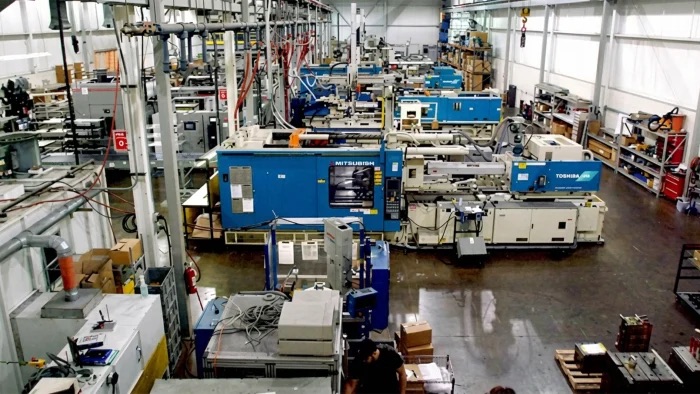
Nigeria’s manufacturing sector is facing a paradox. Despite its rising contribution to government revenue via taxes, manufacturers are neck-deep in multidimensional crises.
To them, the levies are harsh, yet the operating space is harsher.
They said the taxes feel more like ransom for freedom rather than an obligation that should unlock incentives to soften their operational space and broaden their revenues.
Data for 2025 shows significant growth in the sector’s tax payments. Value Added Tax (VAT) contributions increased to N1.17 trillion, representing a 45.61 per cent rise from N803.53 billion in 2024. Company Income Tax (CIT) also grew to N881.29 billion, up by 32.83 per cent from N663.46 billion. Analysts say this trend highlights the sector’s expanding role in government revenue generation and industrial development.
Despite these gains, stakeholders warn that persistent structural challenges continue to limit manufacturers’ performance. They are urging the government to address these constraints through targeted infrastructure investments and policy reforms aimed at lowering production costs, boosting job creation, and improving competitiveness.
Manufacturers have also raised concerns over multiple taxation and complex compliance requirements, which they say are increasing the cost of doing business. The Manufacturers Association of Nigeria (MAN) has repeatedly called for a simplified and more transparent tax system, noting that current policies are slowing growth.
High production costs remain a major burden on the sector, driven largely by rising energy and freight expenses. This has contributed to slower output growth, declining profitability, and a buildup of unsold inventory in many factories.
The Lagos Chamber of Commerce and Industry (LCCI) maintains that manufacturing is critical to Nigeria’s economic growth and diversification. The chamber has therefore called for improved infrastructure, stronger policy support, and more efficient budget implementation to sustain the sector’s momentum.
President, LCCI, Leye Kupoluyi urged the Federal Government to prioritise the resolution of key manufacturing sector constraints, noting the sector’s growing contribution to tax revenues.
Kupoluyi lamented that manufacturers continue to grapple with high production costs, driven largely by unreliable electricity supply, logistics inefficiencies, and policy inconsistencies.
“Frequent power outages, high generator costs, and unreliable distribution networks are crippling productivity.”
LCCI advocated a comprehensive policy mix, including moderate tariffs, streamlined port processes, and stronger support for local manufacturing, stressing that such measures are critical to reducing business costs, enhancing competitiveness, and driving sustainable industrial growth.
Kupoluyi further noted that the rollover of N7.71 trillion in unimplemented 2025 capital projects highlights systemic gaps in Nigeria’s fiscal operations and underscores the urgency for reforms.
“Historical weaknesses in Nigeria’s budget execution capacity, delays in fund releases, bureaucratic bottlenecks, and inefficiencies remain critical challenges.”
He warned that failure to fully fund capital projects has far-reaching implications, particularly for contractors and businesses whose operations depend on government spending.
“When contractors are owed large sums, their operations are stifled, and jobs are threatened. The government must create a new template for capital budget releases to ensure adequate funding of projects,” he added.
He expressed concern over the high import duties, noting that the policy continues to increase production costs for businesses operating in the printing, publishing, packaging, education, advertising, and manufacturing value chains.
This situation, combined with port delays, multiple regulatory checks, inconsistent tariff classifications, and administrative bottlenecks, significantly increases production costs.
“We strongly advocate for a review of import duties, full integration of regulatory agencies into the National Single Window, standardization of tariff classifications, and deliberate efforts to reduce cargo clearance timelines without introducing additional costs.
The Chamber believes that a practical policy mix of moderate tariffs, support for local manufacturing, and stable macroeconomic conditions will lower business costs, and contribute to broader economic growth.
Kupoluyi noted that the success of the NSW initiative must go beyond merely digitizing existing manual procedures.
“The system should deliver real-time interoperability among all trade-related government agencies, eliminate duplication, reduce delays, lower transaction costs, and significantly improve transparency across the import and export process.
LCCI commended the Federal Government on the wide-ranging set of fiscal policy measures for 2026, including cutting import duties on key goods such as vehicles, rice, palm oil, and sugar, while introducing new taxes and protections to support local industries and economic growth.
“One of the most notable changes is the reduction in tariffs on fully built passenger vehicles, including four-wheel drives and station wagons, to 40 percent from 70 percent. Food imports also saw significant adjustments.”
He lamented the poor state of electricity supply which remains one of the greatest impediments to business operations.
“Frequent outages, high generator costs, and unreliable distribution networks are crippling productivity and raising the cost of doing business. Without urgent reforms in the power sector, Nigeria cannot achieve meaningful industrialization.
“While the economy is witnessing a recovery, sectors like manufacturing and agriculture face risks from insecure environments, high energy prices, and FX volatility.”
The LCCI urged the government to boost local refining capacity, tackle oil theft, diversify revenue sources, and improve security to boost investor confidence.
David Etim, Project Lead, Calabar and Gulf of Guinea Municipal and Trade Centre Ltd by Guarantee, said in Nigeria, manufacturers face many challenges affecting costs and competitiveness.
“Though reforms are trying to reduce it, it’s not fully gone yet.”
Etim further noted that Nigeria’s trade environment is faced with several structural challenges that make it fragile and unstable. These challenges he viewed affect manufacturers’ ability to produce, price, and compete effectively in the global market.
“One major problem is the issue of multiple taxation and harassment by revenue collectors at the local and state government levels. “Manufacturers and their workers, including dispatch riders and truck drivers, are often subjected to frequent stops and illegal levies while transporting goods across different regions or states. Although efforts have been made to reduce such practices, they have not been completely eliminated. This increases the cost of doing business and discourages smooth movement of goods.
“Another key challenge is the inefficiency in transport and logistics. The constant harassment of transporters leads to delays and uncertainty in delivery timelines. As a result, manufacturers incur additional costs, which ultimately reduce their competitiveness both locally and internationally.
“Foreign exchange volatility is also a critical issue affecting trade. The frequent and unpredictable changes in exchange rates make it difficult for manufacturers to plan their production cycles. Stability in exchange rates is therefore more important than the actual rate itself.
Furthermore, local industries face strong competition from foreign companies that operate primarily for profit and are less concerned with the growth of the Nigerian economy. Combined with internal challenges such as policy inconsistency and high operational costs, this further weakens manufacturers.
Etim concluded that Nigeria’s business environment remains fragile due to multiple taxation, poor logistics, foreign exchange instability, and high shipping costs. Addressing these issues he said is essential for improving the competitiveness and growth of the country’s trade sector.
He further noted Nigeria and Africa face a fragility crisis caused by insecurity, bureaucracy, and high cost of doing business. Issues like kidnapping, terrorism, and environmental challenges discourage investment.
He insists that governments must reduce bureaucracy, improve ease of doing business, and create an enabling environment that attracts private investment across Africa.









Leave a comment