



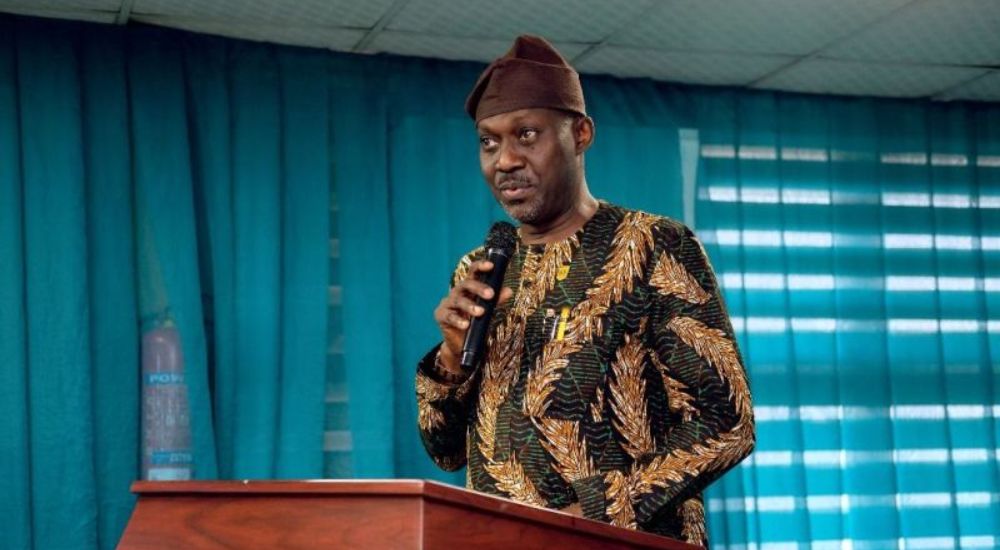
Director-General of MAN, Segun Ajayi-Kadir
My Merit Ibe
The Manufacturers Association of Nigeria (MAN) has called on the Federal Government to ensure full transparency in the domestic pricing framework under the Naira-for-Crude policy.
Speaking in Lagos, the Director-General of MAN, Segun Ajayi-Kadir, stressed the need for a clear and accountable pricing matrix, alongside uninterrupted crude supply to local refineries without bureaucratic delays.
He described the policy of selling crude oil in naira to domestic refineries as a major structural milestone but noted that its current implementation requires urgent optimisation to deliver real economic benefits.
According to him, “The Federal Government should mandate total transparency in the domestic pricing matrix and ensure that local refineries receive their full, unhindered daily crude quotas without bottlenecks. The true macroeconomic benefits of this policy must reach both consumers and the productive sector.”
Ajayi-Kadir also urged the government to accelerate the Presidential Compressed Natural Gas Initiative by heavily subsidising the conversion of commercial and industrial transport fleets to compressed natural gas (CNG). He noted that logistics costs significantly drive inflation, adding that a shift from petrol and diesel to locally available CNG could help reduce prices.
On broader support for manufacturers, he emphasised the need to remove supply-side constraints, including improving the National Single Window platform, eliminating the 4 per cent Free-On-Board (FOB) levy, and providing access to single-digit credit facilities to boost production and lower costs.
He further highlighted the importance of investing in power infrastructure, noting that dependence on expensive liquid fuels for industrial energy worsens the cost of production. He called for reforms to the national grid and incentives for off-grid renewable energy solutions within industrial clusters.
Addressing global energy uncertainties, Ajayi-Kadir warned that reliance on imported fuel exposes Nigeria to external shocks driven by geopolitical tensions. He stressed that sustainable price stability can only be achieved through strengthened domestic production and energy self-sufficiency.
He concluded that rather than resorting to fuel imports as a short-term fix for inflation, Nigeria should adopt practical, homegrown solutions that build resilience, stabilise prices, and support long-term economic growth.













Leave a comment