



•Warns Nigeria, others against policy missteps
From Uche Usim, Washington DC
The ongoing Middle East conflict has forced a sharp pivot on global economy, as nations move from recovering from past economic crisis to containing fallout of the current upset.
To this end, the International Monetary Fund said it is now repositioning itself for crisis response, preparing billions in emergency support as the ripple effects of the Middle East conflict spread across economies already stretched thin.
Nigeria and other developing economies have been warned to avoid policy missteps and knee-jerk interventions but to embrace precision, targeted fiscal support, disciplined monetary policy and stronger coordination between authorities.
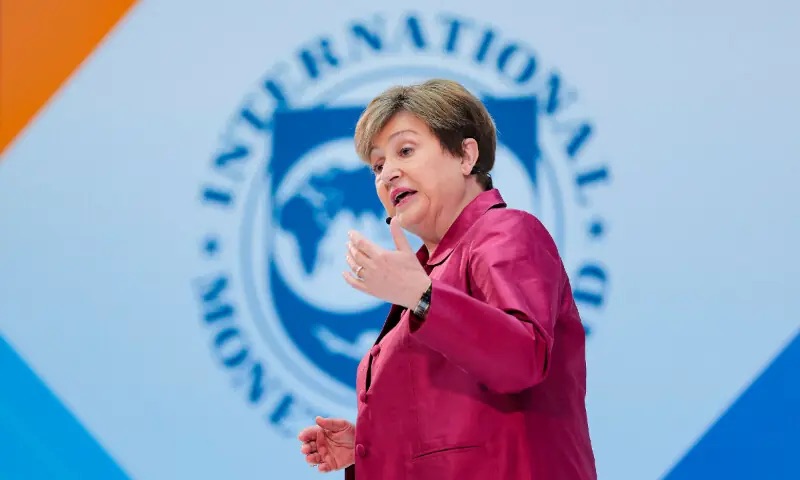
The Managing Director of IMF, Kristalina Georgieva, who has signaled that demand for balance-of-payments assistance could climb to as much as $50 billion.
According to her, the development is a clear reminder that global stability remains fragile and shocks can quickly erase hard-won gains.
The Fund noted that the disruption has hit a critical nerve being energy as a sharp squeeze in oil and gas supply has driven up prices, reigniting inflationary pressures at a time many countries were only just regaining control.
For policymakers, the issue is a painful reversal, forcing difficult choices between stabilising prices, supporting growth and defending currencies.
The Fund added that the consequences are unfolding unevenly but relentlessly, with energy-importing nations already absorbing the heaviest blows.
Rising fuel costs have cascaded into food prices, transport expenses and broader cost-of-living pressures.
The IMF noted that for these economies, already grappling with limited fiscal buffers, the shock is amplifying vulnerabilities at speed.
But the fallout is not confined to them.
Exporters benefiting from higher prices are also navigating a more uncertain terrain, where volatile markets and weakening global demand are dampening investment and long-term planning. The illusion of insulation is fading.
IMF noted that what makes this episode more unsettling is its timing.
Before the crisis, the global outlook was tilting upward, supported by strong capital flows, improving macroeconomic management, and the transformative promise of artificial intelligence. Now, that narrative is being rewritten by supply disruptions, fractured trade flows, and declining confidence.
The IMF sees three fault lines widening simultaneously: rising inflation, tightening financial conditions and shifting market expectations.
“Together, they are creating a more hostile environment for growth, particularly in emerging markets facing higher borrowing costs and a stronger dollar”, the Fund noted.
Beyond macroeconomics, the shock is bleeding into real-world systems.
Fuel shortages are disrupting logistics and aviation.
Supply chain strains are hitting industries reliant on critical inputs.
Food systems are under renewed stress, raising fears of worsening global hunger.
In this environment, policy missteps could prove costly.
Georgieva has warned against knee-jerk interventions such as export restrictions or blanket subsidies, arguing they risk deepening distortions.
The Fund noted that even with the right approach, constraints are tightening.
Debt levels remain elevated, financing costs are rising and fiscal space is shrinking across both advanced and developing economies. The room to respond is narrower than in past crises.
Still, the IMF believes preparation, not panic, will define outcomes.
Countries with stronger institutions, credible policy frameworks, and rebuilt buffers are better positioned to absorb the shock. For others, the Fund stands ready to step in, scaling up support where needed.
What is clear is that the global economy has entered a more uncertain phase, one where resilience will be tested, and recovery can no longer be taken for granted.
The IMF boss stated that the playbook has changed again, prompting it to move to the frontlines to assist vulnerable nations.














Leave a comment