



Bola A. Akinterinwa
Africa has been object and subject of concern in international politics. It is the most critical region of the world in terms of exploitation and insults. It is also the continent for which musicians have complained to God almighty, asking why Africa is not on the good books of God. True, Africa was partitioned at the 1884 Berlin Conference with a stroke of the pen, a partitioning that divided the same ethnic people. For example, the Yoruba people were divided between Dahomey, now Benin Republic, and Nigeria. The Hausa and Fulani people were similarly divided, some living in Nigeria and some in Niger Republic.
As a result, when law enforcement agents in Nigeria and in the immediate neighbouring countries want to collect taxes, people in the border areas simply shift to the other side to avoid payment or arrest as their compounds fall on both sides. If it is the Beninois gendarmes or tax officers that are coming, the people will move to the other part of their house on the Nigerian side. Imagine a compound in which the lounge is on the Beninois side and the bedrooms are on the Nigerian side. Most unfortunately, the African leaders have continued to enslave Africans the more, warranting several pan-Africanists to cry aloud.
‘Nakomitunaka’ is the title of a 1972 Congolese Rumba song by Versckys Kiamuangana Mateta, meaning ‘I ask myself’ or ‘I wonder.’ Asking or wondering about what? Why religious iconography and figures are portrayed as white while demons are always depicted as black. Yet, this same black Africa is a terra cognita for rich mineral resources which the developed countries want to protect and exploit to the detriment of their arch enemies. It is against this background that the birth, life and times of General Murtala Muhammad, in relationship with that of President Bola Ahmed Tinubu, are hereby compared and contrasted in the context of the defence of Africa, its dignity, and future.
Africa Has Come of Age
Nakotumitunaka, undoubtedly, was a rallying cry for black consciousness. Even though Africans are either referred to as black or dark, people of shitholes, poverty, and development setbacks, etc., the African soul brother number 1, James Brown, made it clear to the whole world that he was black and proud before he died. In his own words: ‘Say it Loud, I am Black and Proud.’ What about Nigeria’s Fela Ransome Kuti who changed his name to Fela Anikulapo Kuti? He had several revolutionary songs condemning Africa’s exploitation, bad governance, and societal indiscipline driven by the political chicanery of African leaders. Murtala Muhammad was not different in his perception of the political rottenness in the political governance of Africa during his own life time. He felt the need to address the rottenness.
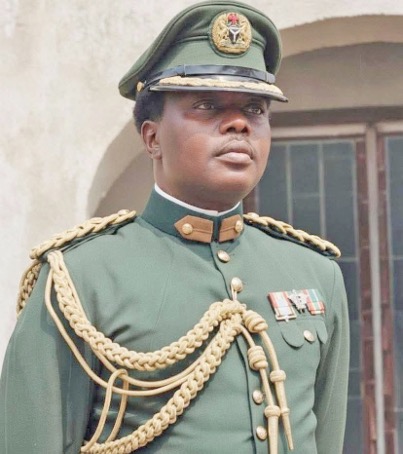
He was Nigeria’s fourth Head of State, coming after Dr Nnamdi Azikiwe, General Aguiyi Ironsi, and General Yakubu Gowon. He was born into a world of unrest and instability on 8th November, 1938, that is, just a day before the Kristallnatch or before the Night of Broken Glass when Jewish synagogues and businesses were wilfully destroyed, when their vitrines, glasses and property were broken. It was a bad day for the Jews but a joyous day for some Americans. 8th November, 1938 was a day of happiness for the Democratic Party in the United States, and also a major day of special joy for the family of Murtala Mohammed. The Democratic Party lost 72 House Seats and 7 Senate Seats in the mid-term elections that took place on that day. The Murtala Muhammad family gave birth to a future leader and bearer of a torch of better days to come.
Without jot of doubt, Murtala Muhammed was not only born at a time of a disorderly world in the making, but also at a time of global inability to prevent the increasing display of psychology of human differences and making of World War II. Murtala Mohammed therefore had no choice than to grow up in a world of unrest, colonialism, injustice, foreign exploitation and indignity, etc., all of which were incompatible with his make-up and personality. This would be clearly reflected when he took over power from General Yakubu Gowon.
First, how do we reconcile his personality with his governance objective? In the eyes of the people of Africa, and particularly Nigerians, he is a good and correct man. In the eyes of outsiders, the Euro-Americans in particular, he is not a good man. But who is correct? A good man is one that defends patriotism, cleanliness of hearts and altruism in the fear of God. A good person always defends objectivity of purpose and refrains from giving untrue testimony. Anyone who bears false witnesses or who swears on oath knowing fully well that his oath is far from the truth is satanic in all ramifications. A good person may not be 100% holy, 100% correct attitudinally. Any person who tries to live honestly to the tune of more than 50% is good enough because God himself knows that all the people he created on the 6th day before he rested on the seventh day are terrible. Murtala cannot therefore be an exception.
Consequently, when General Murtala Muhammad was portrayed negatively in the United States, the general impression was that Murtala Mohammad was, at best, a bad leader without vision. For example, it is useful to put the understanding of the portrayal of Murtala Muhammad in its appropriate context. On August 18, 1975, a diplomatic memorandum with reference no. PA/HO Department of State, E.O. 12958, by John E. Reinhardt, was declassified. The memo, which was titled ‘Nigeria after the coup of July 28,’ was in response to the request by government on August 14, 1975. The government probably wanted to know how to relate with the new Murtala Muhammad regime in Nigeria. The Reinhardt memorandum reported that ‘the leader of the coup against General Yakubu Gowon is an erratic, vainglorious, impetuous, corrupt, vindictive, intelligent, articulate, daring Hausa.’
Additionally, Reinhardt also wrote that ‘Brigadier Murtala Muhammad was a prime force in the Nigerian coup of July 1966, which brought Gowon to power and is one of the two principal plotters against Gowon for the past two years. For some reasons, the memorandum by Reinhardt is of interest for further reflection on the personality of General Muhammad. General Murtala Muhammad was not only reported to have been an active participant in the coup that brought Lt-Colonel Yakubu Gowon to power in July 1966, but also to have been very critical to the removal of the same Yakubu Gowon, now a military General in 1975. Put differently, why did he support the coming of Yakubu Gowon to power in July 1966? Are the reasons for the support no longer sustainable as of 1975 when he reportedly came out in support of his removal? Does this not lend support to the hypothesis that whenever there is the need to support goodness, Murtala Muhammad would always do and condemn what was wrong whenever there was the need to do so? As much as Reinhardt’s memo can have a negative impact, the goodness of General Muhammad’s behaviour cannot be set aside with a mere stroke of the pen.
Our position here is predicated on the consideration that the Government of Nigeria had reportedly exonerated General Murtala Mujammad from being involved in the July 1975 coup that ousted General Gowon in a bloodless coup. Even though coup making was and is still condemnable, the mere fact that it was a change of government free from blood letting is goodness in itself. Additionally, here was also the accusation of the involvement of the Nigerian army in genocide against the secessionist Biafrans, which General Murtala Muhamad again denied. Whatever is the case, nothing can be more beautiful than another side of the memorandum by Reinhardt according to which the same General Murtala Muhammad was ‘intelligent, articulate, daring Hausa.’
Admittedly, General Muhammad might have been vindictive, erratic, vainglorious, impetuous and corrupt, there is still no disputing the fact of his being intelligent and articulate and daring. But daring to who? Probably to the United States. This evaluation was in itself serious enough to warrant the placing of Murtala Muhammad’s on the list of people of concern in the list of foreign policy strategic concerns of the United States. Reinhardt was simply telling the Washingtonian authorities that Murtala Muhammad could be daring to the US foreign policy interests. And who says that Reinhardt’s evaluation is not correct in this regard? Murtala Muhammad was fearless, very daring, and very patriotic. He showed a character that has gone beyond that of timber and calibre to that of iron and steel and his message of ‘Africa has come of age’ to African leaders at the OAU headquarters in Addis Ababa was quite reflective of his iron and steel personality.
Murtala said that Africa was no longer under the orbit of any foreign power. You can imagine this statement in the eyes of a superpower like the United States. Who was Murtala Muhammad to have the effrontery of condemning the exploitation of Africa and rejecting the idea that Africans needed foreign experts to identify their friends? In the words of Murtala Muhammad, ‘the fortunes of Africa are in our (Africans) hands to make or mar.’ This statement was daring and this might have partly or fully informed the coup that took his life. General Yakubu Gowon was very friendly with the West. His removal could not but be antagonising to the West. And perhaps more importantly, for hobnobbing with the communist Soviet Union and Chinese, considered as arch enemies of the United States and its allies, was enough reason to seek to neutralise the life of Murtala Muhammad.
What Future for ‘Strategic Autonomy?
Murtala Muhammad, for many, has died. For many others, he has not died. His message of Africa has come of age has prevented him from being on the list of the dead. Every year he was remembered. President Muhammadu Buhari noted at the 40th memorial lecture of the late General Murtala Muhammadu that he ‘was on his way to putting Nigeria back to the path of order and discipline before his assassination in a military coup on February 13, 1975. Most unfortunate. The longer the time he is remembered, the more thought-provoking he becomes a living dead and that more questions are raised about the future of Nigeria, and particularly in the context of PBAT’s quest for strategic autonomy.
Gerard Ford was US President in 1975 when Angola acceded to national sovereignty. Angola got its independence from Portugal in 1975. It was also in 1975 that General Muhammad put a stop to GOWON or the idea of ‘Go on With One Nigeria.’ Murtala Muhammad was not against keeping Nigeria united. However, he was much concerned about President Gerard Ford’s letter of opposition to the Soviet-backed Popular Movement for the Liberation of Angola (MPLA), a left-wing political party, which was formed in 1956 but only succeeded to come to power in 1975 following independence. The opposition party to the MPLA was the UNITA (National Union for the Total Independence of Angola) which was led by Dr Jonas Savimbi.
Nigeria, until this time, was supporting the UNITA. On the very day that Nigeria discovered that the UNITA was hobnobbing with apartheid South Africa, Nigeria changed support from UNITA to the MPLA which was Marxist-Leninist and anti-America. It is against this very background that the attitudinal dispensation of General Muhammad should be better explained and understood. It is also within this context that the linkage between the message of Africa has Come of Age and PBAT’s quest for strategic autonomy should be understood.
To begin with, has Africa truly come of age? What is the meaning of the message of ‘Africa has Come of Age?’ The meaning can be multifaceted, and therefore ambiguous. Essentially, it was a call for political self-determination, that Africa should be able to articulate its development pathways without the mainmise of foreigners. It meant rejection of neo-colonialism and determination to assume responsibility for resolving Africa’s problems by African people. More importantly, the message was a call for independent decision-making and no more control of foreign powers in the conduct and management of African affairs.
In this regard, to what extent can we admit that there has been an end to foreign subjugation in Africa? What is political self-determination in Africa? To what extent are political decisions owned by African leaders? The countries of the Alliance of Sahel States which withdrew their membership of the ECOWAS to form a confederation as counterweight to the ECOWAS kicked against neo-colonialism, by particularly asking for the dismantlement of French military bases in their countries. Niger even asked for the closure of the US military base in Niger. While these countries are emphasising opposition to perpetuation of neo-colonialism, some other countries are giving warm welcome to the unwanted Franco-American military bases. Even the Americans who purportedly claimed not to recognise the Assimi Goïta-led military regime in Mali has now sent a delegation to the Goïta government seeking trade and economic collaboration. This means that the Government of Goïta has been recognised de facto. The ECOWAS efforts and policy of zero-tolerance for unconstitutional change of government has, at best, become meaningless.
In essence, 50 years after the demise of Murtala Muhammed, the message of ‘Africa has Come of Age’ has not meant anything significant. The message does not mean much for the old and the young in Africa. African youth are being seriously recolonised by technology. Rather than using the same technology for self-liberation, they simply deepen it for sustainable dependency. This is why the new approach to political governance under the incumbent President of Nigeria, PBAT, is important and relevant for further analysis at this juncture.
PBAT, or President Bola Ahmed Tinubu, is the 16th and current leader of Nigeria. He was reportedly born on 29 March, 1952. He is one of the front liners in the quest for a united Nigeria that would be truly federal (vide Bola A. Akinterinwa, ed., Bola Ahmed Tinubu and the Struggle for True Federalism: Perspectives, Problems, and Prospects, Ibadan: Vantage Publishers, 2000, 320 pp.). And perhaps more interestingly, his Minister of Foreign Affairs, Ambassador Yusuf Maitama Tuggar, has also been implementing a foreign policy of strategic autonomy, driven by the doctrine of 4-Ds (Democracy, Development, Demography, Diaspora). The Minister wants to evolve a foreign policy grand strategy for Nigeria. And true enough, he has sponsored a book project on Strategic Autonomy as a Foreign Policy Grand Strategy for Nigeria: The 4-Ds as Definienda, which is edited by Professor Bola A. Akinterinwa, Associate Professor Olatunji Agboola Olateju, and Ambassador Usman Sarki/ The book is published by the Bolytag Centre for International Diplomacy and Strategic Studies. The Nigerian Institute of International Affairs will be playing host to the public presentation of the book on 12 March 2026.
What is the essence of the quest for strategic autonomy and the need for a foreign policy grand strategy? Various efforts had been made in the past to put Nigeria on the path of greatness but all efforts have been to no avail. Prime Minister Abubakar Tafawa Balewa began with the foreign policy principle of non-alignment. Many observers wrongly believed that the policy is negativistic, that it never meant not taking side with the West and the East in their ideological struggle. Whereas, the intended and declared meaning of non-alignment is that Nigeria could, and not, align for as along as the alignment or non-alignment is driven by the national interest. The policy was adopted to assert national sovereignty and self-determination in 1960.
In the same vein, Professor Akinwande Bolaji Akinyemi came with the idea of Concert of Medium Powers in the hope of sustaining national personality and relevance in the governance of international questions. The short-sightedness of Nigeria’s poorly informed policy makers killed the idea, but which is what the BRICS is currently propagating in different formats and which Canada openly canvassed at the 2026 World Economic Forum.
Now, and most significantly, PBAT and his Foreign Minister are making strenuous efforts to reconcile the principles of non-alignment and Concert of Medium Powers within the framework of a quest for strategic autonomy. If democracy is consciously promoted, if demography is constructively translated into creativity, and if the resources from the Diaspora are well harnessed with the new educational policy of the Diaspora BRIDGE initiative (Bridging Research, Innovation, Development and Global Engagement), there is no way Nigeria will not be self-reliant. The 4-Ds doctrine, coupled with the BRIDGE initiative have the potential to serve a solid foundation for the evolvement of a foreign policy grand strategy. Strategic autonomy is about self-reliancism in all aspects of human life and development. It promotes self-reliance at the nuclear home level, local government level, state level, and the national level. If self-reliance is promoted at the primary and secondary school levels, a foundation for a society completely free from unemployment would have been laid. Africa can then truly begin to claim having come of age, especially that Nigeria has made Africa the centerpiece of her foreign policy.
One can only hope that President Bola Ahmed Tinubu would not be killed in the mania of the 1963 style of Sylvanus Olympio or the 1976 assassination of Murtala Muhammad. History has Grosso modo shown that all those who dared the big powers directly and indirectly have been either removed from power or neutralised. This neutralization policy cannot but continue as Africa still remains a good source of raw materials for development of Europe. All the big powers want to continue to befriend Africa by hook or by crook because of its wanted resources. The quest for a foreign policy grandeur seeking the greatness of Nigeria, or a great Nigeria different from the Donald Trump’s MAGA policy, cannot but be seen as unfriendly. Big powers want to survive by all means and without giving due regard to the survival of other people. The quest for strategic autonomy cannot be another struggle for which Nigerians must be fully prepared. This is what fifty years of remembrance of the killing of Murtala Muhammad is raising as a question: What future for Africa? When will Africa really come of age? When will Africa be able to defend powerfully its own sovereignty? ‘Time will Tell,’ to borrow the words of Jimmy Cliff.








Leave a comment