



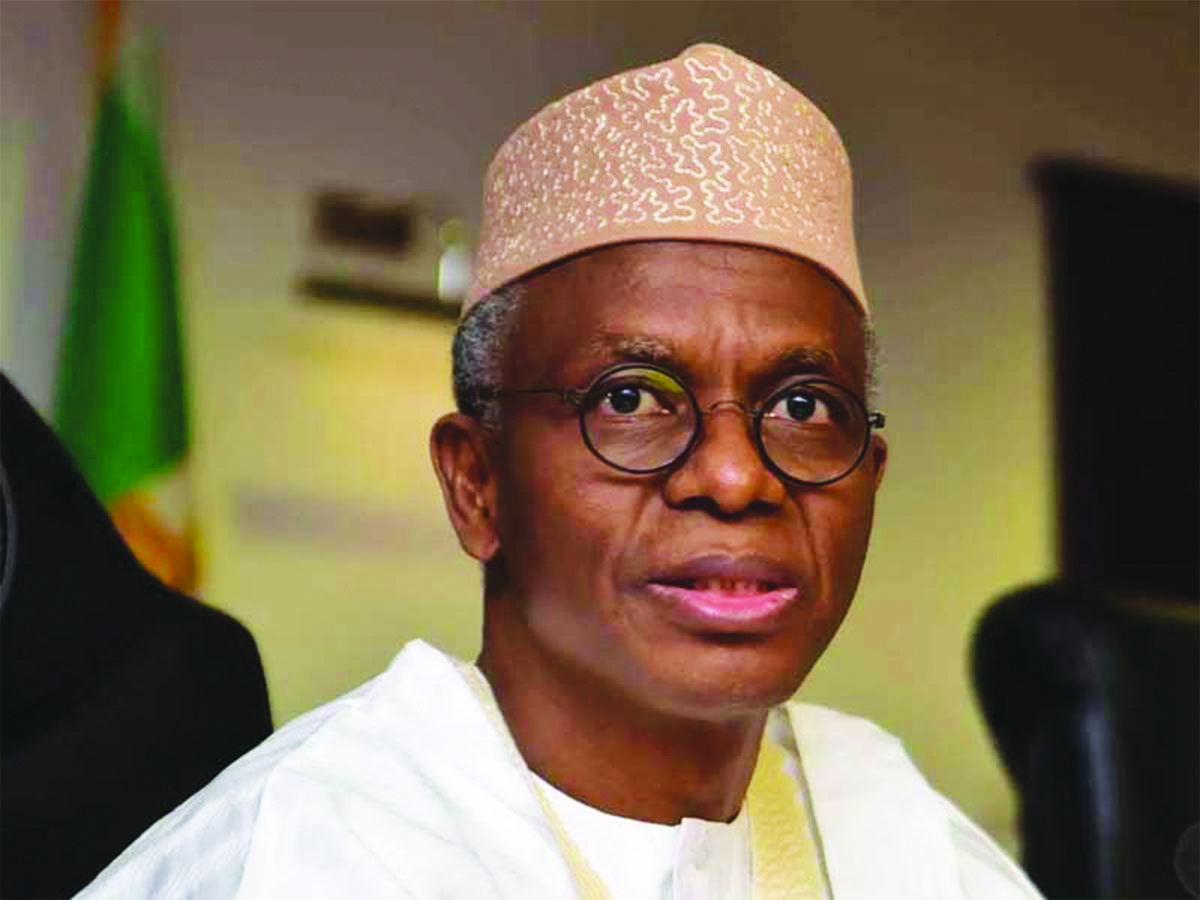
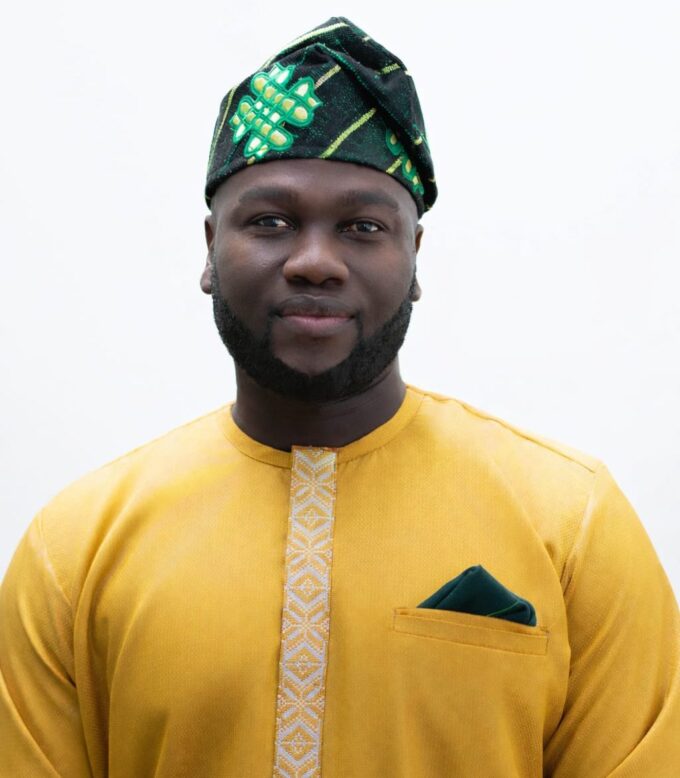
Ibrahim Jubril
When I wrote “Nasir El-Rufai: Judging Others, Evading Judgment,” I expected disagreement. What I did not anticipate was the near-theological fervour with which some of his admirers rejected its central claim: that the former governor’s long season of moral grandstanding had finally encountered institutional scrutiny, and that the arc of accountability he so confidently invoked against others was, however gradually, bending toward him.
My argument was straightforward. Mallam Nasir Ahmad El-Rufai, once the stern accuser in Nigeria’s moral courtroom, had become, at the very least, a subject of inquiry. The Kaduna State House of Assembly had concluded a probe into his eight-year administration, raising grave questions about financial management, debt accumulation, and procurement procedures. The House recommended further investigation by anti-corruption agencies. I noted that such referrals were neither trivial nor symbolic. His defenders dismissed this as fabrication. There was, they insisted, no formal process, no summons, no institutional development requiring his presence. Events have overtaken that denial.
The episode at the Nnamdi Azikiwe International Airport on Thursday, February 12, has now joined the catalogue of Nigerian political theatre. The former governor returned from Cairo. Almost immediately, his media aides announced that security operatives had “attempted to arrest” him. According to their account, he declined to accompany them in the absence of a formal invitation, and his international passport was seized from an aide. El-Rufai’s counsel characterised the incident as executive overreach, a constitutional violation, even an act of “stealing.”
The language was indignant, urgent, theatrical. Yet within that same defence lay a quieter admission: the Economic and Financial Crimes Commission (EFCC) had delivered an invitation to his residence in December 2025. Assurances of compliance had been conveyed. The commission had been informed that he would present himself voluntarily on February 16, 2026. There was, therefore, by his own camp’s acknowledgment, a subsisting invitation.
That fact is not incidental. In constitutional democracies, invitations from investigative agencies are not extraordinary. When a legislative body refers findings for further examination, agencies such as the EFCC or ICPC are obliged to seek clarification. It is equally routine, indeed prudent, for investigative bodies to coordinate with immigration authorities where there is concern that a person of interest may remain outside jurisdiction. Such administrative steps are not persecution; they are procedural safeguards.
Viewed in this light, the airport episode appeared less like ambush and more like choreography. If one has been formally invited to answer questions concerning public funds and public trust, and if compliance has already been promised, the dignified course is uncomplicated: present oneself and respond.
Instead, what unfolded bore the unmistakable imprint of spectacle. Before the ink of his passport stamp could dry, statements were circulating. Allegations of political persecution surfaced. A narrative of victimhood was activated with notable efficiency. In preceding weeks, the former governor had publicly suggested he might face politically motivated arrest upon his return. When operatives approached him at the airport, the groundwork for interpretation had already been laid.
It is this pre-emptive scripting that warrants reflection. For much of his public life, Nasir El-Rufai cultivated the image of the unyielding reformer. As minister and later as governor, he spoke with prosecutorial certainty about corruption and incompetence. He dismissed critics with clipped impatience. He governed with unmistakable firmness. Admirers called it resolve; detractors called it severity. His tenure was marked by contentious episodes that remain deeply debated in Nigeria’s public memory: security crises, clashes with activists and journalists, property demolitions defended as enforcement but criticised as vindictive. To his supporters, he was bold. To his opponents, he was abrasive and intolerant of dissent.
The purpose here is not to relitigate those chapters. It is to acknowledge the irony. A leader who once embodied an iron conception of executive authority now seeks refuge in the delicate language of procedural fragility. The man who rarely entertained pleas of victimhood now invokes constitutional vulnerability. History, one must concede, possesses a quiet sense of symmetry.
When the Kaduna State House of Assembly commenced its probe shortly after his exit from office, many observers were struck by the breadth and depth of its inquiry. The findings were detailed and sobering in tone. They recommended further investigation by anti-corruption agencies. Predictably, interpretations diverged. Supporters saw vendetta. Critics saw overdue reckoning.
Between these polarities stands a simpler democratic principle: no public official is immune from scrutiny.
As investigative processes reportedly advanced and former aides were questioned, the former governor’s prolonged absence from Nigeria drew attention. Absence, of course, is not guilt. Yet optics matter in public life. When questions arise about stewardship, presence conveys confidence. If, as his counsel confirms, he had been formally invited months earlier, a discreet return followed by voluntary appearance before investigators would have demonstrated composure and respect for process. Instead, the nation witnessed a confrontation at an airport terminal, swiftly reframed as persecution.
One must therefore ask: was this about safeguarding due process, or about shaping narrative? Nigerian political culture is familiar with this pattern. When influential figures face institutional scrutiny, two strategies often emerge. The first is legal: contest the process in court, challenge jurisdiction, demand documentation. That is legitimate and foundational to the rule of law. The second is theatrical: mobilise supporters, cast oneself as victim, suggest conspiracy. That is political. The former governor appears to be navigating both terrains.
It bears recalling that during his tenure, mercy was not a defining characteristic of his administrative style. Policies were enforced with vigour; urban renewal initiatives proceeded with little sentimental hesitation; opponents seldom encountered rhetorical indulgence. Many interpreted this as strength; others as rigidity. Whatever one’s view, it established a public persona of severity rather than suppleness. That context renders the present appeals to restraint particularly striking.
Let it be stated plainly: no citizen should suffer persecution. The rule of law protects even those who once wielded power without hesitation. But reciprocity is intrinsic to justice. If investigative agencies have issued invitations predicated on legislative findings, cooperation is not concession; it is civic duty.
The argument that he is being targeted for political dissent may animate partisan sympathies. Yet such claims do not answer the substantive questions raised by the legislative probe. Were public loans prudently contracted? Were procurement procedures faithfully observed? Were expenditures transparently accounted for? These are technical matters requiring documents, not declarations.
If the investigations are flawed, courts are available to adjudicate. If the legislative findings are inaccurate, they can be challenged through lawful channels. What does not advance clarity is public drama at points of entry.
Meanwhile, Kaduna State has moved into a new phase under different leadership. The current administration under a gentle achiever, Governor Uba Sani, has emphasised reconciliation, fiscal recalibration, and social cohesion. Under Senator Sani, Kaduna is enjoying a calmer political climate, less dominated by combative rhetoric. Whether this new direction achieves lasting transformation will be judged by time. Yet the shift underscores a perennial truth of governance: institutions outlive individuals.
Perhaps the most difficult transition for any former officeholder is from centrality to periphery. Power persuades its holder of indispensability. It fosters the illusion that history pauses in one’s absence. But democratic systems, however imperfect, continue. Governments change. Narratives evolve. Those who once commanded the stage must, eventually, answer questions from the wings.
Nasir El-Rufai remains entitled to the presumption of innocence. He is entitled to due process, legal counsel, and fair hearing. What he is not entitled to is exemption from scrutiny. The law, in its noblest conception, does not recognise hierarchy of accountability.
If he emerges from investigation vindicated, that outcome will strengthen institutional credibility. If administrative lapses are established, they must be addressed in accordance with law. Either way, the process, not the performance, should determine the verdict.
Nigeria’s democratic maturation depends less on personalities and more on procedures. It depends on whether public officials, past and present, submit to inquiry without recourse to spectacle. It depends on whether we can distinguish between persecution and prosecution, between grievance and accountability.
In my earlier article on El Rufai, I observed that the self-appointed judge had become subject to judgment. I repeat that observation now, not in triumph but in sober recognition of democratic symmetry. Public life is cyclical. Rhetoric meets record. Posture meets proof. Subterfuge, however skilfully staged, ultimately yields to institutional process.
The former governor stands at such a juncture. He may choose to confront inquiry with the same stern resolve he once demanded of others. Or he may continue to frame each procedural step as persecution. The choice will shape not only his legacy, but also the public’s confidence in our collective commitment to accountability. History, patient and unsentimental, is watching.
• Jubril, a developmental economist lives in Zaria, can be reached on ibroj63@gmail.com










Leave a comment