



•Urges Customs to beam searchlight on Grimaldi
By Steve Agbota
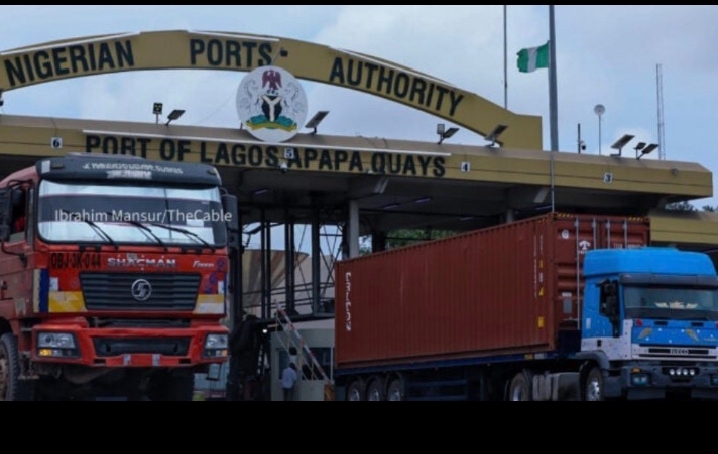
Principal Consultant at International Trade Advisory Services, Okey Ibeke, has alleged that Nigeria may have forfeited over $600 million in Customs duties and Value Added Tax (VAT) over the past three decades, driven by the illicit sale of empty import containers by foreign shipping companies operating in the country’s maritime sector. Ibeke, who stated this while addressing members of the Shipping Correspondence Association of Nigeria ( SCAN) in Apapa on Monday, called on the Nigeria Customs Service (NCS) to immediately suspend all sales of containers by Grimaldi Agency Nigeria and other shipping lines pending a full audit.
Ibeke’s intervention followed media reports that Grimaldi Agency Nigeria plans to sell over 2,500 empty containers to the Nigerian public. According to the reports, the sale terms are: $2,000 for a 40ft container and $1,600 for a 20ft container with buyers expected to make payments in U.S. dollars through domiciliary accounts. However, Ibeke said the arrangement raises concerns over compliance with Nigeria’s Customs regulations as well as ongoing efforts by the Federal Government and the Central Bank of Nigeria (CBN) to discourage the dollarisation of local transactions. “This is happening while the Federal Government, through the CBN and Ministry of Finance, is intensifying efforts to stabilise the Naira and stop the dollarisation of domestic transactions,” he said.
He argued that the core violation is not pricing, but legal status, adding that the containers are in Nigeria under “Temporary Import” status, meaning they were brought in to carry cargo and must be re-exported. Meanwhile, pointed out that such containers cannot be sold locally unless converted to permanent import through the Nigeria Customs Service and other legal procedures.
“Under the Nigeria Customs Service Act 2023 and Temporary Import Guidelines, conversion requires: application to NCS, customs valuation, payment of duties, VAT and levies into government accounts, and issuance of a release order. Only then can the container be sold legally in Nigeria, and the transaction must be in Naira unless the CBN grants an exemption. With Grimaldi, Step 5 is happening without Steps 1-4. That is illegal,” he added.
Using the 2026 Customs tariff for HS Code 86.09 — 5% import duty + 7.5% VAT + 0.5% ECOWAS ETLS + 4% FOB levy, Ibeke calculated that government loses $350-$400 in duties and taxes per $2,000 container if sold without conversion, saying for 2,500 units, the loss is $875,000 to $1,000,000 from one company in one transaction.
Extending the analysis, he said industry estimates show hundreds of thousands of containers have been sold locally over 30 years for use as shops, cold rooms, and building materials.
He added that if 250,000 containers were sold at an average $1,500 without duty payment, Nigeria lost over $375 million in duties and VAT, which is over N600 billion at current exchange rates.
He lamented that it is money that should fund roads, schools, hospitals, and debt service,” he said.
Ibeke said: “Grimaldi is not an isolated case. For 30 years, Maersk, MSC, CMA CGM, Hapag-Lloyd, COSCO, ONE, Evergreen, and PIL have operated in Nigerian ports under similar conditions,” he said.
However, he linked the problem to Nigeria’s trade imbalance where imports account for 75% of dry cargo while exports are just 15%.
“With oil and minerals making up 70% of exports but not containerized, ships arrive full but leave 97% empty. The cost of repatriating empties is between $2,000 and $4,000 per 20ft container, which incentivizes shipping lines to abandon or sell them locally,” he added.
Ibeke also highlighted complaints from importers and freight forwarders, including arbitrary demurrage and detention charges billed in dollars, delayed refund of container deposits, forced use of nominated transporters and withholding of shipping documents until local charges are settled.
He cited provisions of the Nigeria Customs Service Act 2023, the CBN Foreign Exchange Manual, Nigerian Ports Authority temporary import guidelines and Nigerian Shippers’ Council regulations as legal frameworks allegedly being breached by the practice.
“NCS Act 2023, Section 36 states that Temporary goods must be re-exported or converted with duty paid. Sections 245, 248 & 249 give Customs powers to detain, seize, and impose penalties.
“CBN FX Regulations: FX Manual 2018, Paragraph 9.01 mandates Naira for all domestic transactions except with exemption. Domiciliary accounts are for foreign inflows, not local payments. NPA Temporary Import Guidelines Require reconciliation of containers on exit or conversion. Nigerian Shippers’ Council Regulations 2015: Mandate Naira for local charges and penalize unfair practices,” he explained.
He, therefore, urged the Customs to suspend all sales of Grimaldi and other shipping line containers pending investigation.
He also charged the NCS to carry out a system-wide audit of shipping lines and agents operating in Nigerian ports from 2006 and reconcile port exit records with Customs import data to determine the number of containers that were either re-exported, converted legally or disposed of without approval.
The consultant also called for the recovery of all outstanding duties, taxes, levies and penalties from operators found to have violated Customs regulations.
“This is not about driving away investors. It is about enforcing the law and protecting Nigeria’s revenue”, he said.
















Leave a comment