



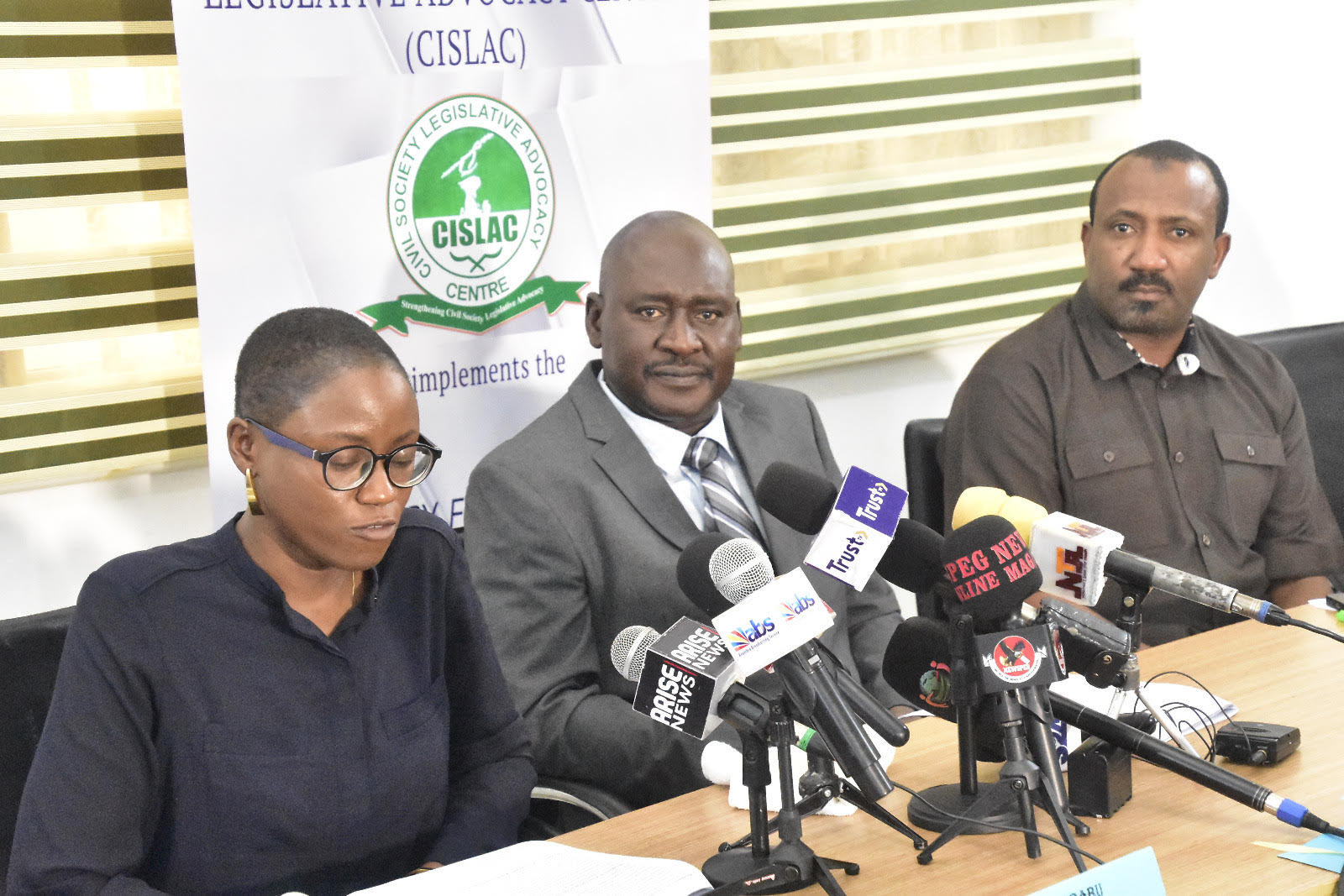
Nigeria’s struggle with corruption seemingly remains stubbornly unresolved, despite years of reforms, prosecutions and policy pledges. The 2025 Corruption Perceptions Index (CPI) recently released by Transparency International, through its Nigerian chapter, the Civil Society Legislative Advocacy Centre (CISLAC), shows that the country has once again failed to make meaningful progress, retaining a score of 26 out of 100 while slipping further down the global rankings. While isolated gains in asset recovery and financial oversight signal cautious improvement, entrenched weaknesses in the judiciary, legislature, security, oil, power and electoral systems continue to undermine public trust and democratic accountability. Chiemelie Ezeobi reports
Nigeria’s long and difficult battle against corruption has once again been laid bare, following the release of the 2025 Corruption Perceptions Index (CPI) by Transparency International (TI), through its Nigerian chapter, the Civil Society Legislative Advocacy Centre (CISLAC). The index paints a troubling picture of stagnation, even as isolated gains struggle to offset entrenched systemic weaknesses.
In the 2025 assessment, Nigeria scored 26 out of 100, retaining the same score recorded the previous year. More concerning, however, is the country’s slip on the global ranking table, dropping from 140th in 2024 to 142nd out of 180 countries. For a nation that has repeatedly declared corruption a national emergency, the results underscore how far rhetoric still outpaces reform.
While the CPI does not measure individual corruption cases, it reflects the prevailing perception of corruption among country experts and businesspeople, drawing from data compiled by ten independent and reputable global institutions. It remains the most widely recognised comparative index of public sector corruption worldwide.
Understanding What the CPI Measures and What It Does Not
CISLAC/TI-Nigeria is careful to clarify that the CPI is not an evaluation of Nigeria’s anti-corruption agencies. Rather, it is a perception-based index grounded in rigorous research conducted by institutions such as the World Bank, the African Development Bank, the Economist Intelligence Unit and the World Justice Project.
According to Auwal Ibrahim Musa (Rafsanjani), Executive Director of CISLAC, the index is widely relied upon by governments, investors, civil society organisations and development partners to guide policy, assess risk and shape governance reforms. As such, Nigeria’s stagnant score is not merely symbolic; it has real implications for investment confidence, public trust and democratic legitimacy.
Despite this sobering outcome, CISLAC notes that there are pockets of progress which, if strengthened, could serve as foundations for broader reform
Asset Recovery Gains Signal Progress, but Transparency Remains Key
One of the most notable positive developments highlighted in the CPI analysis is Nigeria’s improvement in asset recovery efforts. According to official figures, the Economic and Financial Crimes Commission (EFCC) recovered over ₦566 billion and $411 million, alongside 1,502 properties, between October 2023 and September 2025. These recoveries point to sustained enforcement efforts against illicit financial flows.
Similarly, the Independent Corrupt Practices and Other Related Offences Commission (ICPC) reported recoveries amounting to ₦37.44 billion and $2.353 million in 2025 through seizures and forfeitures.
On the international front, Nigeria secured an agreement in January 2026 with the UK Crown Dependency of Jersey for the repatriation of over $9.5 million in corruption-linked assets, earmarked for infrastructure projects such as the Abuja–Kano Road.
While these gains reflect growing international cooperation and enforcement capacity, CISLAC stresses that transparent and effective management of recovered assets remains essential if these efforts are to translate into tangible benefits for citizens.
FATF Grey List Exit and the Role of Civil Society
Another bright spot is Nigeria’s exit from the Financial Action Task Force (FATF) grey list in October 2025, after two years of enhanced monitoring. The delisting followed the successful implementation of a 19-point action plan, strengthening the country’s Anti-Money Laundering and Countering the Financing of Terrorism (AML/CFT) frameworks.
Equally significant is the continued role of civil society organisations and investigative journalists in exposing corruption and demanding accountability. CISLAC acknowledges that media advocacy and civic engagement remain indispensable pillars of Nigeria’s democracy, often serving as the last line of defence against abuse of power.
When Judicial Corruption and Legislative Scandals Undermine Public Trust
Despite these positives, the CPI analysis identifies deep-seated weaknesses that continue to erode Nigeria’s anti-corruption drive.
Judicial corruption remains a persistent concern. Allegations of bias, nepotism and undue influence within the judiciary have been publicly acknowledged, even at the highest levels. The Nigerian Bar Association has repeatedly warned that corruption within the courts threatens democracy and social justice, while concerns persist over politically influenced judicial appointments.
The legislature has also come under intense scrutiny. Investigations published in January 2025 revealed alleged bribery schemes involving federal lawmakers extorting funds from universities to approve budget allocations.
Further allegations emerged in August 2025, when a serving lawmaker publicly claimed that bribes ranging from ₦1 million to ₦3 million were demanded to present motions and bills on the floor of the House of Representatives.
These scandals, CISLAC notes, are not only damaging to Nigeria’s image but corrosive to democratic governance.
Oil Theft, Budget Manipulation and Sectoral Corruption
Corruption in Nigeria’s oil sector continues to exact a heavy toll. The 2022 Auditor-General’s report, published in September 2025, revealed that the Nigerian National Petroleum Company Limited (NNPCL) failed to account for ₦22.3 billion, $49.7 million, £14.3 million and €5.2 million. Weak internal controls, abandoned projects and irregular contracts featured prominently in the audit findings.
Beyond oil, corruption in the power sector has persisted despite tariff increases and heavy public investment. The Auditor-General’s 2025 report alleged the misappropriation of ₦128 billion by the Ministry of Power and the Nigerian Bulk Electricity Trading Plc, even as the national grid continues to suffer repeated collapses.
Concerns have also been raised over procurement fraud and budgetary corruption, particularly following revelations by BudgIT that ₦6.93 trillion worth of questionable projects were allegedly inserted into the 2025 national budget by the National Assembly.
Democratic Decline, Shrinking Civic Space and Security Sector Abuse
As Nigeria approaches the 2027 general election, CISLAC warns of a weakening opposition, rising political defections and growing resistance to electoral reforms, including the rejection of mandatory electronic transmission of results.
At the same time, civic space is shrinking. Journalists, activists and whistleblowers face increasing intimidation through repressive laws and strategic lawsuits. According to Media Rights Agenda, 86 attacks on journalists and media organisations were recorded in 2025 alone.
Corruption within the security sector further compounds Nigeria’s challenges, undermining responses to insurgency, banditry and communal violence, while eroding public trust.
A Reform Agenda That Demands Political Will
In its recommendations, CISLAC calls for the independence of anti-corruption agencies, transparent judicial appointments, security sector accountability, full digitisation of procurement processes, protection for whistleblowers, and the strengthening of electoral laws.
The organisation reiterates its readiness to collaborate with relevant institutions to advance national interest and accountability.
As stated in the concluding declaration signed by Auwal Ibrahim Musa (Rafsanjani), Executive Director of CISLAC, the organisation remains committed to working with all stakeholders “to make Nigeria better for the interest of the Nation”.
For now, Nigeria’s CPI score of 26 serves as a stark reminder that while progress is possible, the fight against corruption remains far from won.













Leave a comment