



Children Leaves Them Unprepared for Real World
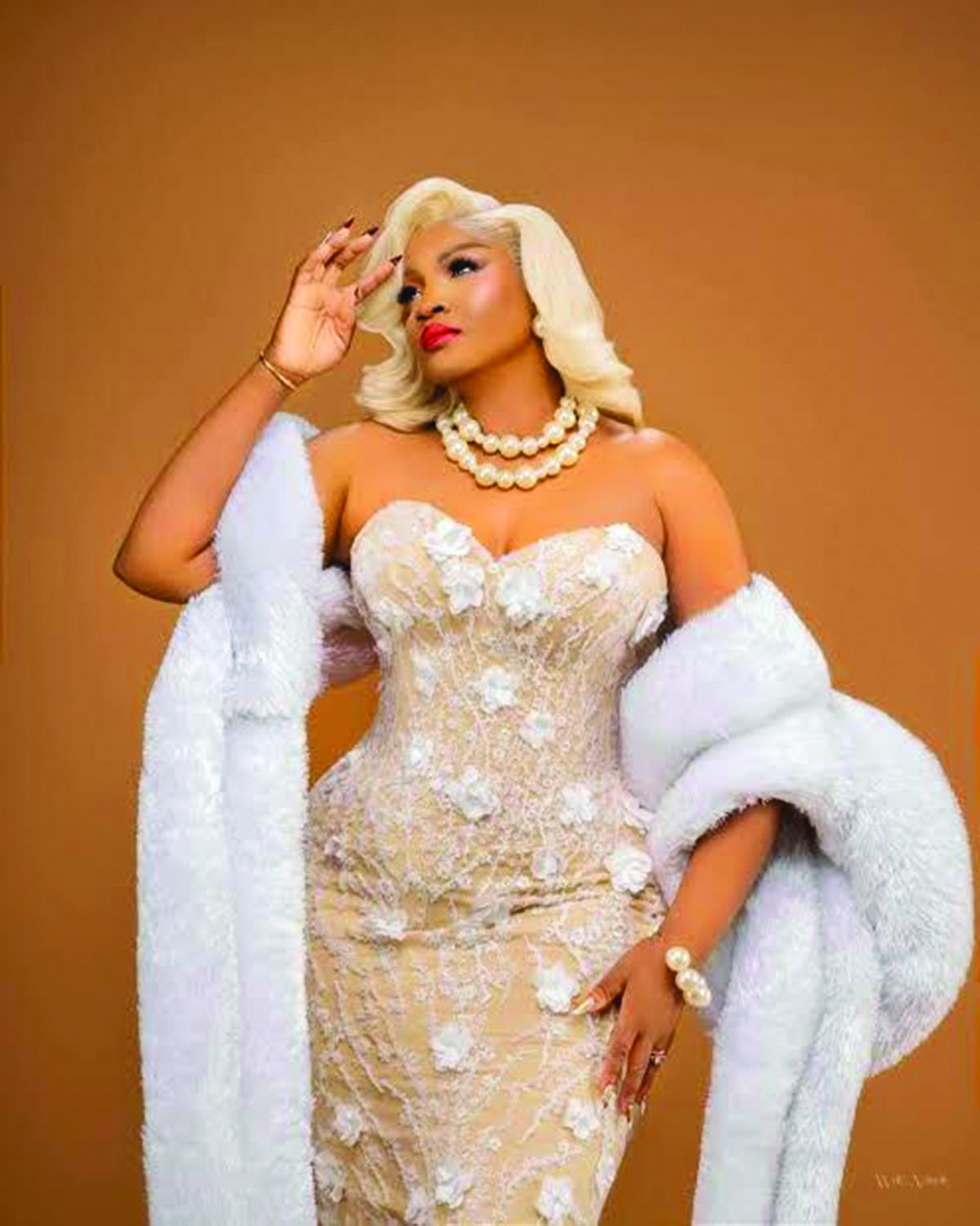
It is not often that you see veteran Nollywood actress Omotola Jalade-Ekeinde make the news. But whenever she does appear, she comes with purpose, much like she did recently, reflecting on her remarkable career. It’s been three storied decades of her journey in the industry and the wife and beautiful mother of four is marking the occasion with her directorial debut – Mother’s Love – released on March 6, coinciding with the period of International Women’s Day 2026. Omotola speaks on her transition from acting to directing. She touched on her character, Labake while highlighting the personal and cultural significance of her latest project which explores the complex bonds between mothers and first daughters. Ferdinand Ekechukwu brings the excerpts:
What specific moment or experience made you realise this story needed to be told?
I visited Nigeria in December 2023 for Christmas, and a very beautiful friend of mine, Ruth Kadiri, a big deal in the YouTube ecosystem, mooted the idea of making a feature film to me. I had organised TEFFEST (The Entertainment Fair and Festival) in 2019, partnering with YouTube and Google, and she wondered why I hadn’t jumped on the current YouTube wave. In her words, “you pioneered this whole movement at some point. We’re doing very well in it now, and you’re not even a part of it”. I told her that I had only travelled home for a vacation, but she insisted that I produce a film, and she was persistent about it. So in March 2024, I consulted my team and discussed the feasibility of shooting a made-for-YouTube film. To my shock, we completed shooting in four days, despite enormous problems. That shocked me, because I didn’t think it was possible. Ultimately, I challenged my team to produce a feature that would go to cinemas. I decided to focus on a simple story. The first thing that came to my heart was a story about the mother-daughter dynamic, a story I’ve always wanted to tell. In previous iterations of Nollywood, we often showed crying mothers. I wanted to show a different kind of mother. My mother was very independent and very strong. I wanted to show that type of woman. I also drew energy from myself, as a mother, and from my own relationship with my first daughter, which in itself is very complicated. Having experienced these intergenerational complexities at both ends, I realised one common theme playing out: with first daughters, mothers always feel like they need to be extremely strict, because first daughters “lead” the others.
Part of the story is set against the backdrop of the National Youth Service Corps, an integral part of youth development and career trajectory. Was it a random decision, or was it something pivotal?
No, it’s just creative license. The weaving of the National Youth Service into the plot went with the theme of how she (her younger character) would have been able to start living anyway. Because the girl in the story was so sheltered, it was the easiest scenario where she’d be able to meet a boy from the other side of the tracks. We were trying to highlight the theme of parents who over-shelter their kids. They think they are doing something great for them, but in essence, they are not preparing them for the outside world. That’s another story, with so many other subjects that would have been nice to touch on.
How did the geography and local communities influence the story you were telling considering that the film was shot across various Nigerian locations?
The locations were very important, because the story itself is juxtaposition: we were working with two extremes, the very rich and the extremely poor. In Nigeria, to be precise, the very rich live on Banana Island. And the interesting part is, just across the ocean and the bridge; you have the Makoko community, which is known worldwide as a squalid settlement. So I thought it was very important for us to shoot there. The dynamic was important: on one end of the ocean is extreme wealth, and on the other end is extreme poverty. So what are the odds that a child with a privileged background and a child from humble beginnings could meet in school, interact, and then fall in love? That contrast is central to the story. When you watch the movie, you will see that we play with people’s perceptions. There is often a belief that when you are from that kind of background, you must be unscrupulous or streetwise. But in this film, you will find a very different kind of person, which we do not show enough in Nigerian cinema.
What surprised you most about the transition from actress to director?
I have worked as a co-director on other people’s projects and served as a consultant on several movies, so I have previously been involved behind the scenes. But this was different. This was totally my own project, and that meant full responsibility. And, as I mentioned earlier, considering how I even got started on this project, everything was on the mark. I did not have much time to think. Everything had to move quickly, and I had to stay on my feet. Shooting in Nigeria at the time added to the pressure. The national power grid had shut down, at least in Lagos, if not across the country, so there was almost no electricity. Then there was fuel scarcity, so we had to buy black-market fuel to keep things running. All this was happening while I did not have the luxury of months of pre-production. I had to keep thinking on my feet, making decisions as I went. I was both producer and director, so the pressure was immense. When I compare directing to acting, to be honest, I found that I actually preferred being a director. I felt more comfortable in that role, as if I was made for it. Ironically, what made things even tougher was the acting. Initially, I was not supposed to act in the film — we had cast another actress — but after we reviewed the final script, everyone insisted that I play the role. That added another layer of pressure, because I had already planned the production with the other actress in mind. Having to step into the role forced me to re-adjust everything. It even got to a point where I would forget I was acting in the movie. I was handling so many things that people would suddenly come up to me and say, “Director, your scene is ready”, and I would have to run off, do my makeup, and rush back to set.
Has this experience changed your perspective on the stories you wanted to tell? Has it shaped or influenced the sort of stories you will focus on from here on and what is next for you as a filmmaker?
I have always been drawn to human stories. Even as an actor, I have consistently been part of projects that centre on human struggles and experiences, such as films like Alter Ego (2017), Lockdown (2021), and Ije (2010). I am very particular about the kind of movies I choose to work on, and that will not change. What this experience has done, however, is make me lean even more towards true-life stories, the kinds that have the power to influence or even change the future. At this point, I feel more comfortable telling stories inspired by real events or real people. I feel more connected to them, and I believe they resonate more deeply. Going forward, I am inclined to pursue stories like these in my own projects.
What do you hope local and international audiences take away from this film about contemporary Nigerian women, particularly those from privileged backgrounds who are questioning their place in society?
I think what audiences can take away from Mother’s Love, especially when it comes to contemporary women, is the understanding that women are flexible. There is no universally singular definition of what it means to be a woman. First and foremost, women are multi-tasking, and we are also multi-thinkers. In other words, we can adjust to whatever situation we find ourselves in. Most importantly, women are also very wise. We know when it is time to pivot. That is exactly what happens with my character, Labake. When it was time for her to switch, she did it so seamlessly you would almost not notice, but she knew that if she did not pivot, she would lose everything. So, I think it is about recognising that we know when to be a wife, and we know when to be a mother. We may not always get it right at first, but if we are given the opportunity, we will adjust and eventually get it right. People often think that independent or contemporary women cannot fulfill traditional roles in the African context. The assumption is that you are either one thing or the other, either “tough” or “homely”. But that is not true. You can be all of it. You can be both soft and nurturing, and yet career-driven. You can take care of your home while also being sensitive, ambitious, and successful. It is possible. I know because I am an example of that balance.
Stories abound about women in Nollywood, who were on an upward trajectory, and then after a while, motherhood comes in the way, and they step back for some time. Then the blogs start asking, “What happened to this person?”
It is tough, it is not easy, but it is possible. My message to my colleagues who have gone through that is this: it’s never too late. Come back whenever you are ready. Take the time you need to do whatever is essential to you, because everybody’s journey is different. I also don’t like the pressure that people put on women to fit into one narrative. If a woman needs to step away for a while to take care of her children, then that is what she needs to do. I step away from the media sometimes, too. I do it intentionally, and people ask, “Omotola, where are you?” But for me, it’s about prioritising my mental health. As women, it’s not easy to balance taking care of a man, a home, and children with maintaining a career. So take the time you need, and when you are ready, come back. Your spot will always be there waiting for you. Nobody else can take it.
What influenced your decision to work with emerging talent like we see in the cast, since they are relatively young and from a different generation?
Lilian (Afegbai) is doing very well now; so her talent is not in doubt. Nosa (Rex) is doing very well on YouTube, and we needed him for his comedic prowess. Noray (Nehita) is relatively new; she’s only done a few projects, but we also needed someone who looked like me. When I saw her, that was the first thing, because the casting had to be believable. She needed a lot of grooming, but she worked very hard and caught up quickly. In my generation, we came in with passion and were very particular about discipline, which is not very easy to come by with the new actors now. So I tend to avoid those who lack a work ethic. I don’t care about popularity. I believe my name can carry a project. For me, it was important to find the right cast, to find disciplined actors, and to showcase people whom, as an actor myself, I would be proud to present to the world. So, it was not just about their acting, even though that was very important, but also about their personalities and how serious they are as artists.














Leave a comment