



By Merit Ibe
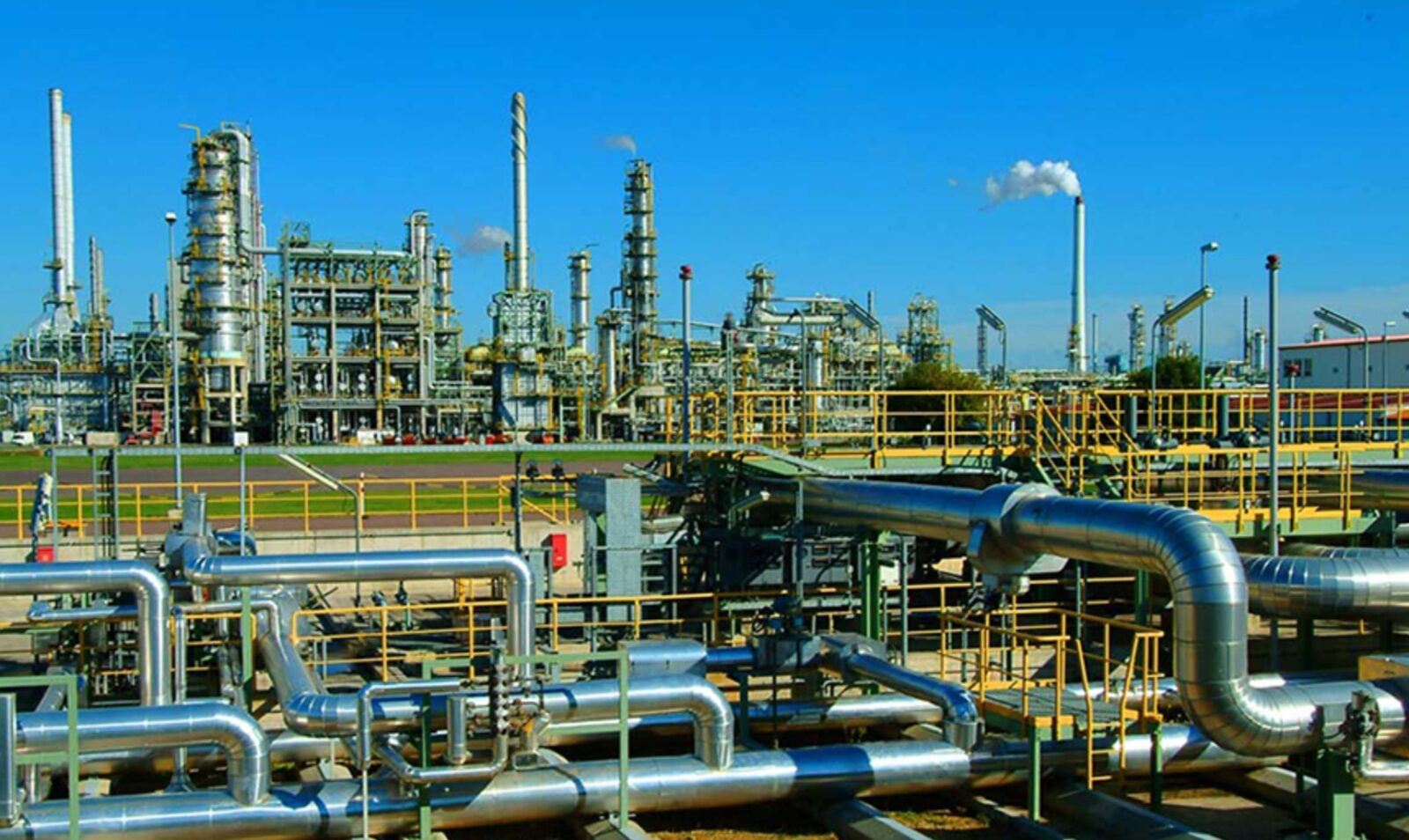
The Ajaokuta Steel Complex (ASC) in Kogi State is 46 years old. But rather than celebrate, Nigerians are weeping as the complex lies prostrate atop a 24,000-hectare sprawling greenfield.
Described as the biggest white elephant project in Nigeria, the enterprise has not lived to its vision and mission; no thanks to institutionalised corruption and terrible bureaucratic and legal hurdles that cripple government outfits in Nigeria.
Nigerians worry about the propensity of successive administrations to use the ASC as a conduit to loot the treasury, rather than a fulcrum to build the needed infrastructure for the nation.
ASC was envisioned to help address Nigeria’s infrastructure nightmare and provide 10,000 direct jobs as well as 500,000 indirect employment opportunities in the first of the three phases. It was also envisaged to have a multiplier effect on agriculture, transportation, mining, maritime and other sectors.
It was conceived after a Soviet survey team discovered iron ore deposits in Itakpe and in 1975, a contract was signed between the Nigerian government and the Soviet state-owned company, Tiaj Prom Export (TPE).
But 46 years down the line, the company itself has become Nigeria’s nightmare, gulping billions of naira on a regular basis with little or nothing to show for it.
South Korea, which started its steel factories around the same time with ASCL, has become a fully industrialised nation, posting an annual revenue of over $60 billion and a staff strength of well over 65,000 by 2019.
After several failed attempts at privatisation from 2003 till 2015, the federal government took back control in 2016 from a concessionaire and returned to paying salaries and benefits to its redundant workforce.
While previous privatisation efforts failed, experts insist it remains the best road to tread especially if done transparently without traces of opacity.
According to them, the complex is too vital to fail, especially when the ancillary projects around it are considered.
As an integrated mill, it has an iron mining company at Itakpe, Kogi State; steel rolling mills in Jos, Plateau State; Katsina; Osogbo, Osun State and the Delta Steel Company in Ovwian-Aladja, Delta State.
For most Nigerians, the non-completion of the complex is a major contributor to the economy’s continued backwardness in terms of infrastructure, manufacturing, job creation and export.
In spite of Nigeria’s vast natural endowments in iron ore, limestone and coal, President Bola Tinubu recently decried during a steel summit that Nigeria imports over 90 per cent of the steel it consumed, which in cost is about 4 billion dollars annually.
Ajaokuta steel has the capacity to become a major producer of industrial machineries, auto-electrical spare-parts, shipbuilding, railways and carriages.
The steel plant can provide direct employment for over 10,000 technical staff and indirect 500,000 for unskilled upstream and downstream employment and foreign exchange earnings if ASC and others can come on stream.
However, despite the ugly history, in a recent steel summit in Nigeria, the Minister of Steel Development, Shuiab Audu, promised that Tinubu’s administration would reposition the steel industry as a driver of industrialisation and economic diversification.
The minister acknowledged that Nigeria was endowed with steel-making raw materials, but was yet to fully exploit its potential for industrial development due to absence of operational integrated steel plants as off-takers.
He said Tinubu’s administration has shown willingness to address the protracted challenges and reposition the steel industry to become a viable sector.
“I stand before you today to declare that we will rethink, retool, and revitalise Nigeria’s steel sector.”
But, some experts suggest that the facility be ceded to the private sector instead of the government.
The belief is that the government is to provide an enabling environment while the private sector will better manage the businesses.
Despite years of investment and multiple failed attempts to get the complex to operate, the government is still working to revitalise it.
Past administrations for decades, have made promises to revitalise, complete and concession efforts, which failed. The question is ; do we believe this administration will walk its talk or things will go like other administrations.
Also, several attempts to concession the ASC ended in corruption scandals, asset stripping and litigation.
Ajaokuta Steel has been ceded multiple times in concession agreements, most notably to Global Steel Holdings Limited (GSHL) (an Indian firm) in 2004, but these were largely terminated due to disputes and accusations of asset stripping and corruption. After years of legal battles and a modified agreement, the Federal Government took back control of Ajaokuta Steel in 2016, while ceding the National Iron Ore Mining Company (NIOMCO) at Itakpe to GSHL to resolve the dispute. The Federal Government maintains ownership of Ajaokuta Steel but has not successfully revitalised it, and is seeking Chinese partners for its refurbishment.
Experts believe that the pragmatic way forward is to privatise it transparently, since several moves to revive failed, leaving the multibillion-dollar complex idle, since these companies have been huge drainage pipes of corruption over the past several decades.
They have gulped whatever resources that have been pumped into them without generating anything.
The Manufacturers Association of Nigeria (MAN), estimates that the country has spent over $8 billion on the idle steel complex without kick-starting production.
Historically, operational inefficiencies and unrealised potential have hindered Nigeria’s progress, but the country is uniquely positioned to make a significant leap in the steel market with a strong political will.
David Etim, Project Implementation Team Leader of the Calabar and Gulf of Guinea Municipal and Trade Centre Limited By Guarantee emphasised the place of steel sovereignty in any vibrant economy.
Etim believes that the private sector should be the driver of industrialization.
“Yes, the government should create policies and an enabling environment. But it is the private sector that must step up and move into that steel sector and convert our iron ore and other minerals into steel and then deploy it in industries.”Steel is the bedrock of industrialisation.
Any country that wants to industrialize seriously must first and foremost address local steel production.”
He cited the case of American President Donald Trump, who bought over a steel mill.
“Trump made a big deal about Nippon Steel, buying over a steel mill in America for what steel sovereignty can do to an economy.
He was trying to achieve steel sovereignty and secure the economy.
“Now, what the president has stated about wanting to reposition the steel industry is extremely critical for industrialisation.
“Nigeria has tremendous potential for steel manufacturing, but over the years, the steel development was politicised and actually used as a pipeline to siphon money out of Nigeria. So that is why it has not worked.
“Steel sovereignty is a critical component of economic dependence.
Almost everything around you has a steel component in it. With the development of the steel sector, you will also have things like aluminum, titanium, which are critical minerals for vehicle manufacture for industries.
“If you look at the full spectrum of industrialisation, steel is the bedrock. It cannot be overemphasised that we have to address our steel sector.
“Personally, I don’t think that government should be the driver of industrialisation.
“On the report that 90% of our steel is currently imported, the same way most of our food products are imported. We have the land, we have everything, but we are still importing food. Why?”
He noted that the issue of food sovereignty is critical just like the issue of steel sovereignty is critical.
“We may not achieve 100%, but we should not be dependent on imports. We have everything in the country to produce that steel, feed ourselves. We have the soil, sun, manpower, everything, but we are just not doing it.
“This administration has to address critical components of sovereignty. The government should focus on policy, provide the enabling environment, and then allow capital to flow to drive the process.
“The truth is that local industries, entrepreneurs, and businesses will initiate that process. Foreign direct investment will not flow into Nigeria to trigger our steel development. “We must trigger our steel development and, in our success, foreigners will see and then they will come.”
He noted that the issue with the steel sector is not policy, since policies already exist. “It’s the politics that has played out over the years that has slowed down the project. The government should now just provide the enabling environment and allow the private sector to make the investment. When the private sector makes the investment, there will be action, because private capital does not accommodate delinquency. The reason why Ajaokuta, Itakpe, and others are hanging is because it is government money. No private sector investor will see his money hanging and sleep. Private sector capital does not die. But government money, nobody cares. The private sector is the driver of industrialisation, not government. The government should allow the private sector to be the driver. You sit in the vehicle, make the policies, create the enabling environment, but allow the private sector to hold the steering and drive the vehicle, that’s what we are saying.”
Daniel Dickson-Okezie, SME expert and member of the Lagos Chamber of Commerce and Industry (LCCI), stated that the challenge with past governments in reviving the steel industry is that “they kept handing over Ajaokuta Steel to the wrong people.” He stressed that, going forward, the current administration must be deliberate about reviving the sector. “The government must get the experts, the right and reliable partners, to manage the process of reviving the steel industry.”
He recalled that in the early 1980s, President Shehu Shagari’s government took a bold step to set up the steel industry as part of Nigeria’s technological take-off. “The idea then was for Nigeria to be industrialised, and no nation can be industrialised without a robust steel sector. Shagari’s government even sent many Nigerians to Russia for training, because the Russians were deeply involved in Ajaokuta Steel. Unfortunately, when the military government of Muhammadu Buhari took over in late 1983, they brought these industries and the development of the steel sector to a halt. That was when the problem with the steel industry really began. Several governments, both military and civilian, promised to revive the sector, particularly Ajaokuta Steel, which was over 80 percent completed before the military intervened again in the Second Republic. Till date, it has remained a story.”
Dickson-Okezie expressed doubt about the Tinubu administration’s capacity to fix the project, citing past experiences with the refineries. “Tinubu has promised to revive the steel sector. This is possible if the government remains focused and does the needful. But the question now is whether Tinubu’s government can achieve that. We have already seen our experience with the revival of Nigerian refineries—policy somersaults and implementation hiccups. With this experience, it’s doubtful whether this government can get the steel industry back on track within its remaining tenure.”
He lamented that Nigeria continues to import cars and other goods, while some African countries and Asian nations are now producing and exporting. “A robust steel sector will jump-start Nigeria’s economic development. Then we can export many of the materials we currently import. We will earn foreign exchange, create employment, and boost the economy. The steel industry will significantly raise employment levels. These are the benefits we expect from having a strong steel sector—but whether this government can deliver remains to be seen. The challenge with past governments is that they kept handing Ajaokuta Steel to the wrong people. This administration must be intentional and committed in reviving the steel sector for good. Only then will it truly jump-start the economy.”











Leave a comment