



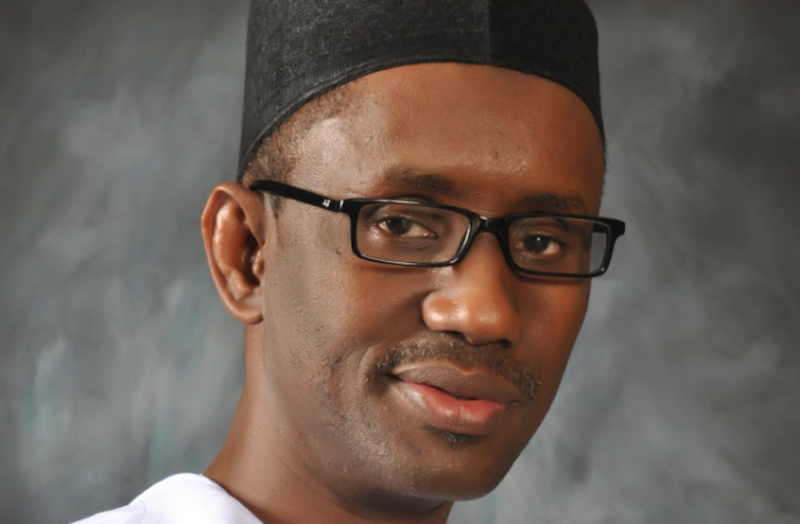
Nuhu Ribadu, national security adviser,is making a difference, argues JUDE OBIOHA
When President Bola Ahmed Tinubu appointed Malam Nuhu Ribadu as National Security Adviser (NSA) in June 2023, the reaction was swift and mixed. Some critics lamented the departure from the traditional norm of appointing military generals to the role. But for many Nigerians—particularly within civil society, the intelligence community, and security policy circles—the appointment marked a bold, progressive shift. It was a strategic signal that Nigeria was finally ready to recalibrate its national security architecture, placing human security and intelligence-led policing at its core.
Ribadu’s background was a refreshing departure from the past. A former top-tier police officer who rose to the rank of Deputy Inspector-General (DIG) and the pioneer Executive Chairman of the Economic and Financial Crimes Commission (EFCC), Ribadu brought with him deep institutional memory, investigative acumen, and intelligence experience. His appointment symbolised the fusion of traditional state security with modern human security principles— bridging the gap between civilian oversight and military-led operations. When he assumed office, Ribadu inherited one of the most complex and multifaceted security crises in Nigeria’s history.
In the Northeast, Boko Haram and Islamic State in West Africa (ISWAP) continued to pose serious threats. The Northwest struggled with ruthless banditry and gun violence. In the North Central, farmer-herder conflicts persisted. The Southeast experienced secessionist movements led by the Indigenous People of Biafra (IPOB). The South-South simmered with latent militancy and oil theft, while the Southwest faced sporadic ritual killings and kidnappings. It was a perfect storm. But Ribadu did not flinch. Rather than resort to rhetoric or blame games, he opted for a strategic, intelligence-led approach. He assembled a robust team of professionals, synergised operations among agencies, and focused on delivering measurable results. Within two years, significant progress has been recorded across multiple flashpoints.
One of Ribadu’s most significant achievements has been restoring relative peace in previously volatile regions. Southern Kaduna, once a hotbed of killings and abductions, is experiencing a calm that residents say hasn’t been felt in years. Zamfara, which was effectively under siege before Tinubu’s administration, is now gradually regaining stability. Even in the Southeast— where sit-at-home orders once paralysed states and “unknown gunmen” targeted security operatives—normalcy is returning.
Ribadu has also made gains in tackling oil theft and militancy in the South-South. For the first time in over a decade, Nigeria’s crude oil production is meeting and even exceeding its OPEC quota, rising from one million barrels per day to 1.7 million. This resurgence in output is directly linked to better maritime security, reduced sabotage of oil installations, and a relatively stable Niger Delta region. The Southwest, too, has seen a sharp drop in herder-farmer clashes and ritual killings. The feared Abuja-Kaduna expressway, once a hunting ground for kidnappers, has seen a marked improvement in safety and accessibility.
In a recent briefing, Ribadu outlined his achievements, including the suppression of large-scale terrorist attacks, the prevention of mass abductions, and the neutralisation of notorious bandit leaders like Kachalla Ali Kawaje, Kachalla Halilu Sububu, and Kachalla Damina. According to him, Boko Haram activities have dropped by 8% in recent times, and only 16% of the total 394 terrorist attacks in 2023 occurred under the Tinubu administration.
These are not just statistics. They represent real lives saved, territories regained, and a nation slowly clawing its way back to safety. Public affairs analyst Reno Omokri highlighted these tangible improvements, asking pertinent questions: “When was the last time you heard of a school abduction? Or a bombing of the Abuja-Kaduna railway? Have you seen the people of Southern Kaduna complaining? What about jailbreaks by terrorists freeing their colleagues?” He also pointed out that more than 100 police stations in the Southeast that were shut during the previous administration have now reopened, enabling better community policing. Oil theft has dropped to under 2%, and peace initiatives like the Ogoniland clean-up and establishment of a new polytechnic are gaining traction.
These security gains are not happening in isolation—they have economic reverberations. Nigeria’s GDP has increased by $67 billion in two years, jumping from ₦269.29 trillion to ₦372.8 trillion. The International Monetary Fund (IMF) has raised Nigeria’s growth forecast from 3.0% to 3.4%. The administration has also reduced the national debt from $113.7 billion to $97.1 billion, helped in part by efforts to curb illicit financial flows such as the $20 billion outflow attributed to Binance. What Ribadu has brought to Nigeria’s security space is more than leadership. He represents a shift from brute force to brain force—from reactive crisis management to proactive intelligence gathering and multisectoral collaboration.
His background in anti-corruption, law enforcement, and intelligence has enabled him to design and implement a security framework that prioritises synergy, speed, and results. Importantly, Ribadu sees security not as a military campaign alone, but as a whole-of-society effort. His understanding of civil-military relations, community engagement, and non-kinetic approaches has made it possible to achieve peace in places where bullets and bombs have failed. Nigeria’s security challenges are far from over. The country still faces several existential threats, especially from Islamic terrorists in the northeast, banditry in the northwest and criminals masquerading as Biafra activists in the southeast.
But, even then, for the first time in a long while, citizens can feel the presence of a coordinated, purposeful, and people-oriented security apparatus. Under Ribadu’s leadership, what we are witnessing is not just a tactical shift but a strategic realignment—one that understands security not merely as a military endeavour but as a multidimensional issue involving governance, intelligence, socio-economic development, and trust-building. Still, challenges persist—from the evolving tactics of non-state actors, to the socio-economic conditions that fuel unrest, to the need for more inclusive security policies that prioritise human security and local participation.
To build on these gains, there must be continued political will, increased investment in technology and community-based intelligence, as well as transparent accountability structures across all layers of the security architecture. The road ahead requires unwavering focus, but Ribadu’s performance so far has shown that with exemplary leadership, coordination, and commitment to both state and human security, Nigeria can—and is beginning to—turn the tide.











Leave a comment