



FACTFILE with Lanre Alfred
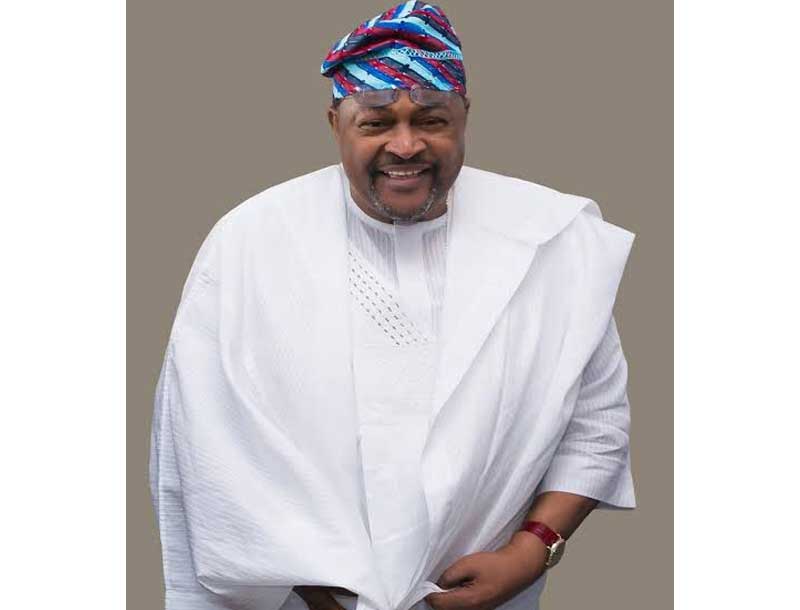
Every April, like clockwork, the great paradox of Mike Adenuga unfolds.
It resounds in columns and commentaries, glossy tributes and hurried think pieces, each one straining, almost feverishly, to outdo the other.
It is that time of year again when Nigeria’s most elusive billionaire is “exposed,”not by his enemies, but by admirers; by those who hope, perhaps too eagerly, to be seen by him. And what a spectacle it is.
I have watched this ritual long enough to understand the process. The early starters: journalists with a nose for proximity to power, aides with cultivated loyalty, and beneficiaries of past benevolence rush to publish first. Their words are spruced up and their metaphors lush to the point of exhaustion. They speak of thunder and titans, of destiny and divinity, of a man who is less human than myth. Then come the late entrants, those who, fearing irrelevance, tilt their pens into spears of superlative, each sentence a plea disguised as praise: See me. Remember me. Reward me. It is, frankly, a rat race.
And yet, beneath the almost theatrical excess, there lies something more interesting, something that says less about the writers and everything about the man they are trying so desperately to impress.
Because here is the irony that nobody quite admits: Mike Adenuga does not need any of this. In fact, if one understands him even slightly, one suspects he might quietly disdain it. He is not a man built for applause.
There are men who cultivate visibility like a crop, tending to their public image with the meticulousness of gardeners. Then there is Adenuga, who has spent a lifetime doing the opposite, building an empire in deliberate obscurity, speaking rarely, appearing sparingly, and allowing his work to travel where his voice does not. While his fellow magnates get intoxicated by spectacle, he has remained stubbornly, almost rebelliously, private. Which is why this annual flood of tributes feels, to me, like a kind of exposure, an unveiling not of his secrets, but of his contradictions.
For how do you write about a man who refuses to be written into easy narratives? The tributes try, of course. They always do. They reach for the familiar arc: the boy at Ibadan Grammar School, the young man defying parental expectations to study abroad, the entrepreneur who returned to Nigeria not to bask in foreign polish but to build something stubbornly local.
They recount the milestones: Devcom Merchant Bank in his thirties, the audacious leap into oil exploration, the Christmas Day discovery that rewrote Nigeria’s indigenous oil story. And then, inevitably, they arrive at Globacom.
Ah, Globacom. The green revolution that did not announce itself with polite intent but stormed the gates of Nigeria’s telecoms industry with something bordering on insurgency. Those who remember the early days will recall the disbelief: SIM cards sold at prices that felt almost absurd, per-second billing that dismantled the old order, queues that stretched like pilgrimages along Awolowo Road and Saka Tinubu.
But even this story, as often told, misses the deeper point. Because Adenuga’s genius was never merely in the act of entering industries, it was in how he entered them. He does not tiptoe into markets; he rearranges them. Adenuga does not compete in uncertain steps; he redefines the terms of competition. And yet, for all this, he remains curiously uninterested in narrating his own legend. Which brings us back to the annual chorus of praise.
There is something almost comical in the way grown men—seasoned journalists, accomplished professionals—suddenly become lyrical acrobats every April. They stretch language to its limits, bending syntax and sense in their quest to produce the most dazzling tribute. It is as though the act of writing itself becomes a performance, a coded message sent into the void in the hope that it might reach a man who has made an art form of not responding.
Because, honestly speaking, many of these tributes are not written for history. They are written for attention.
And there is no shame in that, at least not entirely. We live in a world where access often determines opportunity, and proximity to power redraws the boundaries of one’s life; it is, therefore, understandable that people would seek visibility in whatever way they can. To praise a man like Adenuga is, for some, not just an act of admiration but a strategic gesture, a way of aligning oneself, however faintly, with his orbit.
But it is also, if we are being candid, a misunderstanding of the man. For if there is one consistent thread in the Adenuga story, it is his indifference to noise. He does not grant interviews on demand. He does not parade his philanthropy with the eagerness of a man seeking applause. His generosity, by most credible accounts, operates in a different tenor: it is quiet, targeted, and often invisible to the public eye. There are beneficiaries who will never write op-eds, never publish glowing tributes, and never participate in the annual April chorus. Their lives, however, bear the imprint of his intervention in ways that no column ever could.
This is not to romanticise Adenuga. He is, after all, a man of immense power, and power is never without its complexities. There are stories of hard decisions, uncompromising standards, and of a temperament that can be as exacting as it is generous. But even these are part of the same person: a titan that resists simplification.
And perhaps that is what makes this yearly “exposure” so fascinating. Because in trying to reduce him to a series of flattering adjectives, the tributes inadvertently reveal how difficult he is to contain within them. They pile on descriptors: visionary, titan, patriot, philanthropist, until the words begin to blur, and the intended meaning itself becomes diluted by excess. Meanwhile, the man remains unchanged.
Seventy-three, on April 29. It is a number that invites reflection, both on longevity and on consequence. What does it mean to have lived not merely long, but significantly? To have altered industries, influenced economies, and shaped the trajectories of countless lives, often without the fanfare that such impact usually attracts?
In Adenuga’s case, it means inhabiting a peculiar space in Nigeria’s imagination: omnipresent yet unseen, influential yet understated, celebrated yet fundamentally unknowable. And so, the tributes will continue.
They will continue in waves over the coming days, each one polished, each one eager, each one hoping to be the definitive word on a man who has spent a lifetime defying definitive words. Some will be sincere, written from genuine admiration. Others will be strategic, calibrated for effect. A few will be both.
I will read them, as I always do, with a mixture of amusement and curiosity. Not because they tell me anything new about Mike Adenuga, but because they reveal so much about us: our hunger for recognition, our instinct to align with power, and our tendency to mistake verbosity for insight.
And yet, despite my scepticism, I cannot entirely dismiss the impulse behind them. Because beneath the excess, the competitive lyricism and the almost ritualistic urgency to be seen praising him, there is something undeniably valid; something that resists cynicism and demands acknowledgement. There is, quite simply, something worth celebrating.
To understand this is to move beyond the noise and examine the psychology of the man himself—Mike Adenuga—not as a figure inflated by annual tributes, but as a force that has consistently altered the terms of engagement within Nigeria’s economic landscape. His distinction lies in both his success, and in the manner of its pursuit. He is not a man who followed opportunity; he reinterpreted it. Where others hesitated, measuring risk with caution bordering on paralysis, he demonstrated a peculiar instinct for seeing beyond the obvious contours of danger into the deeper geometry of possibility.
His entry into industries has rarely been ornamental or incremental. He does not arrive to participate timidly; rather, he arrives to test the elasticity of the system itself. In telecommunications, oil, and finance, for instance, his interventions have carried the same signature: an impatience with inherited limitations and a willingness to redraw boundaries that others accepted as fixed. To call him merely an entrepreneur is to understate the scale of his disruption; he is, in many respects, a revisionist of markets, a man who interrogates the status quo until it yields.
And yet, even this does not fully explain the fascination. Because wealth, in isolation, is neither rare nor inherently admirable. What complicates the Adenuga story is the apparent philosophy underpinning that wealth: the sense, whether deliberate or instinctive, that accumulation is not an endpoint but an instrument. He has deployed capital to consolidate his position and reshape the ecosystems in which he operates. Sometimes the intervention is blunt: market-shifting decisions that force entire industries to rejuvenate. At other times, it is precise: targeted moves that unlock value in ways that appear almost surgical in their execution.
This duality is instructive. It suggests a mind comfortable with scale but attentive to detail, capable of both sweeping transformation and granular control. It also hints at a deeper understanding of power, not as static possession, but as something dynamic, something exercised through timing, perception, and restraint.
Restraint, in fact, may be the most underappreciated element of his persona. While his billionaire peers increasingly equate visibility with relevance, Adenuga’s insistence on privacy manifests as both a personal preference and a measured act of defiance. He has resisted the gravitational pull of publicity that draws so many of his peers into performative visibility. There are no constant interviews, no curated glimpses into his private world, and no deliberate cultivation of celebrity. Instead, there is silence—strategic, consistent, and, in its own way, powerful.
This choice has consequences. It denies the public the easy intimacy that often fuels adulation, but it also preserves a certain mystique, a distance that paradoxically amplifies his presence. Where too many pander to overexposure, he has made absence a form of authority. And that, perhaps, is no small achievement.
To build at scale is one thing; to do so without surrendering to the seductions of constant visibility is another entirely. It requires a clarity of self that is increasingly rare, a confidence that one’s work can speak loudly enough without the amplification of perpetual narration. It also reflects a disciplined understanding of legacy: that what endures is not the volume of one’s voice, but the durability of one’s impact.
So yes, the tributes may be excessive, even self-serving at times. But they are not entirely misplaced. They are, in their own flawed way, attempts to grapple with a figure who complicates easy interpretation, a man whose life invites both admiration and analysis, whose choices challenge prevailing assumptions about power, visibility, and success.
And perhaps that is why, despite everything, the impulse to celebrate him persists. But if we must celebrate him, and we should, in our own way, perhaps we ought to do so with a little more restraint, a little more honesty. Perhaps we should resist the urge to turn him into myth, and instead acknowledge the more interesting reality: that he is a man who has mastered the art of contradiction. A recluse who commands attention. A billionaire who shuns spectacle. A benefactor whose generosity often refuses documentation.
Perhaps, in other words, we should let him remain partially unknown. Because there is a dignity in that mystery, a kind of quiet authority that no amount of florid prose can improve upon. As April 29 approaches, I imagine him somewhere far removed from the noise, unbothered by the columns, untouched by the competition, and unmoved by the annual scramble to define him. The tributes will circulate, the headlines will trend, and the adjectives will multiply.
And he will remain, as ever, himself. Unexposed in the ways that matter. Which, in the end, is the greatest irony of all. Billionaires’ Coup
I have always found billionaire rankings faintly theatrical. They arrive every year with the ceremonious inevitability of a society wedding—glossy, breathless, and full of numbers that make ordinary mortals blink twice.
Wealth lists have a way of turning the serious arithmetic of commerce into something resembling aristocratic genealogy. Who has risen? Who has slipped? Whose fortune has ballooned like a festival balloon, and whose has shrunk like an over-watered soufflé?
The latest Forbes 2026 Africa’s Richest People ranking has delivered a headline that cannot be ignored, even by those who pretend not to care about billionaire scoreboards.
Alhaji Abdulsamad Rabiu has officially become Nigeria’s second richest man and the third richest billionaire in Africa.
Let that sink in for a moment. The Kano-born industrialist, chairman of BUA Group and one of the most quietly formidable businessmen on the continent, now commands an estimated fortune of $11.2 billion. That figure represents not just a modest climb up the wealth ladder but an astonishing 120 percent leap in a single year—an increase of $6.1 billion that has left even seasoned watchers of African capitalism raising their eyebrows.
In the careful language of Forbes, Rabiu is the biggest gainer on the entire continent this year.
In the more conversational language of Lagos drawing rooms, Abuja boardrooms, and Kano business salons, the meaning is simpler: Rabiu has conquered the billionaire league table. And in doing so, he has quietly rearranged the familiar hierarchy of Nigerian wealth.
For decades, the ranking of Nigeria’s richest men has seemed almost carved in granite. At the summit stood Aliko Dangote, the industrial colossus whose cement plants, sugar refineries, fertiliser factories, and now oil refinery have built a fortune so vast it often appears geological in scale.
Behind him stood Mike Adenuga, the famously reclusive telecoms tycoon whose Globacom empire and oil investments made him one of Africa’s most enduring billionaire legends.
That order felt almost permanent. Until now. And that is because the new Forbes list places Rabiu squarely between Dangote and the rest of Africa’s tycoon class, occupying the third position on the continent behind only Dangote and South Africa’s luxury goods baron Johann Rupert.
The ranking delivers another striking twist in the Nigerian billionaire drama. Mike Adenuga now occupies the sixth position on the continental list, with a fortune estimated at $6.5 billion, placing him firmly behind Rabiu’s surging $11.2 billion wealth.
To put it plainly, and without delicate circumlocution, Abdulsamad Rabiu is now significantly richer than Mike Adenuga. His estimated fortune of $11.2 billion now sits comfortably ahead of Adenuga’s $6.5 billion. But of course, the real story is not simply the gap between those numbers. The real story lies in the meaning that people attach to them, and in Nigeria’s rarefied circles of business and influence, those meanings are already generating a thousand conversations, some admiring, some analytical, and a few quietly incredulous.
Because anyone familiar with the psychology of wealth, particularly wealth at this dizzying altitude, knows that rankings such as those released annually by Forbes are never merely numerical curiosities. They function as a kind of social barometer, a map of prestige and power that subtly rearranges the hierarchy of the business aristocracy.
Investors study them with the same attentiveness that political observers devote to election results. Corporate strategists read them for clues about market momentum. And society itself treats them as a scoreboard in the ongoing drama of ambition, rivalry, and industrial achievement.
The Forbes ranking has now formalised what the markets have been quietly signaling for months: Rabiu’s business empire has entered a new phase of expansion and recognition.
What makes this moment particularly intriguing, at least to those who enjoy observing the personalities behind great fortunes, is the curious fact that Rabiu himself appears almost constitutionally uninterested in the spectacle of billionaire rankings. Unlike some members of the global ultra-wealthy who treat such lists as personal trophies, Rabiu has cultivated the reputation of a man who regards them with polite detachment.
Associates who have spent time in his company often remark that he seldom dwells on the public show of wealth. The conversation, when it turns to business, tends instead toward production capacity, infrastructure investment, or the strategic evolution of markets. In other words, the language of industry rather than the theatre of celebrity capitalism.
This temperament sets him apart in an era when many billionaires seem almost compelled to perform their prosperity for the public gaze. And yet, as often happens in the strange ecology of wealth and public attention, headlines have found him anyway. The catalyst for his sudden prominence is not a flamboyant acquisition or a spectacular technological breakthrough but the extraordinary performance of BUA Cement, the industrial flagship of his sprawling conglomerate.
Over the past year, shares of the company have climbed by an astonishing 135 percent, a surge so dramatic that it has outpaced even the already buoyant performance of the Nigerian Stock Exchange. Honestly, in top business schools across the continent and beyond, his financial and market exploits are veritable case-studies for academic researches.
To understand why that matters, one must consider the broader economic context. Nigeria’s equity markets have been enjoying a remarkable rally, driven by a combination of stronger corporate earnings and regulatory shifts that encourage pension funds to allocate a greater portion of their assets to equities. The result has been a powerful influx of institutional investment into the stock market, pushing the benchmark index upward by roughly 81 percent and carrying many listed companies to record valuations.
But even within this environment, BUA Cement has emerged as a standout performer. Investors who once viewed the company as merely another participant in Nigeria’s fiercely competitive cement industry have begun to recognize the scale and strategic coherence of Rabiu’s industrial vision. What they are seeing, in effect, is not simply a cement manufacturer but the nucleus of a much broader economic ecosystem.
Indeed, when one surveys the reach of BUA Group, the scope of that ecosystem becomes strikingly clear. The conglomerate now operates across a wide array of sectors that form the structural backbone of modern economies: cement production, sugar refining, flour milling, infrastructure development, and port operations. These are not glamorous industries in the sense that Silicon Valley has accustomed the world to glamour. They do not produce viral technologies or social media sensations. They do not inspire breathless headlines about digital disruption.
Yet they produce something far more fundamental: the raw materials upon which economies are built.
Cement, after all, constructs the cities in which modern life unfolds. Sugar and flour sustain the vast networks of food production that feed entire populations. Infrastructure—roads, ports, and logistics systems—makes trade possible and connects markets that would otherwise remain isolated. When viewed through that lens, Rabiu’s fortune appears less like a speculative bubble and more like the byproduct of a carefully constructed industrial architecture.
In other words, his wealth grows out of the bones of the real economy.
That distinction may help explain why his rise carries a certain gravitas that speculative fortunes sometimes lack. This is not the familiar Silicon Valley narrative in which a start-up founder becomes a billionaire overnight through digital innovation. Rabiu’s ascent is the result of decades of methodical expansion, strategic investment, and the steady accumulation of productive assets. His empire has been built, quite literally, brick by brick—an observation that becomes almost poetic when one remembers that cement remains the foundation of the enterprise.
Rabiu’s super ascent signals that another pole of industrial power is taking shape alongside that legacy. The Forbes numbers make this shift particularly vivid. Only a year ago, Rabiu occupied the sixth position on Africa’s billionaire list. Today he stands at number three in Africa, a leap that few observers could have predicted with confidence.
Such dramatic movements are rare in the world of billionaires, where fortunes tend to evolve gradually rather than explosively. To climb three places in a single year requires a convergence of favorable circumstances: market momentum that lifts asset values, corporate performance that exceeds expectations, strategic decisions that pay off at precisely the right moment, and perhaps a measure of luck. Rabiu, it would appear, has benefited from all of these forces simultaneously.
Yet wealth rankings, fascinating though they may be, reveal only part of the picture. To understand Rabiu’s growing stature in African business, one must also consider the influence he exerts beyond the balance sheets of his companies.
If entrepreneurship were an art, you could call Abdusamad Rabiu, Michelangelo. If it were classical music, you may call him Mozart. If it were philanthropy, you may call him Saint Michael. In recent years he has become one of the continent’s most visible philanthropists through the Abdul Samad Rabiu Africa Initiative, a foundation that has committed billions of naira to projects in healthcare, education, and social development.
Universities across Nigeria have received substantial grants for infrastructure improvements, enabling the construction of lecture halls, laboratories, and student facilities that might otherwise have remained dreams on paper. Hospitals have benefited from targeted funding designed to improve medical capacity and patient care. During the COVID-19 pandemic, the foundation financed emergency interventions aimed at supporting overwhelmed health systems.
These philanthropic efforts add a compelling dimension to Rabiu’s public persona. They present him not merely as an industrial magnate but as a figure increasingly invested in shaping the broader developmental trajectory of the continent. In this sense, the Forbes ranking feels less like a personal victory lap than the emergence of an institutional force whose influence extends far beyond commerce.
Within Nigeria’s crowded corporate landscape, BUA Group is no longer simply another conglomerate competing for market share. It is evolving into something larger: a continental industrial platform capable of shaping supply chains, infrastructure networks, and manufacturing capacity across multiple sectors.
The Forbes ranking illustrates how quickly the balance of wealth can change in the modern global economy. Industries evolve, markets fluctuate, and fortunes rise or fall with surprising speed. In this particular moment, Rabiu’s industrial bets, especially his heavy investments in cement and manufacturing, have delivered spectacular results.
For Nigeria, his ascent carries a message that extends beyond the fascination of society gossip. In a country frequently burdened by stories of economic hardship and political turbulence, Rabiu’s rise offers a reminder that large-scale enterprise remains possible. It demonstrates that African entrepreneurs can build industrial organizations capable of competing on a continental stage.
Viewed in that light, Rabiu’s ascent represents more than a personal financial milestone. It is a story about scale, vision, and persistence, the story of an entrepreneur from Kano who patiently constructed an empire that now ranks among the largest in Africa.
And if the latest Forbes list has done nothing else, it has delivered one unmistakable conclusion: Abdulsamad Rabiu now stands as Nigeria’s second richest man and the third richest billionaire on the African continent. Whether he personally cares about the ranking is almost beside the point, because society, with its enduring fascination for hierarchies of wealth, certainly does.
This year, at least, the scoreboard belongs unmistakably to Rabiu.









Leave a comment