



By Chinwendu Obienyi
Nigeria’s recent cabinet reshuffle may read like a familiar script, but its implications are anything but routine.
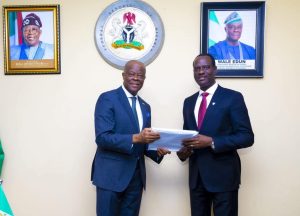
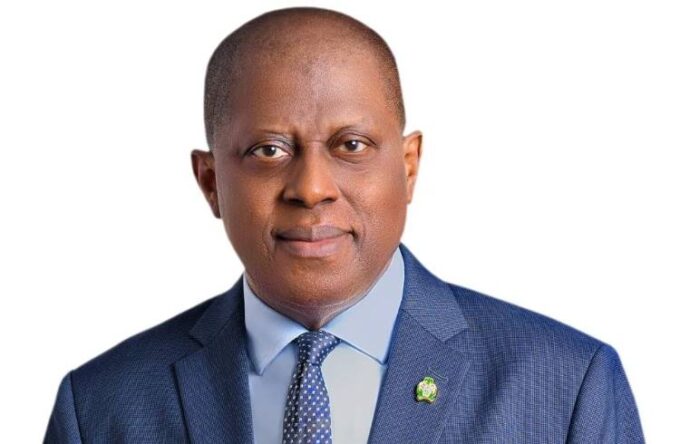
In replacing Wale Edun with Taiwo Oyedele as Minister of Finance and Coordinating Minister of the Economy, President Bola Tinubu has made a choice that signals less about political rotation and more about a recalibration of economic priorities at a critical juncture.
The reshuffle, announced last week, also affected the housing ministry and comes at a politically sensitive moment as Africa’s largest economy continues to grapple with elevated inflation, currency instability and the social impact of wide-ranging reforms, including fuel subsidy removal and foreign exchange unification.
In a statement by the Secretary to the Government of the Federation (SGF), George Akume, the affected ministers had completed their handover processes. Explaining the changes, Akume said the reshuffle is aimed at improving coordination and strengthening economic delivery under the government’s Renewed Hope Agenda.
He added that the President acted within his constitutional powers and signaled that further cabinet adjustments could follow as part of ongoing efforts to enhance governance performance.
At first glance, this statement appears procedural, another adjustment in a government still fine-tuning its economic team. But beneath the surface lies a more consequential shift: from a finance ministry grappling with macroeconomic stabilisation to one now explicitly tasked with structural fiscal transformation.
For Oyedele, the assignment is clear, if daunting, expand government revenue, ease Nigeria’s dependence on debt, and do so in an environment where inflation remains stubbornly high and public tolerance for economic pain is wearing thin.
A technocrat for a fiscal moment
Oyedele steps into the role with a reputation built not in political circles, but in the technical trenches of tax policy and fiscal reform. His prior leadership of the Presidential Committee on Fiscal Policy and Tax Reforms positioned him at the centre of efforts to redesign Nigeria’s fragmented and inefficient tax system.
That background matters. The country’s core economic problem is no longer simply about spending or even borrowing, it is fundamentally about revenue. With one of the lowest tax-to-GDP ratios globally, Nigeria have struggled to generate sufficient income to fund its budget, forcing successive administrations into a cycle of borrowing that has steadily increased debt servicing costs.
In this context, Oyedele’s appointment suggests a deliberate pivot. The administration appears to be betting that the next phase of economic reform must be anchored on revenue mobilisation rather than continued fiscal expansion.
The burden of expectations
The expectations placed on the new finance minister are both immediate and structural.
In the short term, he must help stabilise an economy still adjusting to the aftershocks of major policy decisions, including fuel subsidy removal and foreign exchange (FX) liberalisation. These reforms, while necessary, have contributed to inflationary pressures that continue to erode household purchasing power.
But beyond stabilisation lies a deeper mandate which is to fundamentally change how Nigeria raises and manages its money.
This is easier said than done. Expanding revenue in a fragile economic environment presents an inherent contradiction. Raise taxes too aggressively, and you risk stifling already weak business activity. Move too cautiously, and the fiscal gap persists, leaving borrowing as the default option.
Oyedele’s approach, at least in theory, attempts to resolve this tension by focusing less on increasing tax rates and more on improving efficiency.
Simplification over suffocation
One of the defining features of Nigeria’s tax landscape is its complexity. Businesses routinely contend with multiple layers of taxation; federal, state, and local, often applied inconsistently and sometimes arbitrarily. The result is not just a compliance burden, but a deterrent to investment.
Oyedele’s reform philosophy centres on simplification. By reducing the number of taxes, harmonising collection processes, and leveraging digital systems to improve compliance, the government hopes to widen the tax net without necessarily increasing the burden on those already within it.
If executed effectively, this could mark a significant departure from past approaches that relied heavily on enforcement rather than reform.
Yet the challenge here is institutional. Tax reform in Nigeria is as much about coordination as it is about policy. Aligning federal and subnational interests, particularly when states rely heavily on internally generated revenue, will test the former fiscal policy partner and West Africa tax leader at PwC’s ability to build consensus across multiple layers of government.
Borrowing less
Reducing borrowing pressure is another central pillar of Oyedele’s mandate. Nigeria’s debt, at N159.28 trillion, has risen significantly over the past decade, while debt servicing continues to consume a large share of government revenue.
Investors and credit rating agencies will be watching closely for signals on whether the new finance leadership can rein in deficits without stalling growth.
The logic is straightforward: higher revenue reduces the need for borrowing. But in practice, the transition is unlikely to be immediate.
In the near term, the government may still need to rely on debt to bridge financing gaps, particularly as it seeks to maintain spending on infrastructure and social programmes. The real test will be whether Oyedele can create a credible pathway toward a more sustainable fiscal balance, one where borrowing becomes a tool of investment rather than a necessity for survival.
Inflation, the complicating factor
All of this is unfolding against the backdrop of elevated inflation, which complicates nearly every aspect of fiscal policy.
Currently, inflation rate is standing at 15.38 per cent (March 2026), up from 15.06 per cent in February 2026,” reflecting a 0.32 percentage point increase on a year-on-year (y/y) basis.
High inflation not only reduces the real value of government revenue but also increases the cost of servicing debt. It places additional pressure on households, limiting the government’s ability to introduce new taxes or adjust existing ones without triggering public backlash.
For Oyedele, this creates a delicate balancing act. Fiscal tightening, if pursued too aggressively, could exacerbate economic hardship. But delaying reform risks prolonging the structural weaknesses that have long constrained Nigeria’s growth.
Hence, coordination with monetary authorities will therefore be critical. Aligning fiscal and monetary policy, particularly in managing inflation expectations and exchange rate stability, will require a level of policy coherence that has often been elusive in the past.
Politics meets policy
Beyond the technical challenges lies the political dimension of the role.
The removal of Edun, despite his central role in shaping the administration’s early economic policies, underscores a broader reality: economic management in Nigeria is as much about perception and communication as it is about outcomes.
In Abuja’s corridors of power, numbers tell stories, and not all stories are equally welcome. The suggestion that Edun’s exit may have been influenced by his presentation of economic realities highlights the fine line policymakers must walk between honesty and alignment. Oyedele inherits not just an economic portfolio, but a narrative challenge.
He must demonstrate progress in measurable terms while maintaining the confidence of both the presidency and the public.
The coordination question
As the Coordinating Minister of the Economy, Oyedele’s responsibilities extend beyond the finance ministry. He is expected to align the work of multiple economic agencies, ensuring that policies across sectors are coherent and mutually reinforcing.
This role is particularly important in a policy environment where fragmentation has often undermined effectiveness. From trade to industry to petroleum, Nigeria’s economic architecture is complex, and misalignment between ministries can dilute the impact of reforms.
Whether Oyedele can impose a more unified direction will depend not only on his technical expertise but also on his political capital within the administration.
Unfortunately, time is not on his side. With economic pressures mounting and public expectations high, the window for delivering tangible results is limited.
As stated earlier, investors, both domestic and foreign, will be watching closely for signals of policy consistency and reform momentum. Early wins, such as streamlined tax processes, improved revenue collection, or clearer fiscal communication, could help build confidence.
But the deeper reforms required to transform Nigeria’s fiscal landscape will take longer to materialise. This creates a tension between the need for quick results and the reality of structural change.
Experts’ react
Ultimately, Oyedele’s success or failure will be measured not just by revenue figures or debt ratios, but by whether he can shift the trajectory of Nigeria’s public finances.
There are questions that could determine or define tenre. Can the country move from a system defined by low revenue and high borrowing to one that is more sustainable, efficient, and growth-oriented?
Can tax reform become a catalyst for investment rather than a constraint?
Can fiscal policy, long seen as reactive, become a proactive tool for economic transformation?
Experts who spoke to Daily Sun at the weekend, said, Oyedele’s elevation signals a potential turning point in the government’s efforts to reposition the Nigerian economy, particularly as the Tinubu-led administration accelerates its efforts to meet the ambitious target of growing Nigeria into a $1 trillion economy by 2030.
Chief Executive Officer, APT Securities Ltd, Kurfi Garba, explained that Oyedele’s antecedents around the tax reform, could aid some interesting developments in the coming months and years.
“Oyedele’s antecedents speaks highly of him. He should surround himself with the right people as this position is different from the one he was chairing. This is because the government currently has some leakages and he has to look for ways to block these leakages. Our borrowing is already high and he has to fathom policies around it”, Garba stated.
For his part, Head, Research, FSL Securities, Chiazor Victor, argued that a sharper focus on tax reform could improve revenue predictability and reduce reliance on borrowing, strengthening Nigeria’s fiscal position over time.
He however, warned that implementation risks remain high, particularly given institutional bottlenecks and resistance to new tax measures.
“The President’s decision to replace his finance minister less than three years into his term points to a willingness to adjust course in pursuit of economic stability. Whether the shift delivers quicker results will depend on execution, policy coordination and the government’s ability to balance reform with social protection”, he said.
Conclusion
The reshuffle that brought Oyedele into the finance ministry is more than a change of personnel, it is a statement of intent.
Faced with the twin challenges of elevated inflation and fiscal strain, the Tinubu administration appears to be doubling down on revenue reform as the cornerstone of its economic strategy.
Whether that strategy succeeds will depend on execution and in a country where policy ambition has often outpaced implementation, that is no small task.
For the man often referred to as the tax technocrat, the brief is clear, raise more, borrow less, and restore confidence in the system. The difficulty lies in doing all three at once, without tipping an already fragile economy off balance.













Leave a comment