



By Uche Usim
At a time when global uncertainty is rippling through markets and economies are bracing for fresh inflation shocks, Nigeria’s monetary authorities have opted for a steady hand.
The Monetary Policy Committee (MPC) of the Central Bank of Nigeria, on Wednesday, retained the Monetary Policy Rate (MPR) at 26.5 per cent, a move that signals a deliberate pause rather than a pivot.
The decision, reached at the MPC’s 305th meeting held on May 19–20, 2026, reflects a careful balancing act of holding inflation in check without choking the fragile but improving momentum in growth.
For policymakers, the choice to maintain rates is less about inaction and more about strategic patience. After a prolonged period of tightening aimed at curbing inflationary pressures, the MPC appears convinced that the current stance is sufficiently restrictive to guide inflation back to a downward path.
Inflation, though ticking up slightly for two consecutive months, is not yet cause for alarm in the Committee’s view.
Headline inflation rose to 15.69 per cent in April from 15.38 per cent in March, largely driven by food prices. Yet beneath the surface, there are signs of easing pressures: month-on-month inflation slowed sharply, while core inflation edged lower.
This duality, short-term upticks alongside medium-term moderation, has shaped the MPC’s confidence that inflationary pressures remain transitory.
External shocks, domestic shields
The global backdrop, however, remains anything but calm. Rising geopolitical tensions, particularly the ongoing crisis in the Middle East, have pushed up energy costs and disrupted supply chains. For many economies, these shocks are feeding directly into domestic inflation.
The MPC noted that the spillover effects of global disruptions have been relatively muted, thanks largely to a suite of policy reforms implemented over the past year. Exchange rate stability, improved external reserves, and tighter monetary transmission mechanisms have collectively strengthened the economy’s shock-absorbing capacity.
In practical terms, this means that while global oil and commodity prices are rising, their pass-through into domestic inflation has been contained, at least for now.
Reform dividend sprouts
Perhaps the most glaring element of the MPC’s narrative is its emphasis on reform outcomes. For years, Nigeria’s macroeconomic framework has been criticised for its vulnerability to external shocks. Now, policymakers are pointing to tangible improvements.
External reserves have climbed to $49.49 billion as of mid-May 2026, providing over nine months of import cover. This buffer not only supports exchange rate stability but also boosts investor confidence, an increasingly critical factor in a world of volatile capital flows.
Equally significant is the recent sovereign credit rating upgrade, which the MPC highlighted as validation of Nigeria’s reform trajectory. While details of the upgrade were not elaborated upon, the signal is clear that global investors are beginning to reassess Nigeria’s risk profile more favourably.
Banking sector reinforced
Another pillar of resilience comes from the financial system itself. The successful completion of the banking recapitalisation exercise, resulting in a leaner but stronger cohort of 33 banks, has enhanced the sector’s ability to withstand shocks and support economic activity.
For the MPC, this development is crucial. A well-capitalised banking system improves credit transmission, supports investment, and reduces systemic risk. Still, the Committee has urged vigilance, warning that post-recapitalisation risks must be closely managed to preserve stability.
Growth holds firm
Despite tightening financial conditions, Nigeria’s growth story remains intact. Real GDP expanded by 4.07 per cent in the fourth quarter of 2025, driven by gains in both the oil and non-oil sectors.
The services sector, particularly information and communication, alongside transportation and storage, continues to play a leading role. Meanwhile, improved refining activity has boosted oil sector performance, underscoring the impact of domestic capacity expansion.
This broad-based growth provides the MPC with some room to maintain its current stance without derailing economic recovery.
Walking the tightrope
Globally, central banks are facing a similar dilemma, whether to continue tightening, begin easing, or hold steady amid persistent uncertainty. Many have chosen caution, pausing rate hikes while monitoring incoming data.
By retaining the MPR at 26.5 per cent, the MPC is effectively buying time, allowing previous policy actions to work through the system while keeping a watchful eye on evolving risks.
The road ahead
For the immediate future, the outlook remains cautiously optimistic. Growth is expected to stay resilient in 2026, even as geopolitical tensions pose downside risks. Inflation may edge higher in the near term, but the combined effects of tight monetary policy, exchange rate stability, and improved food supply are expected to steer it back toward disinflation.
Ultimately, the MPC’s message is one of disciplined continuity. In an era defined by volatility, the decision to hold rates steady underscores a broader commitment: anchoring expectations, preserving stability, and ensuring that the foundations of Nigeria’s economic recovery remain intact.
The next test of that resolve will come at the Committee’s July meeting, where the balance between caution and action may once again come into sharp focus.
Crisis to credibility
By 2023, Nigeria’s economic outlook was deeply fragile. Inflation had surged above 22 per cent, foreign exchange (FX) reserves were strained, and the naira was under intense pressure. Years of unorthodox monetary interventions and opaque FX practices had eroded trust in the central bank.
The CBN’s credibility, once a cornerstone of macroeconomic management, had come under scrutiny from investors, multilateral institutions, and domestic businesses alike.
Infact, a report by the Office of the Auditor General of the Federation in 2024, revealed that the apex bank had failed to publish details of the country’s external reserves amounting to $40.23 billion during the 2021 financial year.
The report further revealed that the CBN breached its internal policies on dollar time deposits.
“The Nigerian economy was in a serious hole in 2023. Its nominal GDP was approximately $363.85 billion, ranking Nigeria as the 4th largest economy in Africa. However it dropped from its previous position as the largest behind South Africa, Egypt and Algeria due to currency devaluation and mounting external vulnerabilities”, the 2026 Central Banking report stated.
Also, inflation, meanwhile, had risen from around 15.4 per cent in November 2021 to 22.4 per cent and net foreign exchange reserves were depleted, despite the imposition of significant currency controls.
Notably, the central bank had reportedly failed to honour a backlog of $7 billion in matured FX obligations, and FX liquidity had evaporated, with a 60 per cent spread between official and parallel rates. Extensive subsidies, some being paid out by the central bank, and monetary financing had resulted in monetary policy being in an unsustainable position.
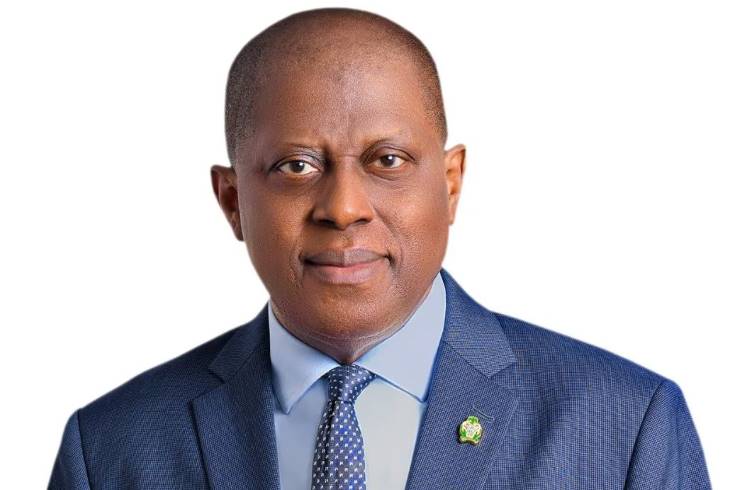
The turning point came with a leadership reset in 2023, when President Bola Tinubu appointed Olayemi Cardoso, a former head of Citigroup Nigeria, as governor of the CBN. There were doubts and questions about whether the new CBN leadership had the necessary experience to lead the central bank through such challenging conditions as the new governor inherited a system marked by distortions. The task set before the new leadership included reasserting the independence of the CBN, ending CBN financing of government spending and tightening monetary controls, paying off the backlog of FX liabilities and unwinding opaque swap arrangements.
It was not an easy time. The removal of fuel subsidies and devaluation of the naira that took place as FX controls were lifted in 2023, led to a rapid rise in prices, with Nigeria’s inflation rate hitting a 28-year high of 34.80 per cent by December 2024. Nonetheless, Cardoso set aside his team to rebuild and implement efforts aimed ultimately at enhancing macroeconomic stability, strengthening the country’s FX market and restoring investor confidence.
Policy reset
In his first statement as the apex bank Governor after months of silence, Cardoso, having taken time to look at the ruins left by previous administration, signaled further interest normalisation, an increase in banks’ capital base and the adoption of an explicit inflation-targeting framework to enhance the effectiveness of monetary policy.
This approach, often referred to as “policy orthodoxy.” included; tightening monetary conditions to curb inflation, improving transparency in foreign exchange markets, and reducing quasi-fiscal interventions.
One of the earliest and most consequential steps was the liberalisation and unification of Nigeria’s foreign exchange market. Multiple exchange rates had previously created arbitrage opportunities and discouraged foreign investment. Under the new regime, the CBN moved toward a more market-reflective system.
Cardoso, speaking during at the Chartered Institute of Bankers of Nigeria (CIBN) in Lagos in 2023, noted that it was crucial for the apex bank to evaluate the adequacy of the country’s banking industry to serve the envisioned larger economy. According to him, this was not about the stability of the financial system.
“Will Nigerian banks have sufficient capital relative to the financial system’s needs in servicing a $1.0 trillion economy in the near future? I believe that the answer is No. Unless we take action. Therefore we must take difficult decisions regarding capital adequacy. As a first step, we will be directing banks to increase their capital”, the CBN Governor stated.
Currently, 30 out of 35 banks operating in the country have met that requirement with others set to be in potential merger discussions and awaiting the apex bank’s approval.
In tandem, the bank addressed a backlog of unmet foreign exchange obligations, an issue that had severely dented Nigeria’s reputation among foreign investors.
Speaking recently at an Africa Capital Forum during President Bola Tinubu’s UK state visit, Cardoso, whilst acknowledging the severity of the crisis he inherited, said, the country’s old financial system is dead and buried.
Emphasizing transparency, Cardoso said the CBN under his leadership would remain open, provide continuous communication, and raise expectations for institutional performance to avoid past errors.
According to award organisers, the bank was recognised for “implementing key policy measures aimed at stabilising the naira, improving transparency in the foreign exchange market, and re-establishing policy credibility.
“Cardoso also championed zero tolerance for poor corporate governance in the financial sector. He has also fostered improved communication and accountability: under his leadership, the CBN has increased transparency in policy decisions, improved stakeholder engagement and built capacity through analytics tools like a macro-diagnostic framework”, the publishing firm said.
Rebuilding external buffers
Perhaps the most visible sign of recovery has been the improvement in Nigeria’s external position.
By 2024, the country recorded a balance of payments surplus of $6.83 billion, a sharp reversal from deficits in previous years. Foreign exchange reserves climbed above $40 billion, while portfolio inflows surged as confidence returned.
Net foreign exchange reserves also reached a three-year high, reflecting reduced liabilities and improved liquidity in the system.
For analysts, these metrics underscore a key achievement; the restoration of trust.
“Investors respond to clarity and consistency. What the CBN has done is send a strong signal that Nigeria is once again serious about macroeconomic discipline”, Co-Managing Partner, Comercio Partners Limited, Nnamdi Nwizu, had said during a programme monitored by Daily Sun.
Inflation fight and monetary discipline
Cardoso and his team also made tackling inflation a top priority as part of a return to orthodox monetary policy. He raised interest rates sharply, from 18.75 per cent in 2023, to 27.5 per cent by November 2024.
Though controversial for its impact on borrowing costs, the policy helped anchor expectations.
Inflation has now fallen sharply, from more than 32 per cent in December 2024, to 16.05 per cent in October 2025 and 15.10 per cent by January 2026, with food inflation at 8.9 per cent, enabling the central bank to cautiously ease rates for the first time in five years.
Speaking to newsmen during the last Monetary Policy Committee (MPC) meeting, Cardoso while expressing satisfaction at the development, called for caution and added that the apex bank is doing everything possible to protect the economy and outfox fragilities.
His words, “We are encouraged by that and we believe that a lot of the measures we have taken, though difficult, you know, tough in many respects, have begun to pay off.
Part of that obviously, is the monetary tightening. We have had no option but to ensure that we have kept a very tight monetary policy. We believe that if we sustain stability in the foreign exchange market, which we have seen in the recent past, then it is important to sustain that. We also believe that it is important that the sort of decreases we are seeing in food inflation should continue like that.
We understand the structural rigidities, and we understand that the fiscal authority is doing everything possible to sort of balance things out so that, at the end of the day, the collective will ensure that we continue on a downward dis-inflation pathway. I must also emphasize that it will take a lot of discipline from all the stakeholders. This is not something that will be left for the central bank alone. All the stakeholders will need to be involved working collaboratively to ensure that the gains we have achieved are sustained”.
This delicate balancing act, tight enough to tame inflation, but flexible enough to support growth, has been widely praised. Economist and Head of Research, Africa and Middle East at Standard Chartered, Razia Khan, described the strategy as “measured pragmatism.”
“They didn’t rush to loosen policy prematurely. That discipline is what differentiated Nigeria from peers facing similar inflation shocks,” she said.
Financial sector reforms and innovation
Nigeria’s banking system has proven relatively resilient given the economic upheavals of the past few years.
But risks have emerged related to credit-concentration pressures, operational vulnerabilities and cyber threats.
The CBN has strived to strengthen risk-based supervision and transition to Basel III, with the aim of further boosting resilience, improving capital quality and strengthening liquidity monitoring. Beyond macroeconomic stabilisation, the CBN also pushed structural reforms within the financial system.
Efforts to enhance banking supervision, enforce regulatory compliance, and strengthen risk management frameworks have been key pillars of the reform agenda.
Despite tighter rules, the central bank has been supportive of lending to the microfinance sector, with loans expanded by over 14 per cent and new digital-credit products reaching more than 1.2 million small enterprises in 2025, according to the CBN.
“Adoption of Basel III and the ongoing recapitalisation programme will strengthen banks. The CBN’s stress testing and upgrading regulation and supervision, including for the fast-growing fintech and crypto sectors, are important,” the IMF said in its article IV. “Addressing structural impediments to private credit would support growth.”
At the same time, the bank has continued to promote innovation in payments and financial inclusion. Initiatives like AfriGo Pay, Africa’s first domestic card scheme, highlight the CBN’s ambition to deepen the cashless economy and reduce reliance on foreign payment systems.
The bank also recalibrated its cash-printing models, issuing new guidelines on the optimal ATM-to-card ratio, strengthening requirements for central bank approval before ATM or branch closures, enforcing sanctions on banks whose ATMs fail to dispense cash, and intensifying supervision of payment agents and point-of-sale operators nationwide.
It has also sought to modernise the country’s payments infrastructure and strengthen cyber security via its ‘payments system vision’ roadmap. The CBN says more than 12 million contactless payment cards are now in circulation and its regulatory sandbox is facilitating experiments and scaling of digital finance by some 40 fintech innovators.
Recently, it introduced stricter Bank Verification Number (BVN) enrollment and data access rules to prevent fraudulent transactions in the financial system. The policy plan, the bank said, would take effect by May 1 and will help in building a secure, stable and more efficient financial system for customers and the economy.
In leaving no stone unturned, the CBN rolled out fresh technology driven rules compelling banks and other financial institutions to deploy automated anti-money laundering systems capable of detecting suspicious transactions in real time.
Hence, this goes to show that the apex bank is not just firefighting; it is building infrastructure for the future and that is what makes the reforms sustainable.
External recognition
Indeed, Nigeria made a major breakthrough in 2025 when it was removed from the Financial Action Task Force ‘grey list’. Although this was the result of co-ordinated efforts by several government agencies, stronger supervision, improved reporting standards, enhanced intelligence sharing and governance tools such as EFEMS and the FX code ensured the CBN addressed deficiencies identified by FATF during its on-site assessment. This development led to Fitch and Moody (two rating agencies) upgrading Nigeria’s ratings.
Market confidence returns
One of the most telling indicators of success has been the return of investor confidence.
Portfolio inflows into Nigerian assets have rebounded, while international financial institutions have renewed engagement with the country. The improved perception of Nigeria’s policy environment has also contributed to stronger currency stability.
For the private sector, the shift has been palpable. “Access to foreign exchange has improved significantly. Planning is easier when you can actually price your inputs with some level of certainty”, Ebele Okonkwo, an export business man told Daily Sun
Similarly, banks have reported improved liquidity conditions and reduced volatility in the interbank market.
Experts’ perspectives
Financial industry stakeholders have largely welcomed the development, stating that although some of the reforms are not without reservations, the transformation was overdue.
Head of Research at FSL Securities, Chiazor Victor, said, “When a central bank wins this award, it signals to global investors that reforms are credible. It reduces perceived risk. It reinforces confidence within the financial system. Local banks, corporates, and even households begin to trust policy direction more.
The absence of an official shortlist highlights something important about the awards: they are less about ranking and more about recognising standout impact.
Still, within policy circles, the consensus is clear. CBN did not win in isolation. It emerged at the top of a highly competitive field of central banks navigating one of the most complex global economic periods in decades”.
Expanded lending capacity
The successful mobilisation of N4.65 trillion in fresh capital is expected to significantly alter this dynamic. With stronger capital bases, banks are now better equipped to underwrite large transactions, absorb potential losses, and extend credit over longer periods. This enhanced capacity is critical for financing infrastructure projects that require substantial upfront investment and long gestation periods.
Cardoso emphasised the importance of this shift, noting that “sustainable economic growth is unattainable without a resilient financial system. This recapitalisation ensures Nigerian banks can fund the scale of transactions needed to drive a $1 trillion economy.”
Supporting this perspective, the World Bank Country Director in Nigeria, Matthew Verghis, described the recapitalisation as a key enabler of economic transformation. He stated that a stronger banking system would provide the foundation for financing Nigeria’s long-term ambitions, including infrastructure development, industrial expansion, and support for small and medium-sized enterprises.
“A stronger banking system creates the foundation to finance Nigeria’s long-term ambitions, from empowering MSMEs and expanding productive capacity to unlocking large-scale infrastructure development. The opportunity before us is clear: to convert stronger balance sheets into deeper intermediation, greater resilience, and inclusive growth that accelerates Nigeria’s journey toward a more competitive and sustainable economy,” Verghis said.
The exercise, President, Bank Customers Association of Nigeria (BCAN), Dr. Uju Ogubunka, said enables banks to offer more affordable loans, broaden their operations, and deliver better services to customers.
“The banks have raised significant funds to shore up their capital bases. Now, we expect them to improve on service quality and shun excess charges,” he said.
Recent data from the CBN suggests that the impact of the recapitalisation is already beginning to take shape. Credit to the domestic economy rose to N111.39 trillion in February 2026, the highest level since November 2024, indicating a gradual increase in lending activity as banks begin to deploy their strengthened capital.













Leave a comment