



• As N7.65trn imports, FG interventions fail to ease surge in food prices
By Chinwendu Obienyi
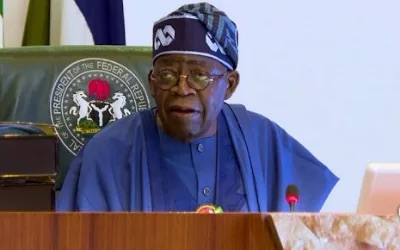
President Bola Tinubu has sought Senate approval for a fresh $516.3 million external loan, pushing total borrowing requests under his administration beyond $30 billion. The move is intensifying concerns over Nigeria’s rising debt profile and its limited impact on economic stability.
The latest request, read on the floor of the Senate by Senate President Godswill Akpabio, is aimed at financing sections of the proposed Sokoto–Badagry superhighway, a 1,000-kilometre project designed to link key commercial corridors from the North-West to the South-West.
According to the request, the facility, to be arranged by Deutsche Bank AG, is expected to support early phases of construction, with additional backing from the Islamic Corporation for the Insurance of Investment and Export Credit.
While the government has framed the project as critical infrastructure under its Renewed Hope Agenda, analysts say the broader pattern of borrowing reflects deeper fiscal challenges.
Since assuming office in 2023, Tinubu has repeatedly turned to both domestic and external markets to bridge budget deficits, with cumulative loan requests now estimated at over $30 billion, alongside more than N1 trillion in domestic borrowing plans.
Commenting on the latest development, economic experts warn that the pace of borrowing could worsen Nigeria’s already fragile debt sustainability metrics. With government revenue underperforming, a significant share of earnings is already being used to service existing obligations, leaving limited room for developmental spending.
Furthermore, citizens are of the opinion that there is little progress. According to them, taking a $516 million loan for a road while the common man struggles is heartbreaking.
A development enthusiast named Sankara on X (formerly twitter) asked, “Is this country so broke that every èke market day, a request to borrow from somewhere must be submitted to the ‘elementary’ National Assembly?
What is happening to the humongous declaration of revenue generated or the already collected loans?”
Head, Research at FSL Securities, Chiazor Victor said, “The concern is not just the borrowing itself, but the capacity to repay without crowding out essential sectors.
The risks are particularly pronounced for foreign loans, which are denominated in dollars. Continued volatility in the naira could significantly raise repayment costs, especially as Nigeria’s foreign exchange (FX) earnings remain heavily dependent on oil exports”.
The growing debt burden comes at a time when government spending has yet to deliver meaningful relief to households. Despite a surge in food imports and multiple fiscal interventions, food prices remain elevated across the country, highlighting a disconnect between policy measures and real economic outcomes.
Data from the National Bureau of Statistics (NBS) show that food and beverage imports rose sharply from N3.83 trillion in 2023 to N6.58 trillion in 2024, reaching N7.65 trillion in 2025. This increase has been driven in part by government efforts to stabilise supply through importation, including a temporary zero-duty policy on selected food items.
However, these measures have had limited success in easing price pressures. Food inflation, while moderating from peak levels of over 40 per cent in 2024, still stood at 14.31 per cent year-on-year (y/y) as of March 2026, contributing significantly to overall inflation of about 15.38 per cent.
In parallel, direct fiscal interventions have also expanded. Government spending on food palliatives reached N9.74 billion in 2024, following an earlier N185 billion intervention in 2023 to support the distribution of grains across states. Yet, market surveys indicate that affordability remains a major challenge for households, particularly in urban centres.
Victor argued that the persistence of high food prices despite rising public expenditure points to structural inefficiencies in the economy, including supply chain constraints, insecurity in farming regions, and currency weakness. “Importing food is a short-term fix, but it does not address the underlying productivity issues in agriculture”, he said.
Chief Executive Officer, Cowry Asset Management Ltd, Johnson Chukwu warned that Nigeria’s rising borrowing could swell external debt by over 50 per cent, cautioning that loans must be efficiently deployed or risk becoming a fiscal burden.
“I have said this before, borrowing is not inherently bad. What is important is if the money borrowed is used to address the problem.
If borrowed funds are invested in assets that generate value higher than the value of the loan, then it is worth it,” he said.
He urged the government to prioritise partnerships with the private sector for infrastructure projects to reduce costs, enhance efficiency, and ensure better value for money.
For investors, the combination of rising debt and weak transmission of fiscal policy raises concerns about Nigeria’s medium-term outlook. Higher borrowing levels could increase the country’s risk profile, potentially leading to more expensive financing in the future.
As the Senate considers the latest loan request, attention is likely to focus not just on the viability of the Sokoto–Badagry project, but on the broader question of how effectively borrowed funds are being deployed.
For now, the trajectory suggests a government balancing urgent infrastructure needs against tightening fiscal constraints, an approach that economists say will require careful management to avoid long-term macroeconomic strain.












Leave a comment