



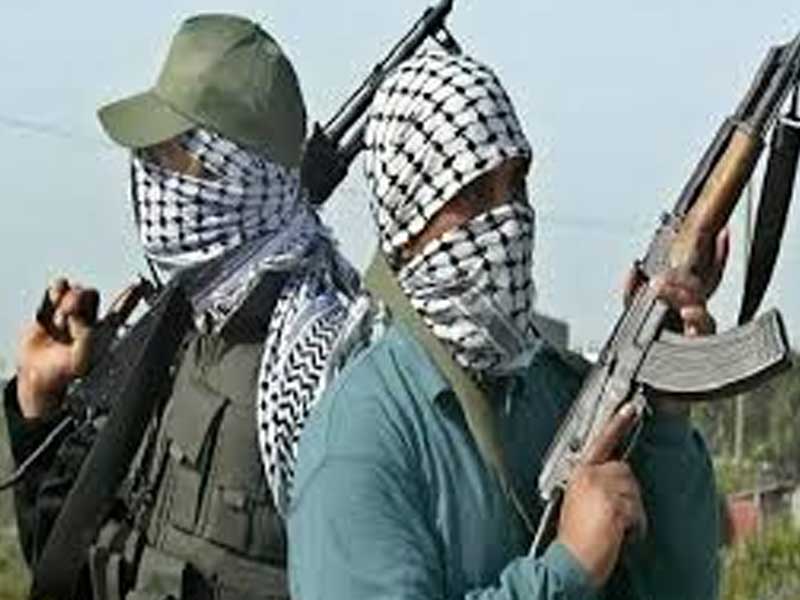
The killings persist because no one is held to account, contends Pat Onukwuli
When will the killings stop, across Nigeria’s many fault lines, from Benue State and Kaduna State to Zamfara State, Borno State, and, most recently again, Plateau State? This question, increasingly, defines the national condition. It is no longer episodic, nor is it confined to one geography. It is structural. And until it is confronted as such, it will persist.
There is a persistent tendency, particularly in moments of collective grief, to localise tragedy, to treat each outbreak of violence as discrete, contained, and exceptional. Plateau is often framed this way. So too Benue. So too Zamfara. Yet such framing obscures more than it reveals. What is unfolding is not a sequence of isolated crises, but a distributed pattern of insecurity, one that reproduces itself across regions and zones with unsettling consistency.
Recent events illustrate this continuity with stark clarity. On March 29, 2026, at least 28 people were killed in Jos North. Days later, on April 3, President Bola Ahmed Tinubu visited Jos, meeting victims’ families at the airport rather than within the affected communities, but a power failure curtailed the visit. Yet within hours of that visit, fresh killings were reported in Jos South. The sequence is difficult to dismiss in its absence, without reach or reassurance, without interruption.
This is not an isolated contradiction. It is a pattern. An earlier presidential visit to Benue in 2025 attracted similar scrutiny and engagement. It did not get to the epicentres of violence, impeded by poor road infrastructure. These incidents, while circumstantial, are nonetheless indicative. Insecurity, inadequate infrastructure, and unreliable electricity supply are not discrete challenges but interconnected elements of a broader governance deficit.
It may be argued that such occurrences are symbolic rather than substantive. However, symbolism carries interpretive weight. However, explanation does not neutralise implication. When the state’s highest office cannot fully access affected communities, it reflects, in concentrated form, the dreadful everyday limitations experienced by ordinary citizens. This underscores the gap between institutional presence and lived reality.
Symbolism, in such contexts, is not incidental. It is diagnostic. Across Nigeria’s security scene, the forms of violence differ: insurgency in Borno, banditry in Zamfara, and communal conflict in the Middle Belt, but the underlying style remains consistent: fragile security coverage, constrained deterrence, and an accountability deficit that continues to erode public confidence. What changes is the method; what persists is the pattern.
It is within this already layered environment that the reported joint aerial operation of December 25, 2025, conducted by the United States in collaboration with the Nigerian government, must be situated. Interpreted one way, it represents a necessary escalation: a recognition that domestic capacity may require external reinforcement. Interpreted another way, it raises enduring questions around sovereignty, proportionality, and the long-term efficacy of externally supported force within a domestic security framework.
A measured assessment accommodates both readings. It neither assumes that such intervention is sufficient nor dismisses it as inconsequential. Rather, it situates it within a continuum in which tactical actions, however precise, must ultimately be evaluated against strategic outcomes. The central test remains unchanged: do these interventions disrupt recurrence, or merely respond to it?
At the core of this recurrence lies a more enduring deficit: accountability. Across affected regions, the limited visibility of arrests, prosecutions, and convictions reinforces a perception of impunity. Justice, when delayed or inconsistently applied, ceases to function as deterrence. Instead, it becomes part of the enabling environment for further violence.
To acknowledge structural constraints, geographic scale, infrastructural deficits, and institutional limitations is necessary. But to rest on them is insufficient. The persistence of killings across multiple states suggests not only constraint, but a systemic vulnerability, one that reproduces itself irrespective of location.
The responsibility before President Tinubu is therefore not local, but national in scope. The challenge is not simply to respond to incidents, nor to demonstrate presence, but to alter the conditions that allow such incidents to recur. This requires coherence among security operations and judicial processes, infrastructure and accessibility, and policy articulation and lived experience.
It is insufficient for the state to imply, whether directly or indirectly, that these conditions are enduring features of national life. Such a posture risks normalising instability. Citizens are entitled not only to assurances but to measurable improvements in safety, mobility, and institutional reliability. Nigeria’s designation as a Country of Particular Concern, in this context, should not be read solely as external criticism. It is, more precisely, a reflection; an acknowledgement that patterns of harm and gaps in protection have reached systemic visibility. It is a mirror, not a verdict.
The question persists, therefore, with increasing urgency: when will the killings stop? It is not rhetorical. It is diagnostic. It measures the distance between constitutional obligation and lived reality. Until it is answered not in visits, statements, or isolated operations, but in sustained and verifiable outcomes, it will continue to define Nigeria’s national discourse.
In the final analysis, the resilience of a state is determined not by the scale of its challenges but by the effectiveness and credibility of its response. What is at stake is not merely the resolution of discrete crises, but the restoration of a national condition in which such crises no longer reproduce themselves. Anything less is unsustainable.
Dr. Onukwuli is a legal scholar and public affairs analyst., patonukwuli2003@yahoo.co.uk















Leave a comment