



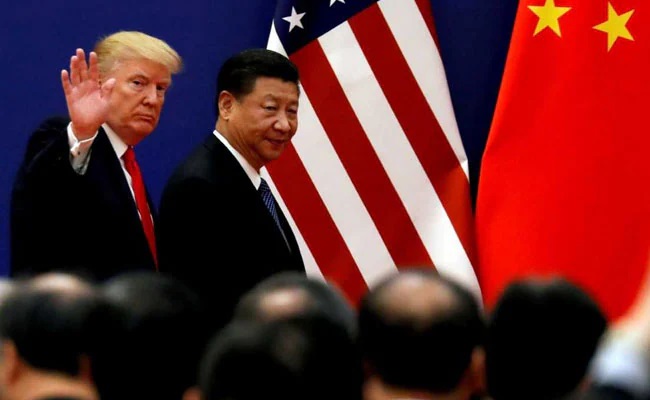

April 15, (THEWILL) — United States President Donald Trump has claimed that China has agreed not to supply weapons to Iran, amid rising geopolitical tensions linked to the ongoing conflict in the Middle East and heightened scrutiny of maritime security in the Strait of Hormuz.
Trump also expressed optimism about future relations between Washington and Beijing, saying he expects improved diplomatic engagement with Chinese President, Xi Jinping, ahead of their scheduled meeting on May 14–15, where he predicted a notably warm reception.
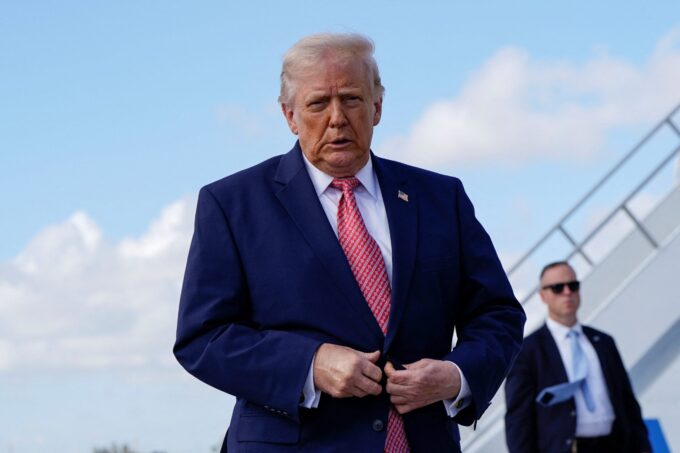
In a post on Wednesday on his Truth Social platform, Trump asserted that Beijing has pledged not to send weapons to Iran, following concerns over reported military cooperation between China and Tehran.

He further claimed that China is supportive of his approach to stabilising maritime routes in the Middle East, particularly the strategic Strait of Hormuz, one of the world’s most critical energy corridors.
Trump stated, “China is very happy that I am permanently opening the Strait of Hormuz. I am doing it for them, also — And the World. This situation will never happen again. They have agreed not to send weapons to Iran.”
Looking ahead to his anticipated meeting with Xi Jinping, Trump struck a confident tone, suggesting a strong personal rapport between the two leaders.
“President Xi will give me a big, fat hug when I get there in a few weeks. We are working together smartly and very well! Doesn’t that beat fighting?” he said.
He added that while diplomacy is preferred, the United States remains prepared for escalation if necessary, underscoring the mixed tone of cooperation and deterrence in his remarks.
The Strait of Hormuz remains one of the world’s most sensitive maritime chokepoints, with nearly half of China’s crude oil imports passing through the waterway. Globally, more than 20 percent of seaborne oil trade flows through the corridor annually, making it vital to global energy stability. Any disruption in the passage has historically triggered sharp fluctuations in global oil prices, with Asia—particularly China—among the most exposed regions due to heavy reliance on Gulf crude.
While no independent confirmation from Chinese authorities regarding any formal agreement to halt arms supplies to Iran or to endorse changes in maritime policy as described by Trump, Iranian military officials, including Maj. Gen. Ali Abdollahi of the Khatam al-Anbiya Central Headquarters, have warned that continued restrictions on Iranian shipping could trigger wider regional retaliation.
According to Abdollahi, if Iranian commercial and oil vessels are obstructed, Tehran could consider reciprocal measures affecting maritime traffic in the Persian Gulf, the Sea of Oman, and the Red Sea, stressing that Iran would defend its sovereignty and trade interests “with full force”.











Leave a comment