



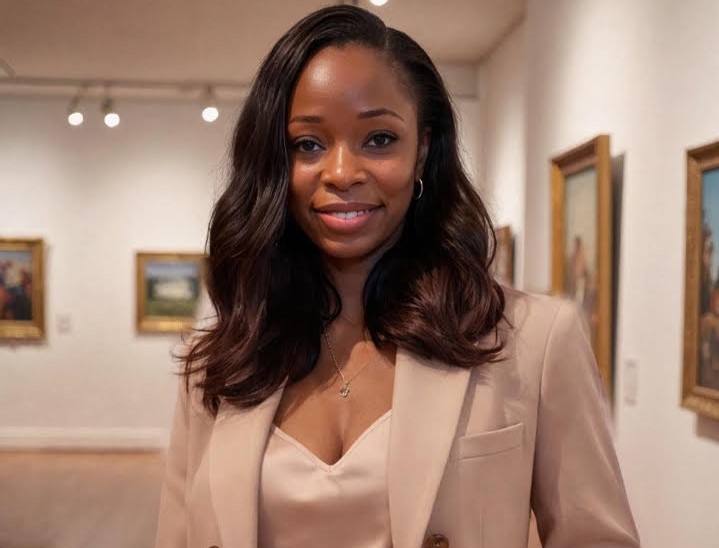
There are designers whose work announces itself, and then there are those whose work lingers, unfolding slowly, revealing intention over time. Tinuke Odunfa, founder and head Interior Architect & Designer at The 4th Place Company, belongs firmly in the latter. With a practice shaped by discipline, cultural awareness, and a deep respect for process, she has built a body of work that resists excess and leans into clarity. In this conversation, she speaks about her craft, context, and the responsibility of designing spaces that carry meaning. Nume Ekeghe brings excerpts
Your work moves across residential, commercial, and now culturally significant national projects. What, for you, defines a distinct design voice within Nigeria’s evolving landscape?
My perspective is rooted in structure before expression. Creativity and artistic flair is inevitable for me so discipline, clarity, and function come first. Every design choice has to be intentional and earned.
I design with restraint rather than excess, focusing on balance, proportion, and how a space feels the moment you enter it.
Context matters deeply to me: who the space serves, what it needs to communicate and the influencing environment in which it exists. That grounding is what makes my work in Nigeria feel distinct, thoughtful, and lasting.
Across such varied project types, what principles remain constant in how you approach design?
My foundation in commercial design has shaped everything. It taught me rigor, how to think at scale, how to respect timelines, budgets, consultants, and how to design for people I may never meet. That discipline never leaves you.
Across all project types, my guiding principles are clarity, restraint, and emotional intelligence. I don’t design to impress other designers. I design to serve the space, the client, and the story that needs to be told.
In Nigeria especially, where design can sometimes lean toward excess, I’m interested in balance, spaces that feel resolved rather than loud, confident rather than busy.
I also design with context in mind. Where are we? Who are we designing for? What does this space need to communicate subtly, without explanation? Those questions guide everything I do.
Your recent work with the National Museum in Lagos places you at the intersection of design and cultural memory. What does that responsibility mean to you, both professionally and personally?
This project is deeply personal. Designing and renovating a building for the National Museum in Lagos isn’t just another commission, it’s a responsibility.
It places you in conversation with history, identity, and national memory.
Artistically, it challenges me to design with humility.
The architecture and interiors must never overpower the story. They must support it. Culturally, it’s an opportunity to help shape how Nigerians, and the world, experience our history in a contemporary way.
Personally, it feels like a quiet full-circle moment.
I’ve spent years honing my craft, often behind the scenes, and this project affirms that there is space in Nigeria for designers who take both creativity and professionalism seriously.
Interior design is often misunderstood as surface-level work. What are some of the misconceptions you’ve encountered, and how have you defined your professionalism in response?
One of the biggest misconceptions is that interior design is primarily about decoration.
People underestimate the technical depth, the coordination, problem-solving, negotiation, documentation, and stamina involved.
My career has been built on showing up prepared. On understanding drawings, systems, contractors, and constraints.
On being someone clients trust with complex projects, sensitive budgets, and high expectations.
Standing out isn’t about being flashy. It’s about consistency, accountability, and taste that doesn’t expire. I’ve earned respect by delivering, by managing difficult situations calmly, and by treating every project, big or small, with seriousness.
Looking back, which projects have stayed with you the most, and why?
My favorite projects are usually the ones that demanded the most clarity.
Projects where the brief was layered, the stakeholders were many, or the space had to communicate something intangible – trust, calm, authority, or belonging.
I’ve loved commercial projects where structure and creativity had to coexist, and residential projects where restraint made the space feel timeless rather than trendy. Increasingly, I’m drawn to projects with cultural weight, spaces that will outlive trends and speak to something larger than the client or the designer.
When someone walks into a space you’ve designed, what do you hope stays with them long after they leave?
I want people to remember how they felt when they first walked in, before they noticed finishes or furniture.
That first inhale. That moment of calm, curiosity, or quiet confidence.
I want my spaces to feel considered, not forced.
To feel like they make sense, even if you can’t immediately explain why. When someone leaves a space I designed, I hope they feel grounded, respected, and slightly changed, as if the space understood them.
As a designer and as an artist, I want to be remembered for emotional intelligence.
For designing spaces that don’t shout, but stay with you. Spaces that reveal themselves slowly and feel better over time.
The conversation around the Benin Bronzes continues to evolve. From your perspective, how should we be thinking about their return and ownership?
The debate around the Benin Bronzes goes far beyond technical considerations like climate control or museum storage. At its heart, it’s a clash between two worldviews.
In the West, these works are treated primarily as historical artifacts, fragile objects to be preserved under strict institutional standards, which I understand.
But for the people of Benin, these works are not simply objects. They represent lineage, memory, identity, and continuity. They are culturally alive. Once you acknowledge that, the conversation changes.
True repatriation isn’t just about returning objects while maintaining control over how they are displayed or cared for.
That’s supervision, not restitution. If these works are to return, the authority to decide their future must rest fully with the culture that created them. Autonomy is essential.
If you could define a project that fully captures your creative ambition, what would it look like?
My dream project is a boutique hotel with a generous budget and real creative freedom. A project where design is trusted, not diluted – where storytelling, materiality, and atmosphere are taken seriously.
Hospitality design allows you to choreograph experience from arrival to departure. It’s emotional, immersive, and demanding. That’s where I thrive.
And the ideal client; what kind of collaboration brings out your best work?
My dream client is someone who understands that good design is an investment, not an expense. Someone curious, decisive, and respectful of expertise.
They don’t need to know the answers – they need to trust the process. The best clients are collaborators who value thoughtfulness, patience, and integrity over trends.















Leave a comment