



From Jude Chinedu and Geoffrey Anyanwu, Enugu
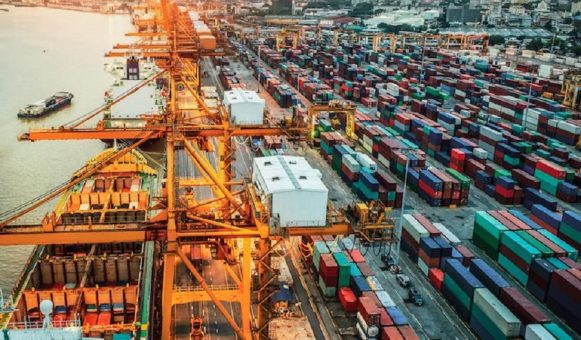
Stakeholders in academia and regional development have said the South East stands to gain significantly from improved maritime systems, stressing that better logistics, infrastructure, and policy implementation could unlock economic growth across the region.
This was the central message at the 3rd International Conference of the Institute of Maritime Studies, University of Nigeria, Enugu Campus, where participants examined how maritime development can drive sustainable operations in Africa.
Delivering remarks on behalf of the Managing Director/Chief Executive Officer of the South East Development Commission (SEDC), Mark Okoye II, the Executive Director, Natural Resources, Agriculture and Rural Development, Dr Cliff Ogbede, said the region’s economic potential is closely tied to its ability to connect efficiently to maritime value chains.
“The South East is not typically described as a maritime region. However, that framing misses the deeper reality. Our region is deeply integrated into maritime value chains through trade, production, and logistics. The real constraint is not absence of access, but inefficiency of connection,” he said.
He noted that logistics challenges remain a major barrier to competitiveness, revealing that costs can account for as much as 30 to 40 per cent of the final price of goods in Nigeria.
“Port dwell times often stretch far beyond global benchmarks, creating delays that ripple across the entire economy. What this means, quite simply, is that improving maritime linkages is one of the most direct ways to unlock economic value in the South East. It reduces the cost of doing business, expands market access, and strengthens the viability of local industries.
“When we speak about maritime, we must, therefore, think beyond ports and vessels. We must think in terms of systems — systems that connect farms to processing centres, processing centres to logistics hubs, and logistics hubs to export corridors. Systems that enable predictability, reduce waste, and support scale,” he said.
He said agriculture presents a clear example of how maritime efficiency can transform the economy, particularly in reducing post-harvest losses and boosting exports.
“At the same time, post-harvest losses are estimated to be as high as 30 to 50 per cent in some value chains. This is not simply an agricultural problem. It is a logistics problem. It is a systems problem. And it is precisely where maritime efficiency, cold chain infrastructure, and coordinated transport networks can make a measurable difference.
Globally, this space is valued at over $1.5 trillion annually and continues to expand. For Nigeria, and, indeed, for the South East, inland waterways, aquaculture, and associated industries present a largely untapped frontier,” he said.
While highlighting these opportunities, he stressed that implementation remains the biggest challenge.
Earlier in his opening address, the Vice-Chancellor, University of Nigeria, Nsukka, Prof. Simon Ortuanya, said the maritime sector remains critical to economic growth and regional integration, noting that the real challenge lies in translating global regulations into practical outcomes.
“This year’s theme captures a fundamental challenge of our time: the transition from normative frameworks to practical implementation. The real test lies not in the existence of these frameworks, but in their domestication, enforcement, and measurable impact,” he said.
Also speaking, the Director, Institute of Maritime Studies, Prof. Florence Orabueze, said Africa’s maritime potential remains largely untapped due to weak implementation of policies.
“Too often, the strength of policy is undermined by the weakness of execution. It is this gap that demands our urgent attention. We must move from aspiration to realisation, from policy articulation to operational excellence,” she said.















Leave a comment