



From Uche Usim, Washington DC
The federal government has ruled out any immediate plan to approach the International Monetary Fund (IMF) for fresh loans, opting instead to double down on key economic reforms, domestic resource mobilisation, and private sector-driven growth to ease mounting debt pressures.
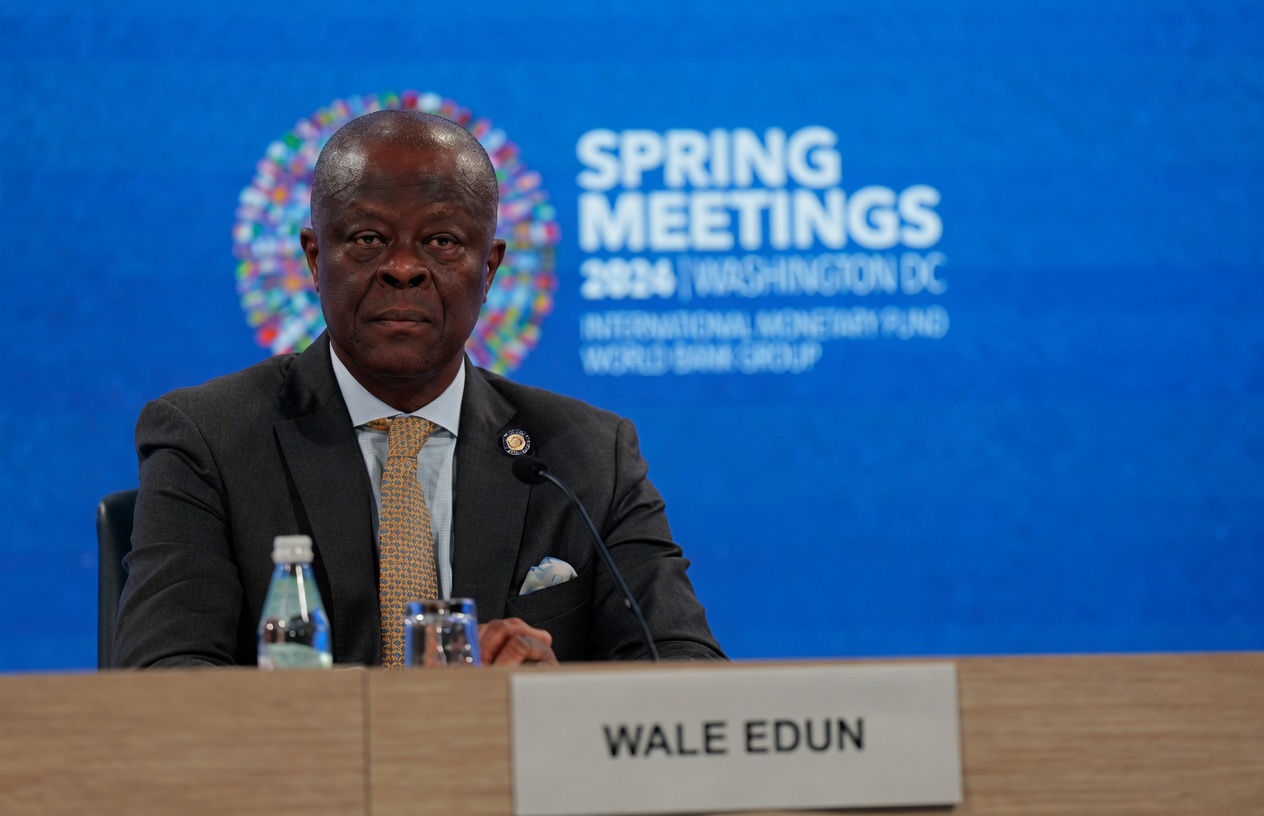
Speaking against the backdrop of rising concerns over Africa’s debt vulnerability, the Minister of Finance and Coordinating Minister of the Economy, Mr Wale Edun, noted that while global financial support mechanisms remain important, Nigeria is charting its own course, which is anchored on policy reforms rather than emergency borrowing.
He spoke at the African Finance Ministers’ press conference on the sidelines of the IMF-World Bank Spring Meetings in Washington DC on Thursday.
“Nigeria has no plans at the moment to approach the IMF or any other such body,” he said, expressing confidence in the country’s ongoing macroeconomic adjustments.
Across Africa, debt sustainability has come under strain, largely due to elevated borrowing costs and what many leaders describe as an unfair risk premium imposed on the continent.
These high interest rates have significantly increased the share of government revenues committed to debt servicing, often at the expense of critical sectors such as healthcare and education.
However, Edun said President Bola Tinubu has joined other African leaders in calling for a reassessment of how global rating agencies evaluate African economies.
The goal, he said, is to reduce the premium on African debt and make financing for development more affordable.
He further explained that Nigeria has already taken bold steps in economic recovery with the removal of untargeted fuel subsidies, previously costing up to five per cent of GDP, which has freed up fiscal space, while the shift to market-based pricing for foreign exchange and petroleum products is aimed at improving efficiency and transparency.
Beyond domestic reforms, Nigeria is advocating innovative financing solutions at the global level. Among these is the increased use of guarantees by multilateral institutions to de-risk investments in African economies and attract private capital at lower cost.
While the IMF has proposed a $50 billion support facility targeted largely at vulnerable countries, many of them in Africa, Edun stressed that the priority is not just access to funds, but the speed and scale of disbursement when needed.
Equally critical, he argued, is ensuring that support reaches the most vulnerable populations. Rather than broad-based subsidies, the government is pushing for targeted interventions that protect low-income households without derailing reform efforts.
“There is a need to deliberately focus on the most vulnerable households,” Edun said, even as he warned that generalised subsidies could undermine the progress of ongoing economic restructuring.
With digitalisation identified as a key enabler of efficiency and growth, Nigeria, he said, is also ramping up efforts to automate systems and improve governance through technology.
Also at the briefing, the Minister of Finance and Development Planning of Lesotho, Retselisitsoe Matlanyane, and Hervé Ndoba, Minister of Finance and Budget, Central African Republic, noted that the strategy centres on four key pillars: deepening economic reforms, improving revenue-to-GDP ratios, accelerating digitalisation—including the use of artificial intelligence—and crowding in private sector investment.
“These are the pathways to reduce dependence on expensive debt,” they noted.














Leave a comment