



By Chinelo Obogo
The International Air Transport Association (IATA) has taken a hard look at the aviation industries in Africa and Europe and called on governments across both regions to urgently implement far-reaching reforms to prevent further deterioration of the sector and economic collapse.
While the challenges differ across the two continents, IATA warned that the outcome of continued policy missteps remains the same, being a steadily weakened aviation industry.
The global airline body stressed that poor regulatory choices are undermining growth, efficiency and long-term sustainability.
IATA rarely holds back when it believes governments are not enacting the right policies.
In its recent interventions, especially those directed at policy makers in Europe and the other at African governments still struggling to create conducive environments for the sector, IATA spoke uncomfortable truths to power.
Nonetheless, IATA offers different remedies to both continents.
Europe
In Europe, IATA’s frustration is that it has been issuing the same warnings for years and watching policy move in the wrong direction. It said European air connectivity grew by just 1% in 2025, a figure that is below the continent’s compound annual growth rate of 1.5% over the past decade. IATA describes this as a flatline.
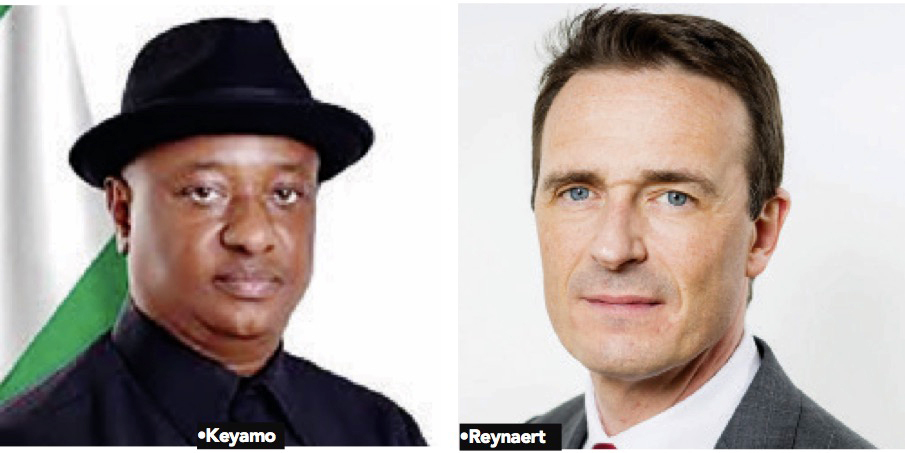
IATA’s Senior Vice President for External Relations, Thomas Reynaert, said: “The growth of airline route networks reflects both developments in demand and the operating environment. That the European Union (EU)’s air connectivity will virtually flatline in 2025 is no surprise. The regulatory burden is onerous, costs are high, and the EU’s well-documented underlying competitiveness issues have not been seriously addressed. Consumer protections are a case in point. The flaws of the current regulation have been known but attempts to correct them appear to be doomed to just make them worse. These are the kind of frustrations that make it more difficult for airlines to grow the connectivity that Europe relies on to power jobs and economic growth.”
According to him, 1,127 routes were cancelled across the EU in 2025, while only 1,281 were added producing a net gain of just 154 routes. For a sector that supports over 9.2 million jobs and generates €760 billion in GDP across the European Union, a growth rate of 1% is not a success story.
IATA said it is irked by EU261, the passenger rights legislation that governs compensation for flight delays, cancellations, and denied boarding. It said the regulation, intended to protect consumers, has instead spiralled into an €8 billion annual cost burden for European airlines. The association said it is not calling for the cancellation of passenger rights; rather, it is calling for reform, and an increase in the time thresholds that trigger compensation obligations. Without it, IATA said, the thinner, less profitable connections that serve communities and travellers will become difficult to justify.
The aviation body said that the EU261 is not the only problem. It said Europe’s Sustainable Aviation Fuel mandates, especially the e-SAF requirement should be scrapped outright. The association said it is not against the transition to cleaner aviation fuels; rather, it is against a mandate that, as currently structured, drives up costs without increasing the actual production of sustainable fuel. IATA is proposing a ‘book-and-claim’ purchasing process that would allow airlines to buy SAF where it is produced most efficiently, rather than being locked into supply chains that add cost without adding benefit. Emissions Trading Scheme revenues, IATA said, should be redirected toward making SAF production cheaper rather than functioning as a fiscal instrument.
IATA then urged the EU to strengthen the regulation of airport and air navigation charges which have been rising as airlines have very limited power to contest. It also wants the elimination of passenger taxes just as Sweden has done. In summary, IATA’s prescription for Europe is: fewer mandates, lower costs, and more room for airlines to make commercial decisions about which routes to operate and how to grow.
Africa
While Europe’s problem is an excess of regulation that has become economically damaging, Africa’s challenge is the absence of policies that allow aviation to function as a normal market. When speaking on Africa, IATA’s tone is less exasperated and more constructive.
Speaking at the Focus Africa Conference in Addis Ababa, IATA’s Regional Vice President for Africa and the Middle East, Kamil Alawadhi, articulated an aviation strategy for the continent built on safety, cost-competitiveness, energy security and sustainability, and ease of doing business. For Africa, IATA is not asking governments to deregulate their way to a better aviation market, it is asking them to govern better.
IATA speaks on the blocked funds crisis saying that as of the end of March 2026, African governments were holding $774 million in airline revenues that carriers were legally entitled to repatriate under existing bilateral agreements, but could not access. Algeria tops the list with $258 million in blocked funds, while the XAF Zone follows with $105 million, Mozambique with $82 million, Eritrea with $78 million, and Angola with $73 million. IATA said African governments are not honouring obligations they have already agreed to and the consequences are that airlines operating routes to and from these markets face the prospect of earning revenue they cannot spend, invest, or repatriate. In an industry that operates on thin margins and requires constant capital reinvestment, this is an existential threat.
The association also spoke on taxes and charges, saying that aviation costs in Africa are 15% above the global average and they are driven by government-imposed charges which IATA argues are being levied contrary to international civil aviation standards. For instance, Tanzania’s API-PNR charge of $45 per one-way trip is the highest in the world. Similar charges in Angola, the Democratic Republic of Congo, Nigeria, Ghana, and Kenya also exceed global norms. These charges directly affect ticket prices and determine if routes are viable at all.
On visas, IATA said that nearly half of all intra-African travel still requires visas to be obtained before departure and that this barrier suppresses regional mobility, dampens tourism, and works directly against the goal of a more economically integrated continent. In situations where visa requirements have been eased, IATA said the results have been more positive with stronger tourism revenue generated, more resilient routes, and better regional air services.
IATA’s agenda for Europe and Africa are separate, as the battles being fought over EU261 and e-SAF mandates have no connection with the conversations about blocked funds and visa liberalisation in Addis Ababa.
However, the reasoning of the association is identical. IATA said governments that view aviation as a source of revenue are making themselves poorer in the long run. It said every route that does not get launched, every connection that gets cut, every traveller who does not fly because the ticket is too expensive, represents an economic opportunity that never materialises.
“Aviation is the economic infrastructure for Africa. Its value lies in the long term benefits it delivers. An aviation strategy focused on safety, cost-competitiveness, energy security/sustainability, and ease of doing business will create jobs, enable trade, support tourism, and further regional integration. The prosperity this generates will allow governments to push forward social and economic development more durably than any tax that might be collected from travelers,” Alawadhi said.















Leave a comment