



Jubril Kubau
History often remembers leaders not by the comfort of the seasons they governed, but by the storms they endured and the steadiness with which they held the helm. In moments of crisis, leadership sheds its ceremonial robes and stands exposed; measured not by rhetoric, but by resolve; not by outrage, but by outcomes. It is within such a moment that Governor Uba Sani of Kaduna State has etched a defining chapter in the evolving story of governance, resilience, and moral courage in Nigeria.
On January 18, 2026, terror returned uninvited to Kurmin Wali, a quiet community in Kajuru Local Government Area. Armed men invaded three churches during worship services, firing sporadically to instil fear before abducting congregants and vanishing into the surrounding forests. Sanctuaries were violated. Families were torn apart. Faith was tested in its most vulnerable hour. For a state that had laboured painstakingly to stabilise its security environment since 2023, the attack was both a human tragedy and a deliberate attempt to fracture hard-earned progress.
Yet adversity does not merely test systems; it reveals character. Faced with this brutal provocation, Governor Sani neither surrendered to despair nor allowed the tragedy to paralyse governance. He refused to dramatise pain, refused to amplify fear, and refused to grant the abductors the psychological victory they sought. Instead, he chose a path that has become increasingly rare in public life: calm, disciplined leadership anchored on duty rather than drama.
The morning after the attack, on January 19, the governor was in Kurmin Wali. He stood with grieving families, listened to their anguish, and offered a promise that carried the full moral weight of his office: that his administration would do everything possible to bring their people home. In a country where such assurances have too often dissolved into silence, the pledge was not casually made. It was a covenant with the people, undertaken with a clear understanding of its consequences.
Behind the scenes, the machinery of rescue moved into motion. Working quietly and relentlessly, Governor Sani coordinated round the clock with the nation’s highest security authorities, maintaining close engagement with the National Security Adviser, Mallam Nuhu Ribadu, and the Director General of the Department of State Services, Mr. Oluwatosin Adeola as well as the leadership of the Nigeria Police Force. Intelligence-driven operations intensified. Search-and-rescue efforts expanded across difficult terrain. Security agencies tightened pressure with patience and precision, guided by a singular objective: the safe return of every abducted soul.
In moments like this, leadership is often tempted by spectacle. Kaduna witnessed the opposite. While rescue efforts advanced discreetly, governance did not pause. The Governor stayed focused, stayed the course, and refused to allow bandits to dictate the rhythm of the state. Projects were commissioned. New ones were flagged off. Institutions continued to function. Kaduna, visibly and deliberately, remained in motion.
Road reconstruction works commenced across strategic corridors. Over 60 kilometres of internal roads at Ahmadu Bello University, Zaria were flagged off, reaffirming the state’s commitment to education as a shared responsibility. The Kaduna State College of Education, Gidan Waya, long in decline, was fully reconstructed, renovated, and equipped, restoring a vital teacher-training institution, particularly for Southern Kaduna. Operation TSAPTA was launched to improve environmental sanitation and public health, engaging thousands of women and young people in lawful employment while restoring dignity to urban spaces.
Healthcare delivery was strengthened with the commissioning of primary healthcare centres, the distribution of modern medical equipment and ambulances, and the induction of 1,800 new health workers. Inclusion advanced with the flag-off of the North-West advocacy campaign for the Reserved Seats for Women Bill, placing Kaduna at the forefront of the national push for gender-balanced representation. Strategic partnerships deepened through engagements with the United Nations Development Programme and the Nigerian Institute of Public Relations, positioning the state as a hub of reform, dialogue, and national policy engagement.
This continuity was not coincidence; it was conviction. It sent a clear message that governance would not retreat into paralysis because criminals sought attention. Progress itself became an act of resistance.
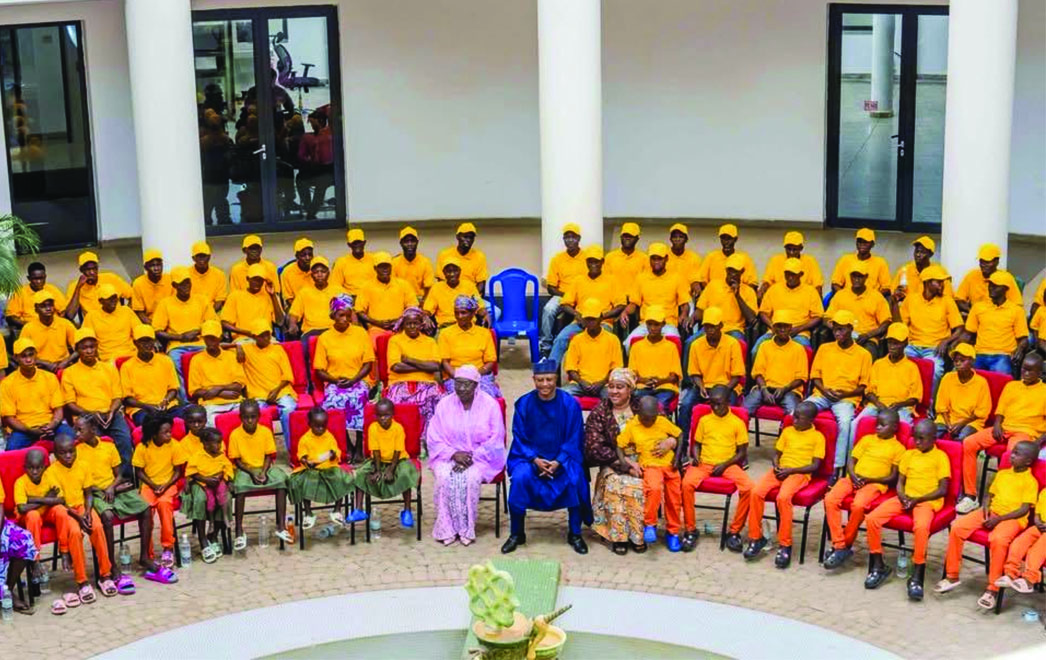
Then, gradually, the tide turned. Reports emerged of worshippers escaping while being led into the bush. Security pressure mounted. And finally, the moment Kaduna had laboured toward arrived. All abducted worshippers, 183 men, women, and children, regained their freedom. Eleven who had earlier been hospitalised were treated, discharged, and reunited with their families. The remaining 172 were formally received by the Governor, marking a decisive victory for Kaduna State and the Federal Government’s coordinated security efforts.
Across communities and faith lines, relief gave way to gratitude. Churches rang with thanksgiving. Families embraced. A people bruised but unbroken found reassurance that their government had not abandoned them. Northern Christian leaders expressed profound joy, describing the release as a moment of grace and resolution, and commending the Governor for listening to the voice of the people and keeping his word.
What mattered most was not the mechanics of the release, but the fact of life restored. In that outcome lay a deeper truth: that leadership, when anchored on empathy and persistence, can reclaim even the darkest moments.
The Kurmin Wali episode did not occur in isolation. It sits within a broader narrative of deliberate peacebuilding under Governor Uba Sani’s administration. Since assuming office in 2023, he has advanced what has come to be known as the Kaduna Peace Model; an approach grounded in dialogue, inclusion, fairness, and early intervention. Over the past two and a half years, this model has yielded measurable results, most notably the absence of ethno-religious conflict in a state once synonymous with division.
That transformation has not gone unnoticed. When the 105th Archbishop of Canterbury visited Kaduna two weeks ago, he reflected on his first visit in 2002, a period marked by deep tension and recurrent crises. He noted with clarity the relative peace and stability now characterising public life, commending the state’s inclusive governance and reconciliation efforts. The visit was more than symbolic; it was affirmation that patient, principled leadership can alter the trajectory of a place.
Beyond peace, the administration’s development agenda has been both expansive and deliberate. Since 2023, approximately 140 road projects covering 1,335 kilometres have been initiated across Kaduna State, with dozens already completed. Communities long excluded from infrastructure investment, some for over twelve years, have seen roads restored, travel times reduced, and economic activity revived. Agriculture corridors have been strengthened to support farmers and reinforce Kaduna’s leadership in ginger production, which accounts for nearly 80 percent of national output. Renewable energy projects have brought electricity to rural communities, stimulating enterprise, healthcare delivery, and learning.
Transport reforms have reimagined mobility through modern bus terminals, affordable mass transit, and future rail and rapid bus corridors. Fiscal reforms have strengthened transparency and accountability, earning Kaduna recognition as Nigeria’s most transparent state for consecutive years. Health and education investments have expanded access, improved quality, and restored confidence in public institutions.
Yet, at the heart of this governance philosophy lies a simple, uncompromising principle: that the lives of citizens come first. The Kurmin Wali rescue affirmed this ethos more powerfully than any policy document could. The governor’s promise, made in the raw aftermath of tragedy, survived pressure. It was kept.
In refusing to be defined by adversity, Governor Sani did not deny the pain of Kurmin Wali. He confronted it with discipline, strategy, and empathy. He demonstrated that leadership does not always roar; sometimes it works quietly, persistently, and effectively, until hope is restored.
The story of Kurmin Wali will be remembered not only for the cruelty that began it, but for the resolve that ended it. It stands as a testament to a style of leadership that understands that silence can be strength, continuity can be courage, and governance, when anchored on duty, can prevail over fear.
In an era where adversity often defines leaders, Uba Sani has shown that it is still possible for leaders to define adversity and, in doing so, diminish its power.
• Kubau, a mass communication teacher, resides in Zaria, Kaduna State.














Leave a comment