



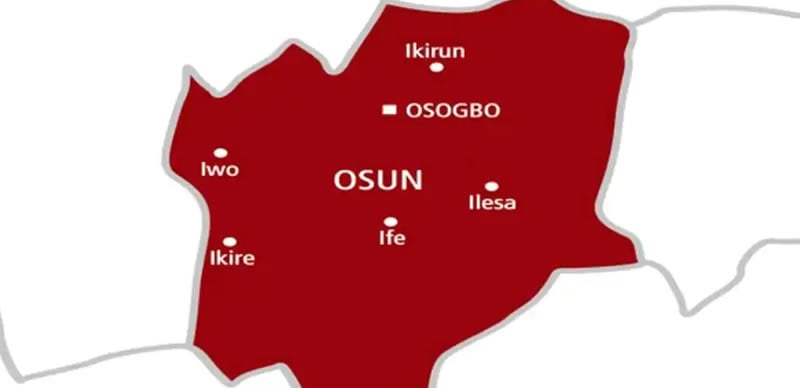

At defining moments in the history of a state, elections cease to be routine political exercises and become referendums on direction, identity, and collective ambition. Osun State appears to be approaching such a moment. The next governorship contest is not merely about party loyalty or campaign spectacle; it is about the quality of leadership that will represent Osun within Nigeria’s competitive federal landscape and shape its developmental route for the next decade.
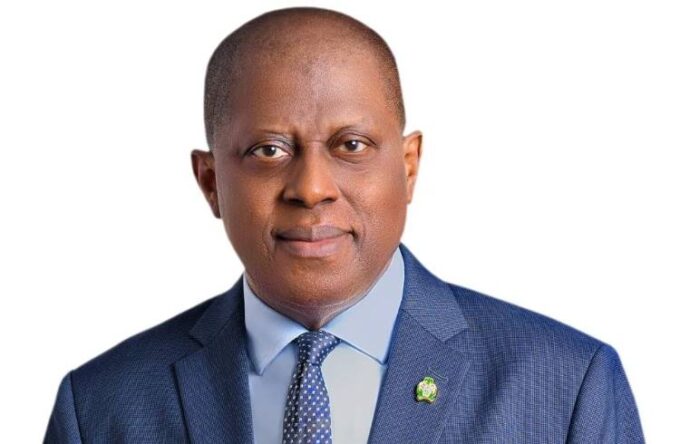
In this unfolding conversation, the name Munirudeen Oyebamiji, popularly known as AMBO, has steadily emerged as a symbol of structured competence and administrative readiness. His supporters argue that Osun needs not just a popular figure, but a governor equipped with the technical capacity, fiscal literacy, and institutional discipline required to navigate modern governance.
Osun State operates within tight fiscal margins. Internally Generated Revenue remains modest relative to infrastructure demands, youth unemployment challenges, and the growing need for educational and healthcare reform. In such a context, governance cannot be improvised; it must be engineered. A state with limited resources requires a leader who understands budgeting cycles, debt management, investment signalling, and long-term planning. AMBO’s background in financial administration and public management is frequently cited as evidence that he understands the mechanics of governance beyond political optics.
Effective leadership today demands more than charisma. It requires systems thinking, the ability to align agriculture with agro-processing, education with employability, infrastructure with industrial clusters, and revenue expansion with fiscal prudence. Observers note that AMBO’s professional trajectory reflects exposure to structured financial management and policy coordination, attributes that could strengthen Osun’s capacity to move from project-based governance to program-based transformation.
Political organisation also plays a crucial role in governance effectiveness. The All Progressives Congress is characterised by layered institutional structures that extend from the ward level to the national executive. Such organisational coherence can facilitate smoother coordination between state and federal authorities, especially in areas like infrastructure financing, agricultural policy alignment, and youth enterprise development. In Nigeria’s federal system, where intergovernmental relationships often determine access to opportunities, party alignment and institutional depth may serve as strategic advantages.
Leadership temperament further distinguishes effective governors. Civil services thrive under clarity, predictability, and procedural consistency. A calm, methodical leader who prioritises consultation and strategic sequencing can foster bureaucratic morale and policy continuity. For a state aspiring to compete economically with more industrialised regions, administrative stability becomes an asset rather than a luxury.
There is also a symbolic dimension to leadership. Governors do not merely administer states; they represent them. Within the Nigerian Governors’ Forum and other intergovernmental platforms, a governor’s intellectual capacity, negotiation skills, and policy fluency shape perceptions of the state he or she represents. Many of AMBO’s advocates contend that his analytical disposition and administrative grounding would allow Osun to project a confident and competent image nationally. For citizens, there is pride in seeing their state represented by leadership that commands respect within policy circles.
Beyond symbolism lies substance. Osun’s youth population requires more than campaign-era empowerment rhetoric. Sustainable youth development demands structured vocational pathways, digital skill integration, entrepreneurship incubation, and industry partnerships. Transformational governance must institutionalise opportunity rather than distribute episodic incentives. The next governor must think in systems, not slogans.
Ultimately, the choice before Osun is about governance architecture. Will the state consolidate its institutions, deepen fiscal discipline, and pursue a long-term economic strategy? Or will it remain driven by short-term political cycles? Advocates for AMBO argue that the state’s future prosperity depends on disciplined leadership anchored in competence, planning, and administrative experience.
Osun deserves leadership that inspires pride, not merely excitement. It deserves a governor who approaches public finance with caution, infrastructure with sequencing, and youth development with a measurable strategy. If governance is to be judged by capacity rather than charisma, by systems rather than spectacle, then the argument for AMBO rests on the belief that structured leadership offers Osun its most reliable path toward sustainable growth.
The future of Osun should be shaped by strategic foresight and disciplined execution. At this pivotal moment, the state’s electorate must ask a fundamental question: what kind of leadership best safeguards its long-term prosperity? For many, the answer lies in competence, institutional strength, and the promise of a governor prepared not just to lead but to build.
In comparing leadership styles, some analysts argue that the current administration under Ademola Adeleke has emphasised visibility and populist engagement, yet critics question whether spectacle has consistently translated into institutional deepening and fiscal restructuring. While mass appeal can energise political participation, sustainable governance ultimately rests on durable systems, policy coherence, and disciplined execution. The debate, therefore, is not about personality but about administrative architecture.
AMBO’s professional exposure within regulated financial institutions is frequently cited as a defining asset. Working within environments governed by compliance protocols, audit frameworks, and performance metrics cultivates a culture of accountability. Such experience suggests a leadership style attentive to due process, expenditure tracking, and measurable outcomes, qualities increasingly essential in an era where citizens demand transparency and value for public spending.
Furthermore, proponents emphasise that AMBO’s approach reflects long-term economic thinking. Rather than episodic projects, he is perceived as advocating integrated development models that connect agriculture to value chains, technical education to industry demand, and infrastructure to revenue generation. This integrated lens aligns with contemporary development economics, where states thrive not through isolated interventions but through coordinated sectoral alignment.
Supporters also highlight his calm engagement with stakeholders across professional, political, and community spheres. In governance, consensus-building is often more productive than confrontation. A leadership style rooted in consultation and institutional respect may strengthen collaboration between the executive, legislature, and civil service, reducing policy friction and enhancing implementation speed.
Critically, the question of debt sustainability and fiscal signalling remains central to Osun’s prospects. Investors and development partners closely observe subnational fiscal management. A governor with demonstrable understanding of capital structuring, budget prioritisation, and investment climate reform could reposition Osun as a state attractive to private-sector partnerships. Structured fiscal governance may thus become a catalyst for job creation and enterprise expansion.
In a rapidly evolving national economy, states must compete for federal attention, donor partnerships, and industrial investment. Alignment with national economic reforms and effective engagement within the governors’ forum can influence outcomes for infrastructure grants and policy negotiations. Advocates believe AMBO’s technocratic orientation may enable Osun to navigate these intergovernmental dynamics with greater strategic clarity.
The broader contrast being drawn is therefore philosophical: governance as performance versus governance as process; excitement versus execution; populist immediacy versus institutional consolidation. For voters evaluating the incumbent’s record and alternative propositions, the essential question is which model better secures predictable growth and structured progress.
If Osun’s next chapter is to be defined by strengthened institutions, disciplined budgeting, coherent policy sequencing, and long-term economic positioning, then the case advanced by AMBO’s supporters is that competence must prevail over charisma. In this framing, the governorship is not merely a political office but a stewardship of systems. And in that stewardship, structured leadership may well prove the decisive advantage.
Oni is a professor of Sociology in the Department of Educational Foundations, Faculty of Education, University of Lagos












Leave a comment