





Nigeria is intensifying efforts to grow non-oil exports through air cargo reforms driven by the Federal Airports Authority of Nigeria, highlighting fresh infrastructure and revenue initiatives while examining their long-term viability, PRINCESS ETUK reports
In the modern global economy, the speed of trade is often as important as its volume. For a nation like Nigeria, endowed with vast agricultural resources, the perennial challenge has been bridging the logistical chasm between the farm gate and the foreign consumer. After years of infrastructural neglect and policy inertia, there are finally tangible signs that the government is treating this gap as an economic emergency rather than an afterthought.
Traditionally, Nigeria’s aviation sector has been viewed through the narrow lens of passenger travel, packed terminals, delayed flights, and aviation safety issues, while the cargo value chain quietly limped along in the shadows. Now, a strategic shift is underway. A dedicated Cargo Development Directorate has been established within the Federal Airports Authority of Nigeria, marking a concerted effort to inject dynamism into the country’s air freight infrastructure.
Created in December 2024 by the Honourable Minister of Aviation and Aerospace Development, Festus Keyamo, the Directorate is meant to be a driver of change for Nigeria’s struggling non-oil export sector. Although the initiative is still in its early stages, it represents a significant shift for a sector long plagued by inefficiencies and overlooked opportunities.
Nigeria, despite being a major agricultural producer of goods like yams, peppers and fruits, has found few viable pathways to global markets because of logistical gaps that make exported goods slow or too costly to be competitive. To succeed in international markets, particularly for perishable produce like mangoes, okra and leafy vegetables, seamless cold chains and rapid transit are essential. Exporters often lose large proportions of harvests to spoilage before products even reach an airport.
Compounding the challenge, Nigeria’s air cargo ecosystem has historically been fragmented, hampered by decaying infrastructure, bureaucratic bottlenecks, and institutional inertia that favours passenger aircraft operations over freight handling. Cargo was an afterthought, a perception that the new directorate aims to reverse.
The strategic reforms championed by FAAN’s leadership and operationally driven by Director of Cargo Development & Services, Lekan Thomas, are designed to overhaul the status quo. Significant milestones already achieved include the commissioning of a new cargo terminal at the General Aviation Terminal in Lagos, a key development intended to improve export logistics.
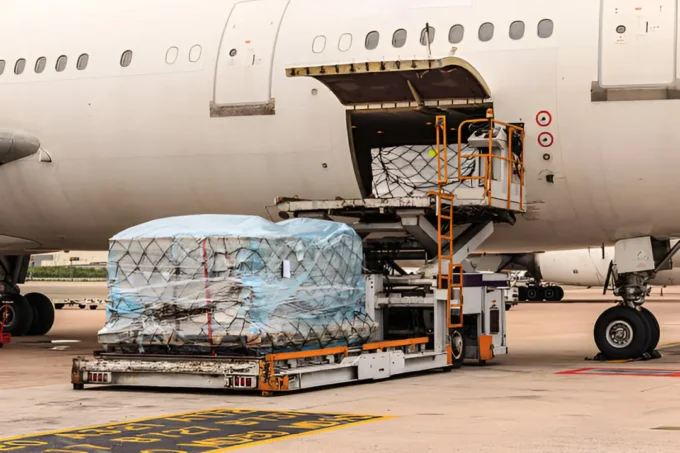
In May 2025, FAAN commissioned a dedicated domestic cargo terminal at the General Aviation Terminal in Lagos. Designed to improve cargo handling capacity and efficiency, the facility is expected to reduce bottlenecks and enhance connectivity for agricultural exports. The authority has plans to replicate this model across other states, including Abuja and Kano, expanding modern cargo processing nationwide. Officials noted that the facility positions Lagos as a central cargo hub and is meant to attract national and international freight operators, a key step toward decentralising and optimising cargo movement.
Industry stakeholders, however, stress that air cargo success is not decided at cruise altitude but on the ground, particularly at farm gates, customs checkpoints and cargo loading bays. The Directorate’s approach involves wide engagement with stakeholders across the supply chain, with meetings bringing together the Nigeria Customs Service, freight forwarders, ground handlers, cooperatives and government agencies to reduce friction in the export process. These collaborative efforts are intended to dismantle longstanding silos that have constrained cargo throughput.
Experts have also stressed the need for digital reforms such as single-window clearance systems, modern cargo villages, and integrated cold chain solutions to align Nigeria’s cargo ecosystem with global standards. Beyond physical infrastructure, the cargo push includes reforms to strengthen financial sustainability and revenue collection for aviation logistics. After a 15-year hiatus, FAAN resumed direct collection of cargo revenue at the Murtala Muhammed International Airport cargo terminal, positioning officials from the Directorate of Cargo Development and Services at cargo release points to plug revenue leakages and improve accountability.
However, these revenue reforms have also sparked controversy. A planned tariff increase raising cargo charges from N7 to N25 per kilogram triggered industry opposition and protests, forcing stakeholders into negotiations that resulted in a compromise tariff of N15 per kg. While authorities say tariff adjustments are necessary to sustain improved operations, critics argue they risk pricing Nigerian produce out of international markets.
These developments align with the Federal Government’s ambition to expand Nigeria’s economy beyond oil and build a more resilient non-oil export base. For the aviation sector, this means evolving from a “landlord” of airport property into a logistics partner enabling trade. If the Cargo Directorate succeeds, the implications for Nigerian agriculture could be profound. Not only could more farmers access profitable export markets, but Nigeria could also begin to reposition itself as a regional export hub, especially for perishables that command higher prices when delivered quickly and efficiently.
The government recently unveiled an intra-African air cargo corridor that offers significant discounts for exporters moving goods across key African markets. Such initiatives could reduce logistics costs and expand exporter access beyond traditional Europe-Middle East routes. Still, hurdles remain. Some reports highlight that despite these efforts, Nigeria’s export performance lags because of wider economic factors like exchange rate instability and high operational costs. In 2025, cargo exports by air fell due to rising freight costs, a reminder that logistics reforms must be paired with broader economic stability to attract market growth.
Notably, in previous reports, analysts emphasised challenges such as inadequate aircraft availability, infrastructure deficits and an imbalance between imported and exported cargo, with more goods arriving into Nigeria than leaving, as critical hurdles that must be tackled head-on. For now, the direction of the cargo reforms is encouraging. By prioritising dedicated facilities, stakeholder cohesion, digital reforms and regulatory focus, Nigeria is laying the groundwork for an agro-export economy that could compete on the world stage.
The farms are ready. The demand exists globally. The logistics, long the weakest link, may finally be catching up. After years of talk, the air cargo engine is starting to fire. And if it flies, Nigeria’s agricultural export ambition might finally take off.
Experts speak
Aviation expert Alex Nwuba believes the initiative is rooted in a strategic ambition to move Nigeria from fourth to number one in Africa’s air cargo ranking.
“Nigeria is fourth in cargo movement in Africa. And so, the former MD of FAAN decided that we can take action to become number one because we lead in a number of export areas, but we are not recognised,” he said.
According to him, the drive to climb to the top of Africa’s cargo ladder did not begin overnight. It started with the establishment of an Aviacargo Committee mandated to study how Nigeria could reposition itself. “So, what would it take to move to the first position? So, he established the Aviacargo Committee to look at how to reposition Nigeria. And then what happened was this administration then took that up and said, ‘Since we have created an Aviacargo Committee that has given us a report on how we can move to the first position, we need a driver.’ So they created the Cargo Directorate to become the driver of the repositioning of Nigeria’s export opportunities. To move Nigeria from fourth place to first place.”
Nwuba explained that the committee’s report identified systemic inefficiencies, especially the lack of coordination among airport agencies and the cumbersome export process that discourages exporters. “The Aviacargo Committee has given the Federal Government the various things and positions that we need to take with respect to moving Nigeria’s position forward, like removing and streamlining the export process and getting the agencies to work together cooperatively, because what you have are very fractured operations at the airport. So, the document is about to be released that sets out what Nigeria must do to take that position. And basically, the Cargo Directorate was put in charge of that process.”
He pointed to recent steps taken by the directorate, including expansion of cargo infrastructure and efforts to reduce post-harvest losses. “And that is what you are seeing them do today, which is increasing airport services, like opening a new domestic cargo terminal and building warehouses across the nation to process agricultural products at the major gateways of Nigeria, trying to create an opportunity for cargo airlines that come here full and leave empty to have products to export. And in order to have products to export, you are going to have to streamline the process for efficiency and ensure that not only do you produce something, but you can also actually get it to the airport and get it out of the country. Today, 80 per cent of what we produce in our agricultural areas is lost between the farm and the airport.”
That statistic underscores one of the most critical bottlenecks in Nigeria’s export chain: logistics between farms and airports. Without cold-chain facilities, aggregation centres, and proper inspection mechanisms, produce often spoils before reaching international markets.
“That is one of the challenges. So, the Cargo Directorate’s job is to streamline this process and allow Nigeria to grow its air cargo capacity,” Nwuba added.
He stressed that cargo growth is not only about export prestige but also about airport sustainability: “If you have throughput, the airport makes money through throughput. So even if it increases, if we can stretch a bit more revenue from what is passing through, the airport will become much more profitable and more sustainable. That is basically what it is. That is what is driving it.”
Part of the reform effort has included tightening loopholes that previously allowed commercial goods to pass through passenger channels without proper cargo processing fees. “So, we saw them early in the year start to charge fees to people that were not shipping things by cargo but were taking them through airports. You know how people carry excess bags through airports. Everything that should be going to the cargo terminal is being carried as passenger luggage. So, they instituted fees. It was the time when they seized some goods, and people took them to court. So that slowed that process down. So now they said, ‘Okay, even for the cargo passing through the airport, let us increase the charges per kilo.’ So, they are just increasing the revenue.”
However, he emphasised that revenue generation alone cannot be the goal. Quality control and international acceptance of Nigerian exports are equally important.
“But at the same time, it is not just about increasing the revenue. It is also about what the challenges are we face when we produce things in the agricultural areas, to how we get them to the market, and they are not rejected when they go abroad. That is also the function of the directorate, to engage people like the Agricultural Quarantine Service, the National Agency for Food and Drug Administration and Control, the Standards Organisation of Nigeria, and the Nigeria Customs Service to ensure that things can leave the farm, get to the airport, be properly inspected and certified so that when they leave the country, they are not rejected.”
He cited yam exports as a classic example of Nigeria’s under-recognised potential: “Nigeria is the largest producer of yams. But when you talk about yams in the export market, they say Ghana. And Ghana does not produce a quarter of what is associated with them. So obviously you know that Nigerian yams are going by road to Ghana and going out by air. So, the question is, therefore, what do we do to address the challenges with Nigerian yams so that they can go by air from Nigeria, and Nigeria is recognised as a yam exporter, and deriving the revenue from exporting yams?”
According to him, the Cargo Directorate has begun engaging state governments in major producing regions to align infrastructure with export goals. “So the cargo directorate is engaged. So, they are engaging states. They are going to producer states and saying, ‘How can we cooperate? What are the possibilities we need to put in your state to enable you to get these goods to the major airports and get them out of the country as a Nigerian export?’ So, they have a lot of work cut out for them.”
While Nwuba sees a structured roadmap in place, aviation expert and CEO of Centurion Security Limited, John Ojikutu, takes a more sceptical stance, questioning whether the push for cargo expansion is backed by credible traffic data. “For you to talk about the air cargo, go and check the statistics. The traffic figure in the last 10 years. Just check the traffic figure. Have we carried up to half a million tonnes? The last one I saw was even less than 200,000. Our traffic figure has always been around 200,000 tonnes, not up to 300,000. If you are going to do anything about it, then you will see a kind of significant annual increase of about four or five years.”
He queried whether the airport authority is truly positioned to demonstrate measurable cargo growth: “Have we got that from FAAN? FAAN is not even in charge. The people that are in charge, are they giving us a figure that shows an increase? We should not be creating avenues to spend government money in a direction where there is no increase in the development. I have done that thing before.”
Ojikutu recalled past efforts to convert idle passenger aircraft capacity into cargo operations during periods of low passenger demand.
“That is why I told them, when there was no passenger for the passenger aircraft, I said, ‘Find a way to carry cargo’. And they said there is no cargo inside. When we want to go out, okay, you want to go out. Where is the cargo for you to take out of the country? We have more cargo coming into the country than going out.”
For him, any serious cargo reform must begin with transparent, verifiable statistics. “But if they have any increase, let us pick it out. Last year, we had this much export. The year before, we had this much export. They have to come out with a figure that they have carried out in the last five to ten years. They just want to spend money on something that they cannot prove.”
He extended his criticism to broader spending patterns within airport infrastructure, arguing that large-scale renovation and runway projects must be justified by traffic growth.
He said, “It is like using 712 billion to renovate a terminal. International terminals in MMA have four terminals. Four terminals in the master plan. Why everybody wants to be spending money now, I do not know. You want to spend 712 billion to reconstruct, not to build, just one terminal. You want to spend 535 billion for one runway that was planned in 2022 for just 90 billion. What is wrong with our people, for heaven’s sake? Why are they spending money? Why do you not give this airport for concession? Give it for concession. We are losing a lot of money.”
He urged closer scrutiny of revenue figures and passenger throughput, insisting that policymakers must match budget projections with realistic income sources. “Go and look at the figure the Managing Director of FAAN gave out. As their revenue is generated in 2024. Go and look at their traffic. Just the international passenger alone. It says they have 2.5 million. Each passenger. 2.5 million. They said they have five million international passengers in and out. What are they doing there? Can they do it in Terminal 2? Can they do it on any of the airlines? The only thing you can do on the airlines is collect passenger services. Which I just told you now is $100 [equivalent]. Internationally and domestically, you collect N2,000. Multiply N2,000 by about N5m. That is a different game from what I just told you. So, by the time you ask what they are telling you, you are going to get about N500 bn.”
He warned that without clear data, cargo expansion risks becoming another fiscal burden. “Okay, where is the cargo going to come from? How much money are you going to get from the cargo? The imports are almost four or five times what the exports are. And the imports have not increased that much. It does not increase. Let them bring their statistics. They were 50,000 tonnes. And they are collecting how much? They are collecting N7,000 per kg?. So, when the 50,000 remain and they are collecting N20 m, they will think they are increasing. Meanwhile, they are killing the industry.”
Ojikutu also advocated concessioning cargo terminals to private operators to improve efficiency and revenue collection. “The cargo terminal will want from you every year five billion; you are not paying any staff there. You should be able to be collecting between N15 to N20 bn from all of them there. Concession this place out and get your money without any hassle.”














Leave a comment